Rain ticked against the leaded windows like a metronome set to impatience. The Camden study—dark wood, older money—smelled faintly of wax and wet wool. We’d come straight from the burial, still carrying the damp of October on our sleeves. Mr. Dalton, the family lawyer, stacked envelopes with a surgeon’s care. Tyler cracked his knuckles; Madison arranged her face for a reaction video no one had asked to film. My mother’s hand found mine; my father stood with his jaw set in that stoic way that means he’s swallowing fire.

The fortunes were read out like titles to small countries. Chicago towers for Tyler. Cape houses, an island, and four yachts for Madison. One hundred and twenty thousand dollars and a shelf of first editions for my mother, paired with a note that landed like a verdict. And then mine: a crumpled envelope, my name rushed onto the paper as if my grandfather had written it between meetings. Inside: a first-class ticket to Marseille, connection to Saint-Tropez. Tomorrow, 8:00 a.m. A torn scrap of his handwriting: First class. Don’t miss the flight.

image

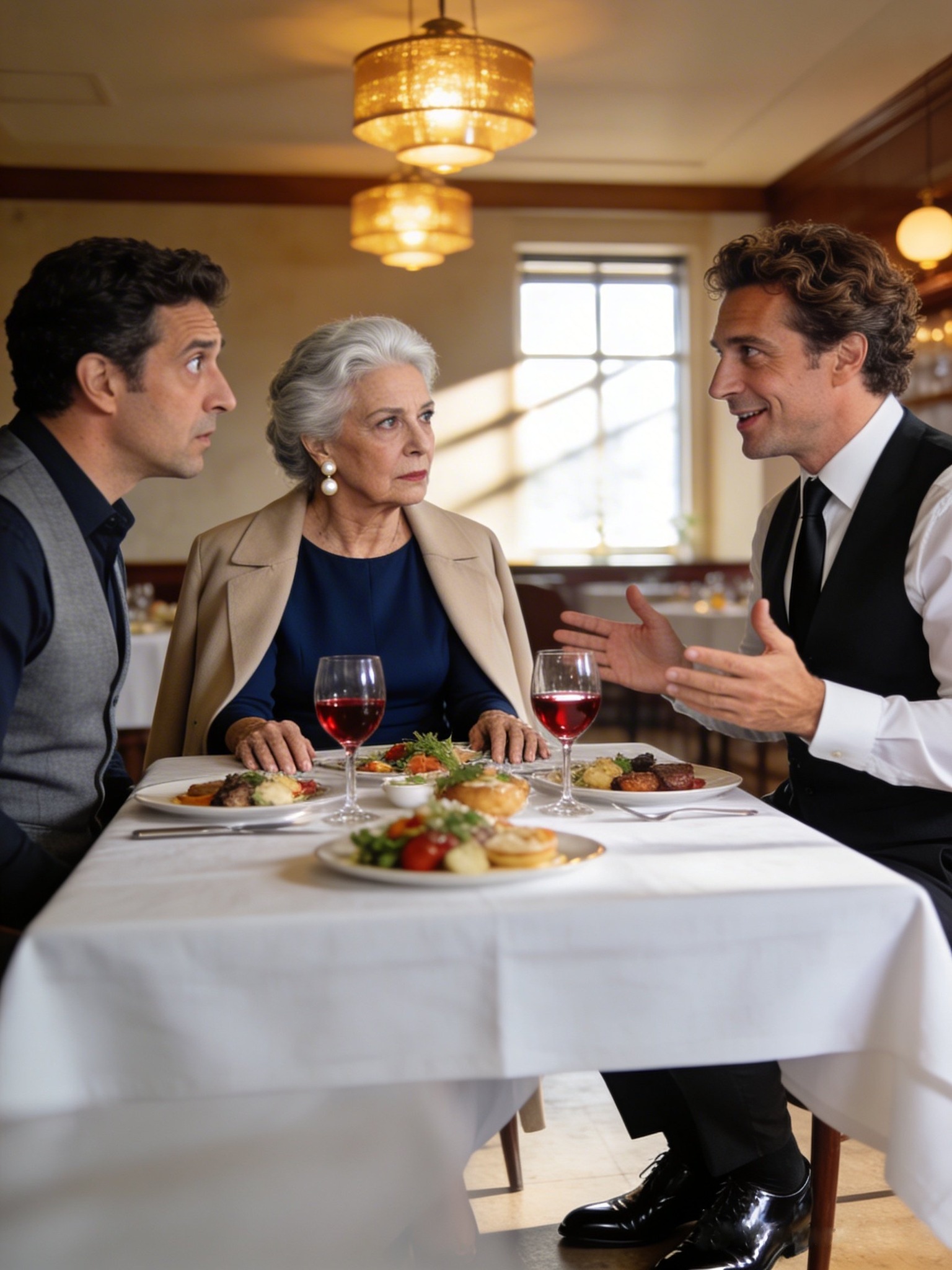
Tyler laughed so hard he slid sideways in his chair. Madison snatched the stub, performed disbelief for the chandelier. “A vacation,” she said, delighted. “How… quaint.”

I stared at the ticket until the letters blurred, the rain on the glass keeping time with the heat in my face. My father’s voice dropped the room two degrees. “You’ve had your fun,” he said. “That’s enough.” No one listened. No one ever had.

Twelve years earlier, I’d stood in this same room trying to be allowed to listen. Grandfather had dismissed me—go find your mother—and even his rebuke had sounded like an investment tip. Tyler had smirked. I found my father in the garage tracing the curves of a 275 GTB. “Men who measure everything in dollars,” he said, arm around my shoulders, “usually come up short where it counts.” I chose a life my grandfather couldn’t price: a classroom in Oakland, the daily attempt to light a match in air saturated with doubt. I learned to love the look that crossed a student’s face when electron orbitals finally resolved into sense. It paid in moments, not in dividends.

Grandfather turned ninety and looked through me like I was a window. I decided I was done auditioning for a part I wasn’t born to play. Then he died, and his last gesture toward me was… geography.

That night, back in my old room—periodic table still taped to the wall, the treehouse my father built dissolving into the dark beyond the window—my parents came bearing beer and tea, which is to say, truth and warmth. Dad told me not to dance for the dead. Mom said Grandfather had called her ten days before he went. I’ve been watching Ethan, he’d said. He has something the others don’t. When she asked what, he said only, He’ll know when it’s time.

I turned the ticket over in my hands. The paper felt heavier than travel should.

Morning was a bruise that didn’t fade. I texted a sub plan, kissed my mother’s cheek, and followed a line of men in sport coats onto a plane that smelled like privilege and starch. Marseille greeted me with sun too bright for grief. In Saint-Tropez, the taxi hummed past yachts posed like punctuation. The address on the note led to a narrow street strung with laundry and light, to a cobalt door with a brass lion’s head. I knocked because the note hadn’t told me what else to do.

The man who opened it wore a linen shirt the color of clouds and carried himself like he’d been waiting for me his entire life. “Monsieur Hayes,” he said, as if my name were a password. “I am René. Monsieur Camden’s instructions were precise.”

Inside: cool stone, salt air, a portrait of my grandfather in his thirties beside a woman I didn’t recognize—barefoot, laughing, a scarf catching the wind like a sail. On a table, an envelope sealed with wax. My name again, written slower this time.

Ethan, the letter began. If you are reading this, you have chosen curiosity over pride. Good. Saint-Tropez is not a test. It is a confession.

He wrote about a summer when he was twenty-four and poor in a way no one would believe later. About a woman named Maëlle who taught him how to listen to the sea and to people. About a partnership made of salt and plans. Then about the return to America, the ascent, and the decision that hardened into habit: choose the sharp, the ambitious, the ones who bite. I mistook appetite for character, he wrote. I confused noise with music.

René watched me as I read, not unkind. “There is more,” he said, and led me down a narrow stair to a room that smelled of old paper and lemon oil. On shelves: ledgers, letters, photographs. In a glass case: a faded blue ticket stub—Marseille to Boston, 1961. Beside it, a portfolio with my mother’s name on the tab.

“Your grandfather deposited money here for decades,” René said. “Not to hide. To hold.” He opened the portfolio. Inside were transfers, annotated in that small decisive hand, each labeled: Elaine’s share. “He told me,” René added, “that one day a teacher would arrive who understood the value of a quiet inheritance.”

Grand plans make their own weather. This felt different: a wind that knew my name.

The letter sent me down a path my cousins would never recognize as wealth. There was a second address—an atelier with skylights and sawdust where an old man named Benoît built guitars by hand. “Your grandfather swept this floor,” he said, and put a cedar-topped instrument into my hands like a benediction. There was a café where a woman brought me coffee and a story about Walter Camden anonymously paying a fisherman’s debts in 1987. There was a librarian who pressed into my palms a slim notebook of my grandfather’s from that first summer: drawings of hulls, recipes for aioli, a list titled Things Worth Learning that included how to apologize without performance and the names of all the constellations visible from the stern of a small boat.

At the end of the day, René returned me to the blue door and one last envelope. Take what is yours, the note read. I opened the safe with a code my birthday made obvious. Inside: a deed to the house on the lane, transferred to my mother’s name; a letter of instruction gifting me a modest account to be used “for projects that make the world less stupid”; and a final page—a letter to Tyler and Madison that would never be sent. I have given you things that will demand more of you than you think you owe the world. I have given Ethan a door. The door is harder.

I called my mother from the quay at dusk. She listened without speaking until I reached the part about her name on the deed. Then she laughed the startled laugh of someone who has just realized a weight she learned to carry can be set down. My father was quiet for a long time. “He finally built something that won’t be torn down,” he said. “He built a bridge.”

I stayed two days—long enough to learn the rhythm of the bell tower, long enough to write sub plans from a kitchen table where my grandfather had once counted someone else’s blessings. On the flight home, I wrote out the grant that would become the after-school lab I’d been sketching in the margins of my life for years: microscopes that worked, stipends for students who’d otherwise have to choose between a shift and a club, partnerships with the community college down the hill. I named it The Maëlle Project and didn’t explain that to anyone.

When I returned, the family wanted a theater. Tyler wanted me to marvel at his Ferrari. Madison wanted the island to trend. I showed them a photograph of a cobalt door and said only, “Grandfather left me a place to go.” They laughed until the lawyer sent a supplemental letter to the heirs: a quiet redistribution of something less flashy—endowed scholarships at the public high school where I worked, a curriculum grant in my mother’s name, the codicil that put the Saint-Tropez house forever beyond the reach of anyone who’d list it.

My students arrived on Monday with pencils and nerves. I proctored their exam and felt that strange alchemy again—the way understanding lights a face from behind. After the bell, I unlocked a storage closet and showed three kids a stack of brand-new lab aprons. “We’re starting something,” I said. They didn’t ask how it was paid for. They asked what we would build.

The moral, if there is one, is small enough to fit in a coat pocket: The richest gifts are often not the ones that glitter; they are doors. A ticket can be an insult, or it can be the map to the only room where the truth is kept. A fortune can be a mirror that flatters the angle you prefer, or it can be a window out of yourself. My cousins inherited reasons to be looked at. I inherited a reason to look more closely.

My grandfather believed in tests. I used to think I’d failed his. In the end, the only test that mattered was the one I give every day: can you make sense out of what looks like chaos; can you show your work; can you explain, without theatrics, why this bond forms and that bond breaks? In chemistry, we call it valence—the number of bonds an atom can make, the measure of its capacity to connect. Turns out families have valence, too.

On clear nights now, I take the school’s donated telescope to the roof and let the freshmen find Orion. I point out the belt, the sword, the way light takes years to arrive and still manages to show up. Somewhere far away a blue door hears the sea. Somewhere closer, a student looks up and decides she will, too.