
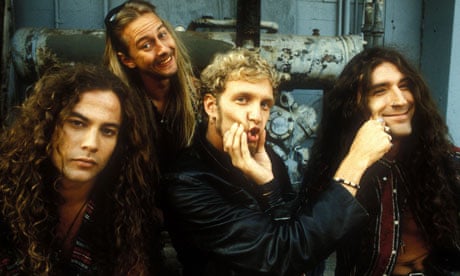
Alice In Chains, one of the most iconic rock bands of the last three decades, is now facing an unexpected kind of pressure—not from the music industry or critics, but from animal rights activists.

PETA (People for the Ethical Treatment of Animals) has made a rather unusual request: they want the band to temporarily change their name on social media to “Betty and Chains” for a month.
The purpose? To raise awareness about the plight of Betty, a 56-year-old Asian elephant who has been suffering in U.S.circuses for decades.
This request has stirred curiosity and debate among millions of fans worldwide.
What does the band’s name have to do with an elephant’s fate? And why would PETA choose to approach Alice In Chains with such a campaign? Here’s the full story behind this strange but heartfelt plea.
PETA’s letter to Alice In Chains was direct yet respectful.
They called it a “wonderfully strange request” and pitched the idea as a way for the band to lend a version of their iconic name to a cause that needs urgent attention.
The plan was simple: by changing their social media handle to “Betty and Chains,” the band’s millions of followers would be exposed to Betty’s story, which otherwise might remain confined to animal rights circles.
The hope was that fans seeing “Betty in chains” would be intrigued enough to learn about the elephant’s suffering and support efforts to free her.

Betty is no ordinary elephant.
According to PETA, she is a 56-year-old Asian elephant taken from Thailand as a baby and has spent most of her life performing in U.S.circuses, most recently with the Cardam Circus.
Despite her age, disability, and deteriorating health, she is still forced to perform and give rides in roughly 300 shows a year.
An elephant expert who examined Betty this year warned that she is at risk of a catastrophic, likely fatal collapse if she isn’t retired to a proper sanctuary soon.
The expert’s report described Betty shuffling on stiff front legs, dragging a weakened, almost half-paralyzed trunk on the ground.
Footage and photos released by PETA show Betty standing still with eyes closed, cracked nails, and carrying people despite her obvious pain.
PETA has been actively protesting Cardam Circus’s shows around the country.
Their tactics include a massive 20-foot inflatable crying elephant and “Free Betty” banners.
They urge people to boycott the circus and flood regulators with complaints, aiming to force the circus to retire Betty and improve conditions for all performing animals.
However, the circus presents a different narrative.
Cardam Circus states on their website and social media that they are committed to ethical treatment of their animals, emphasizing respect, trust, and proper care.
In some cities, local animal welfare inspectors have reportedly found the circus in compliance with expected standards, licenses, and records.
So far, Alice In Chains has remained silent on the matter.
Media outlets have reached out for comment but have been met with no response from the band or their representatives.
This silence leaves fans and observers in a tricky position.
On one hand, many support animal rights and appreciate efforts to raise awareness about Betty’s suffering.
On the other hand, the request to alter a band’s identity—even temporarily—can be seen as intrusive or confusing, especially without clear communication from the band.
Rock fans are known for their loyalty and passion, and the idea of changing a band’s name can be met with resistance or misunderstanding.
Some worry that without proper explanation, the campaign might backfire or alienate fans who don’t understand the connection.

This isn’t the first time PETA has used celebrity names and wordplay to promote causes.
Recently, they asked Led Zeppelin’s Robert Plant to temporarily go by “Robert Plant Wool” to promote plant-based, animal-free alternatives to wool and cashmere.
Such campaigns are designed to attract attention through humor and surprise, leveraging the reach of famous personalities to spread messages beyond typical activist circles.
The request raises important questions about the best ways to advocate for animal welfare.
Is asking a famous band to change their name—even briefly—a powerful way to spotlight an issue, or is it a gimmick that risks trivializing both the cause and the band’s legacy?
Critics argue that if Betty’s situation is truly dire, efforts should focus more directly on legislative or regulatory action, sanctuary funding, or public education rather than symbolic gestures that might confuse or alienate supporters.
Supporters counter that any attention is good attention and that creative campaigns can mobilize new audiences who might otherwise remain unaware.
The request for Alice In Chains to become “Betty and Chains” is a fascinating example of how activism intersects with popular culture in unexpected ways.
It highlights the challenges of raising awareness for animal welfare in a crowded media landscape and the delicate balance between respecting artistic identities and promoting urgent causes.
As the band remains silent, the debate continues among fans, activists, and the general public.
Will Alice In Chains embrace the campaign and help free Betty? Or will they hold fast to their name and legacy, leaving the cause to other voices?
Whatever happens, Betty’s story has reached millions more ears and eyes—and that, perhaps, is the first step toward change.
News

The Song that Bob Dylan Wrote About Elvis Presley
Bob Dylan and Elvis Presley are two of the most legendary figures in American music history. One is known as…

Raul Malo, Lead Singer of The Mavericks, has died at age 60
The music world is mourning the loss of Raul Malo, the charismatic lead singer of The Mavericks, who passed away…

At 69, Steve Perry Confessed This Was the Song He Couldn’t Finish
Steve Perry’s voice is one of rock’s most iconic and enduring sounds. As the lead singer of Journey, he gave…

Top 6 SHOCKING Things Axl Rose Said About Other Rock Legends!
Axl Rose, the legendary frontman of Guns N’ Roses, is known not only for his iconic voice and music but…

‘You Had ONE Job!’ How Powerman 5000 FUMBLED a Platinum Future
Powerman 5000’s story is one of bold creativity, underground buzz, and a dramatic crossroads that nearly derailed their ascent to…
‘He Knew Last Show Would Kill Him’ Ozzy Osbourne’s Final Moments | Sharon Osbourne Interview
Ozzy Osbourne, the legendary rock icon, cultural pioneer, and beloved family man, gave his final performance knowing it might be…
End of content
No more pages to load






