
Released in 1976, *Rocks* stands as Aerosmith’s fourth studio album and arguably the rawest, hardest-hitting record of their career.
It captured the band at the peak of their rock ‘n’ roll excess and creative chaos, setting a new standard for hard rock and influencing generations of musicians including Slash, Kurt Cobain, and James Hetfield.

But what went into making this seminal album? Let’s dive deep behind the scenes to uncover the story of *Rocks*—a record that was as much about wild partying and excess as it was about musical innovation and gritty authenticity.
Following the massive success of their previous album *Toys in the Attic*, Aerosmith found themselves catapulted into rock stardom.
Guitarist Brad Whitford recalls the sudden influx of wealth: “My bank account started to grow and I felt very wealthy all of a sudden. I wasn’t. But $10,000 felt like a million. I was 22. I thought, man, I can buy the kind of car I’ve always dreamed about. That’s when I got my first Porsche.” It wasn’t just Brad—apparently, the whole band bought their first Porsches around this time.
This new wealth also fueled some darker habits.
Joe Perry, Aerosmith’s lead guitarist, candidly admitted, “The main influence that the drugs will have had was that we were partying too much and didn’t notice the kind of money we were spending or take care of the decisions we were making.”
Cocaine was everywhere on tour, and the band’s hard-partying lifestyle both inspired and imperiled the recording process.
Rather than retreating to a traditional studio, Aerosmith and producer Jack Douglas chose a more unconventional approach for *Rocks*.
They set up in a repurposed rehearsal space known as The Warehouse in suburban Massachusetts.
Douglas wanted to capture the band’s unfiltered chemistry in a live, organic environment rather than the sterile confines of a studio.

To achieve this, they rented the Record Plant’s mobile studio and placed it inside the massive, untreated live room of The Warehouse.
This big metal room, described by Douglas as “roaring,” allowed the band’s sound to explode with a raw, aggressive energy.
Stage monitors blasted the band’s sound back at them, pushing their performances to new experimental heights.
Douglas explained that *Rocks* was a pivotal album for Aerosmith.
“It had to make a big statement about how loud and hard they were. How unapologetic they felt about being who they were. This brash, rude, sexual, hardcore rock band. ” The recording process was designed to reflect exactly that: chaotic, dangerous, and thrilling.
One of the secrets behind *Rocks*’ distinctive sound was deliberate distortion and saturation.
Instead of clean, polished tracks, everything was recorded “totally overloaded,” creating a thrilling, saturated soundscape that set the album apart from the crisper productions of the era.
Rather than rehearsing songs fully before recording, Aerosmith embraced spontaneity.
They entered the sessions with just basic riffs and fragments.
Tracks like “Back in the Saddle” evolved organically as the band fleshed out instrumental skeletons and finalized lyrics late in the process.
This approach gave the album an urgent, spontaneous energy that pulsed through every note.

Producer Jack Douglas also encouraged Joe Perry to explore new solo ideas, even directing him towards jazz guitarist John Coltrane for inspiration.
The evolution of songs like “Back in the Saddle” from simple riffs to full-blown rock anthems was meticulously documented on cassette tapes, preserving the creative journey.
Joe Perry’s iconic guitar tone on *Rocks* was shaped by a mix of instruments and amps.
His main guitars were the Fender Stratocaster and Gibson Les Paul, with the Les Paul favored for live shows.
For amps, Perry used a combination of Music Man, Ampeg V4, and 50W Marshall Plexis, plus the Fender Tweed Champ for its natural compression and break-up at high gain.
Engineer Jay Messina recalled using a mix of microphones to capture the guitar cabinets: a Shure SM57, Sennheiser 421, and Sony C37.
The SM57 and 421 added edge and brightness, while the C37 provided weight and depth.
Sometimes, phasing effects were added for extra texture.
Brad Whitford, the band’s other guitarist, also played Strats and Les Pauls with a similar amp setup.
He experimented with early BC Rich and Hammer guitars, helping popularize these brands among metalheads in the 1980s.
Whitford was known as the technician, spending long nights in the control room perfecting his parts, while Perry was the improviser, laying down quick, inspired takes.

Tom Hamilton’s bass sound came from his Fender Jazz Bass plugged into an Ampeg B15N, miked with an Electrovoice RE20 and a direct input from the amp head.
Joey Kramer’s drums were recorded in the large live room with stage monitors enhancing the physicality and presence of his hard-hitting style.
A unique technique involved placing a Shure SM58 microphone inside a pillow in the kick drum, feeding the signal into an Ampeg SVT amp behind the kit to feel the power of the kick drum.
This kick sound bled into all other microphones, influencing the overall sonic texture of the album.
Steven Tyler’s vocals were mostly recorded using a directional shotgun Sennheiser MKH405 microphone into a Spectro console, with compression from a Teletronics LA2A and EQ from a Pultec PQ1A.
He preferred monitors over headphones to minimize bleed, though sometimes a Neumann U87 was used with the same signal chain.
Remarkably, Aerosmith completed the entire album in just six weeks.
Producer Douglas attributed this speed partly to the record labels providing drugs to keep the band working.
“It was written into the project and in the case of Columbia, they had guys who delivered it to you and they finally got busted for that. People lost their jobs and it became a huge scandal. If they could keep you doing coke, then the records would get done faster. That was their philosophy.”
This raw, drug-fueled intensity helped *Rocks* reach number three on the US Billboard Top 200 upon its release in May 1976, despite mixed reviews.
Rolling Stone criticized it for mostly rehashing earlier material, but fans and future musicians saw it differently.
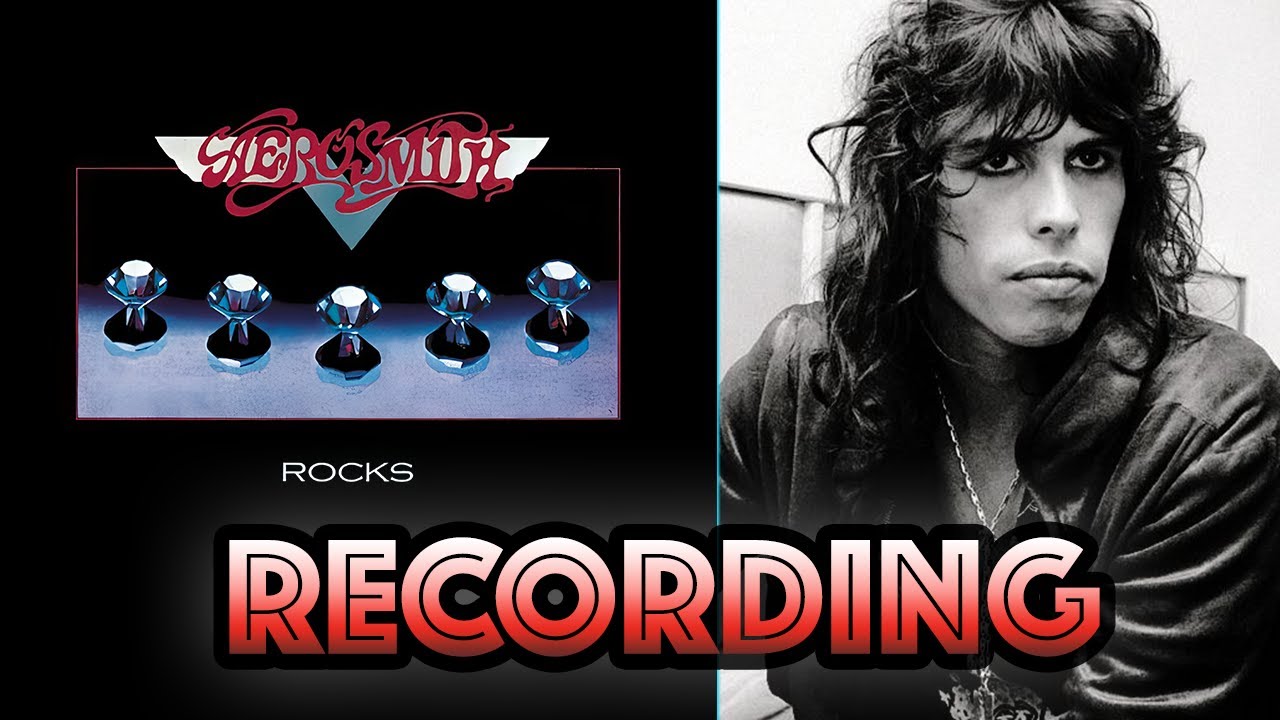
*Rocks* became a touchstone for aspiring rock musicians.
Metallica’s James Hetfield said it was the reason he picked up a guitar, and Slash called it his “epiphany moment” that launched his own six-string journey.
Kurt Cobain listed it among his top 50 favorite albums, underscoring the album’s lasting impact.
The band, producer, and engineers achieved the elusive goal of “harnessing chaos” to capture lightning in a bottle.
The album’s willingness to embrace noise, bleed, and distortion made it stand apart as a snapshot of a band on the edge, channeling their volatility into pure electrifying sound.
In conclusion, Aerosmith’s *Rocks* is more than just an album—it’s a raw, unfiltered document of a band at the height of their powers and excesses.
From the unconventional recording environment to the deliberate sonic overload, from the wild partying to the inspired musicianship, *Rocks* remains a landmark in rock history.
It’s a testament to how chaos and creativity can collide to produce something truly unforgettable.
News

The Song that Bob Dylan Wrote About Elvis Presley
Bob Dylan and Elvis Presley are two of the most legendary figures in American music history. One is known as…

Raul Malo, Lead Singer of The Mavericks, has died at age 60
The music world is mourning the loss of Raul Malo, the charismatic lead singer of The Mavericks, who passed away…

At 69, Steve Perry Confessed This Was the Song He Couldn’t Finish
Steve Perry’s voice is one of rock’s most iconic and enduring sounds. As the lead singer of Journey, he gave…

Top 6 SHOCKING Things Axl Rose Said About Other Rock Legends!
Axl Rose, the legendary frontman of Guns N’ Roses, is known not only for his iconic voice and music but…

‘You Had ONE Job!’ How Powerman 5000 FUMBLED a Platinum Future
Powerman 5000’s story is one of bold creativity, underground buzz, and a dramatic crossroads that nearly derailed their ascent to…

‘He Knew Last Show Would Kill Him’ Ozzy Osbourne’s Final Moments | Sharon Osbourne Interview
Ozzy Osbourne, the legendary rock icon, cultural pioneer, and beloved family man, gave his final performance knowing it might be…
End of content
No more pages to load






