
When Guns N’ Roses released their debut album *Appetite for Destruction* in 1987, few in the music industry believed it would become the biggest selling debut album of all time.

The band’s notorious reputation for chaos and self-destruction made record labels wary, and even Slash later admitted to blowing most of the band’s advance payment on heroin.
But against all odds, *Appetite for Destruction* emerged as a raw, electrifying powerhouse that reshaped rock music forever.
The classic lineup of Guns N’ Roses—Axel Rose, Slash, Duff McKagan, Izzy Stradlin, and Steven Adler—had been playing together across the West Coast for over a year before their big break.
Their sound was a gritty, rebellious blend of punk attitude and hard rock swagger, a perfect storm that would soon explode onto the world stage.
However, the road to success was anything but smooth.
The band’s manager, Alan Niven, took a huge gamble by securing a $250,000 advance from Geffen Records, despite the label’s skepticism.
The odds seemed stacked against them, with many doubting the band could even repay the advance, let alone produce a hit album.
Initially, Spencer Proffer was hired as the producer and recorded nine songs with the band.
However, the band wasn’t satisfied with the results and continued searching for the perfect fit.
Among the contenders were Paul Stanley of KISS and legendary producer Mutt Lange, but Lange was deemed too expensive.

Ultimately, Guns N’ Roses chose Mike Clink, a producer admired for his work with UFO and other rock acts.
Clink’s approach was to get the best performances from the band without over-polishing their raw energy.
His role would prove critical in shaping the album’s sound.
Recording began at Rumbo Recorders in January 1987, a studio equipped with a Trident ATC console and a variety of outboard gear.
The band spent two weeks laying down basic backing tracks, with Clink guiding them to capture the intensity and spontaneity that defined their live performances.
A key to the album’s feel was the way the band rehearsed tirelessly—Duff McKagan recalls they rehearsed twice a day, focusing on perfecting each guitar part and how the instruments interlocked.
Steven Adler’s drumming was carefully recorded using his Gretsch kit with a Ludwig Black Beauty snare, miked with Shure SM57s and an Nyman Fat 47 on the kick drum, capturing the powerful yet natural drum sound.
Interestingly, the backing tracks were recorded without a click track because Adler struggled to play naturally with one.
Instead, Clink played a subliminal click before recording each take to help the band lock in the tempo, then removed it to let the music breathe.

Slash’s guitar work on *Appetite for Destruction* is legendary, but it wasn’t without challenges.
His primary guitar during rehearsals was a battered Jackson guitar with intonation problems.
To achieve the perfect tone, the band rented guitars from a Los Angeles instrument rental company, Sir, including Gibson SGs and Les Pauls.
Slash’s now-famous guitar was a replica of a 1959 Les Paul Burst made by luthier Chris Derek, equipped with Seymour Duncan Alnico II Pro pickups.
This guitar became his number one weapon and remains iconic to this day.
The story behind Slash’s amplifier is even more intriguing.
For pre-production, he used a modified Marshall 1959 T Super Tremolo head with the tremolo circuit removed and an extra preamp stage added.
However, this amp was rented out for the main sessions, so Slash was given a different Marshall JMP 1959 Super Lead head, which was modified in-house to replicate the sound of the original.
Slash loved the amp so much, he tried to buy it from Sir, but they refused.
Undeterred, Slash “stole” the amp back from the band’s rehearsal space, a story that has become rock folklore.
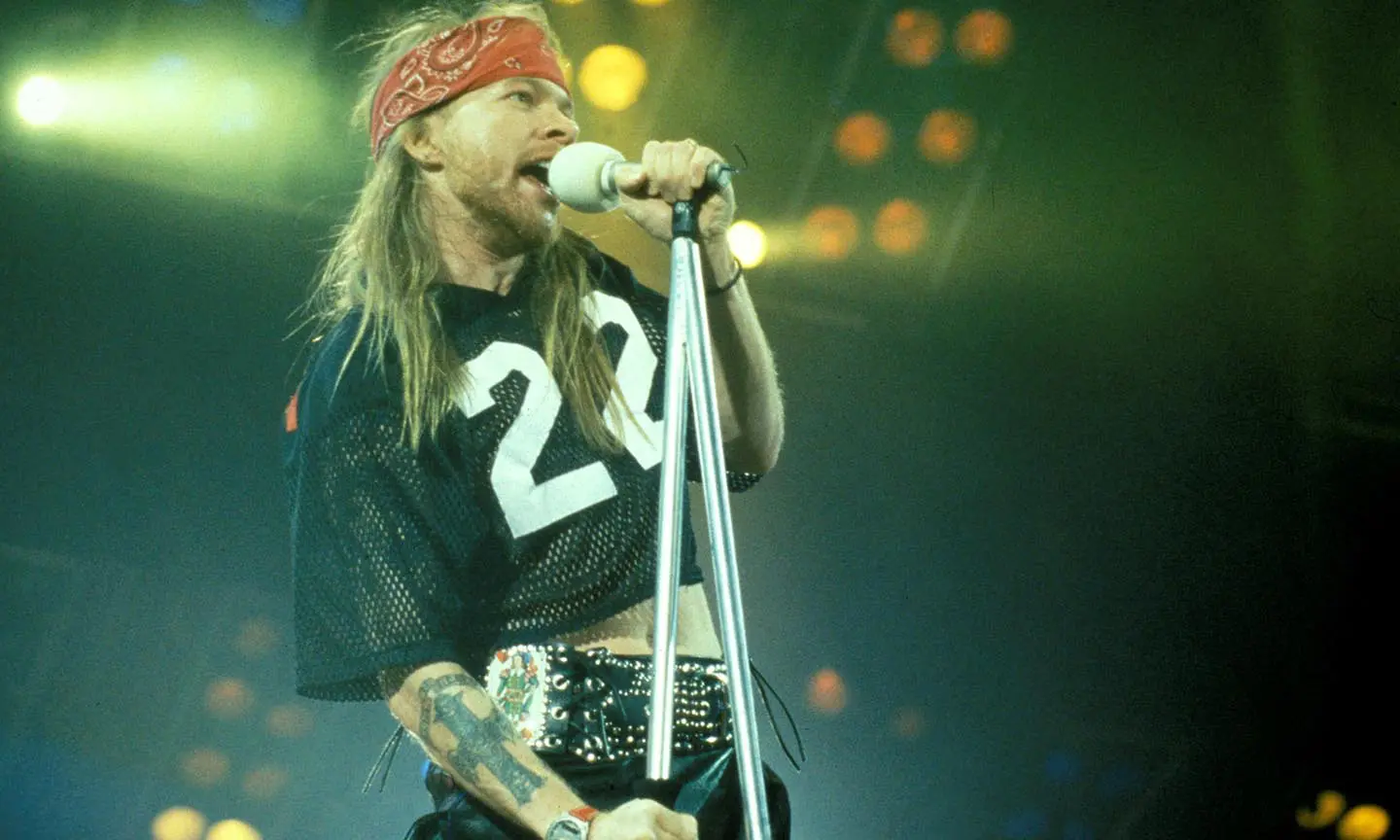
After the initial tracking at Rumbo, guitar and vocal overdubs were done at Take One Recording Studios.
Mike Clink often worked 18-hour days with Slash and Axl Rose, pushing them to deliver their best performances.
Axl’s vocals were recorded using a Nyman M49 microphone, prized for capturing warmth even at close range.
The mix incorporated effects like AMS delay, Lexicon reverbs, and DBX compression to give the album its polished yet raw edge.
One of the album’s most infamous moments is the track “Rocket Queen,” which features a recording of genuine carnal pleasure, adding a provocative layer to the song’s raw energy.
*Appetite for Destruction* was released on July 21, 1987, with little fanfare.
The album debuted at a modest 182 on the Billboard 200, largely ignored by radio and press.
It seemed the band’s chaotic reputation might hold them back.
However, the tide turned when MTV’s general manager Al Coury lobbied to play the video for “Welcome to the Jungle” just once a night for three nights.
The video became the most requested on the network, sparking massive radio play for “Welcome to the Jungle,” “Paradise City,” and “Sweet Child O’ Mine.”
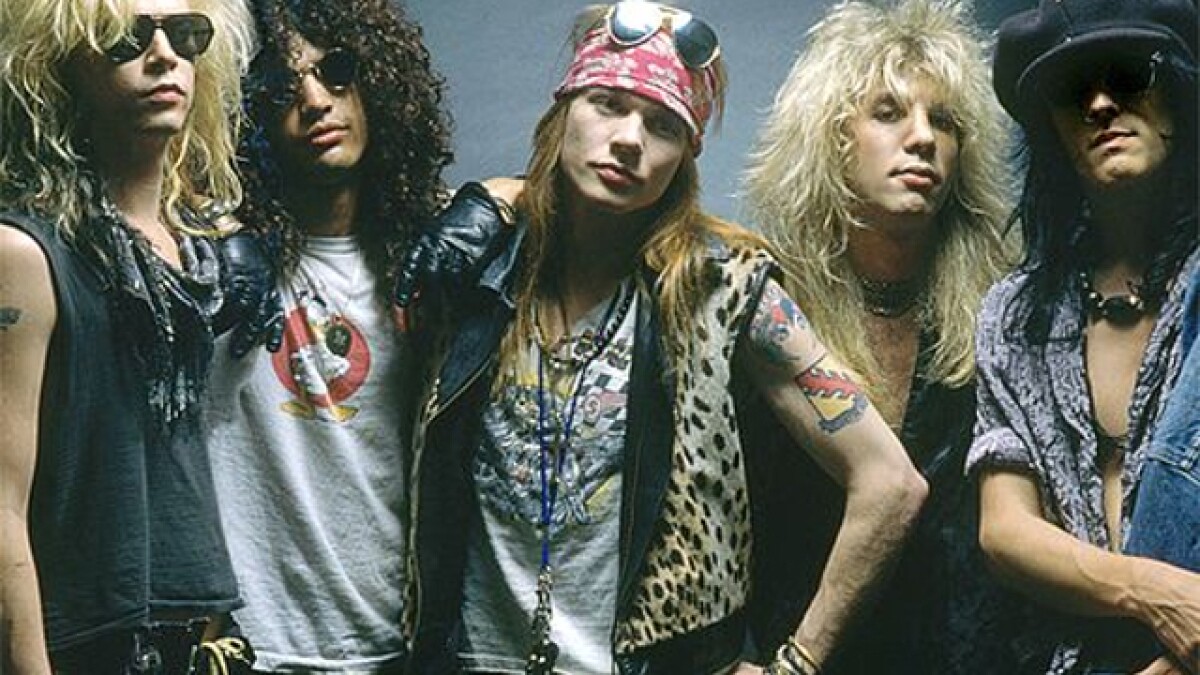
The album soared to number one on the Billboard 200 by August 6, 1988, over a year after its release.
It went on to sell over 30 million copies worldwide, cementing its place as the bestselling debut album of all time.
Despite its rocky start, *Appetite for Destruction* is now hailed as a timeless classic that captured the raw spirit of late-’80s rock.
The album’s gritty production, combined with the band’s ferocious energy and songwriting, created a blueprint that influenced countless artists.
Mike Clink’s production, Slash’s iconic guitar tone, and Axl Rose’s distinctive vocals all contributed to an album that remains a benchmark in rock history.
The story behind *Appetite for Destruction* is one of perseverance, chaos, and creative brilliance.
From uncertain beginnings and internal struggles to global superstardom, Guns N’ Roses defied expectations and created a masterpiece that still resonates decades later.
Their journey reminds us that sometimes, the greatest art emerges from the wildest storms.
News
The Song that Bob Dylan Wrote About Elvis Presley
Bob Dylan and Elvis Presley are two of the most legendary figures in American music history. One is known as…

Raul Malo, Lead Singer of The Mavericks, has died at age 60
The music world is mourning the loss of Raul Malo, the charismatic lead singer of The Mavericks, who passed away…
At 69, Steve Perry Confessed This Was the Song He Couldn’t Finish
Steve Perry’s voice is one of rock’s most iconic and enduring sounds. As the lead singer of Journey, he gave…
Top 6 SHOCKING Things Axl Rose Said About Other Rock Legends!
Axl Rose, the legendary frontman of Guns N’ Roses, is known not only for his iconic voice and music but…
‘You Had ONE Job!’ How Powerman 5000 FUMBLED a Platinum Future
Powerman 5000’s story is one of bold creativity, underground buzz, and a dramatic crossroads that nearly derailed their ascent to…
‘He Knew Last Show Would Kill Him’ Ozzy Osbourne’s Final Moments | Sharon Osbourne Interview
Ozzy Osbourne, the legendary rock icon, cultural pioneer, and beloved family man, gave his final performance knowing it might be…
End of content
No more pages to load






