
Chaos erupted across Cleveland the moment fans realized what had just unfolded on the field, and the shockwaves only intensified as the anger grew louder: the belief that head coach Kevin Stefanski had once again undermined rookie quarterback Shedeur Sanders.

The frustration built throughout the stadium as Sanders delivered a career-defining performance, only for the final moments to slip away under the weight of a baffling coaching decision that left fans, analysts and players stunned.
In a game where Sanders fought through snow, chaos and a porous defense, he produced the kind of electric, guts-driven display that franchises pray to discover in a young quarterback, yet the controversy surrounding the late two-point conversion overshadowed everything he accomplished.
The tension had been simmering all season, but this matchup intensified every suspicion.
Cleveland entered the game as heavy favorites, and fans expected a straightforward win, but the Browns defense collapsed early, allowing the Titans to run at will and storm to a 31–7 lead built on a mix of blown assignments, special teams disasters and an opening kickoff return that instantly set the wrong tone.
Through it all, Sanders played as if the chaos only sharpened him, firing tight spirals, extending broken plays and dragging a lifeless team back into the fight with rare poise for a rookie fifth-rounder.
As he piled up yardage, evaded pressure and connected with his rookie receiving tandem, the belief spread among fans that the Browns had finally found something real, something with potential to rise above the turmoil that has defined the franchise.
That belief looked justified when Sanders orchestrated an immaculate seven-play, eighty-yard touchdown drive marked by relentless precision.
Every throw carried purpose, every escape showcased underrated mobility and every decision showed total command, as if the moment had slowed down just for him.
When he capped the drive with a soft fade to the corner of the end zone, the stadium roared with the sense that this was his breakthrough, the moment Cleveland had been waiting years to see.

And when he followed it with a tough seven-yard rushing touchdown moments later, grinding through defenders to cut the deficit, the idea of a dramatic comeback felt not only possible but inevitable.
Yet the moment the Browns lined up for the game-tying two-point conversion, confusion spread like wildfire.
Instead of placing the ball back in the hands of the quarterback who had just carved up the field with unstoppable rhythm, Stefanski sent Sanders to the sideline and rolled out a Wildcat formation that left fans gasping in disbelief.
Running back Quinshon Judkins took the snap, hesitated, drifted sideways, seemingly unsure of the play’s design, and collapsed under a wave of Titans defenders as the stadium fell silent in crushing disappointment.
Sanders jogged off the field with the weight of yet another near-impossible comeback that he alone had almost delivered, only to watch the crucial moment slip from his grasp before he could even influence it.
The frustration that erupted afterward didn’t come out of nowhere.
To many, it symbolized a pattern they believed had been unfolding since the draft: the idea that Stefanski never wanted Sanders, had resisted playing him, and was too proud to acknowledge the electricity the rookie brought to the offense.
Critics pointed to earlier moments in the season where similar decisions undermined Sanders’ momentum, each one feeding a narrative that the coach was stunting his development rather than nurturing it.
Watching Sanders deliver 364 passing yards, three touchdown throws and a rushing score while almost single-handedly keeping the Browns alive only added fuel to the accusations that he was being overshadowed by questionable coaching choices.
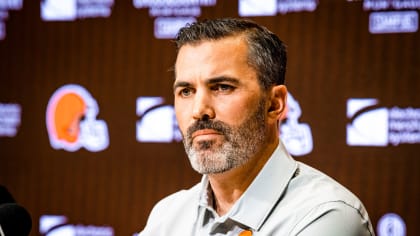
Fans compared his performance to that of Tennessee quarterback Cam Ward, who struggled through one of his weakest outings of the year.
Sanders outshined him in every category, moving fluidly through reads, staying composed under pressure and showing the accuracy and touch that scouts once raved about during his days at Jackson State and Colorado.
Ward managed only 117 passing yards, while Sanders repeatedly answered adversity with brilliance, demonstrating exactly why some believed he should have been a top-five draft pick.
The Titans, a struggling team sitting at 1–11, were stunned every time Sanders stepped forward and cut into the lead, giving Cleveland faithful renewed hope each time he touched the ball.
What made the loss more infuriating was the sheer incompetence displayed by the rest of the Browns roster.
Missed tackles, blown coverages, fumbles, special-teams breakdowns and penalties created a snowball effect of self-inflicted damage.
Even as Sanders kept producing, the team dug itself into deeper holes.
A blocked punt, a brutal fumble by Tennessee that should have tilted momentum toward Cleveland but didn’t, and a defensive meltdown in the first half left Sanders with one impossible situation after another.
Through all of it, he refused to quit, refused to collapse and kept elevating his team even as the odds piled up in absurd fashion.

As the game slipped away, fans began directing their fury not at Sanders, but at the man overseeing him.
They questioned why the Browns seemed reluctant to embrace the quarterback who had clearly ignited the offense and sparked life into a failing season.
They recalled how Stefanski once clashed with Baker Mayfield and wondered whether history was repeating itself with a new young talent.
The sight of Sanders standing on the sideline as the biggest play of the game unfolded without him became the most talked-about moment of the night, symbolizing everything that frustrated fans about the coach’s philosophy and decision-making.
By the time the final whistle blew, social media was ablaze with anger, disbelief and demands for accountability.
Many believed Sanders had earned the chance to finish the comeback he had engineered with brilliance and heart.
Instead, they were left with a crushing sense of what could have been — a rookie stealing the show, dragging a broken team to an inspiring comeback, rewriting the narrative of the Browns season.
Instead, that moment was handed away by a coach who, in the eyes of fans, showed more ego than faith, more stubbornness than trust.
Sanders walked off with his head high, but the sting of the decision hung in the cold air.
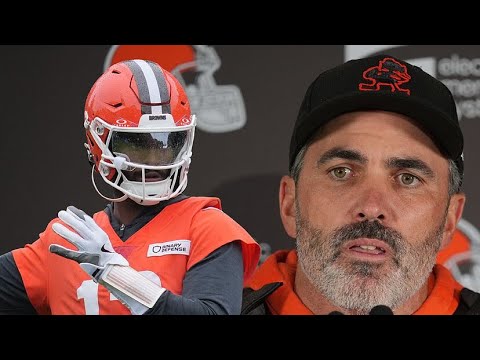
In the aftermath, the conversation shifted from the loss to something bigger: the future of the franchise itself.
People wondered whether the Browns could move forward with a coach who seemed unwilling to empower the player who had given them the best spark they’d seen in years.
Sanders had proven he could lead, could fight, could elevate a collapsing team, but the question was whether he could do it under a system that didn’t fully believe in him.
As fans demanded change and analysts dissected every second of the game, one truth stood brighter than the scoreboard: the Browns had found their quarterback, but their biggest obstacle might not be the opponents on the field — it might be the man calling the plays.
News
The Song that Bob Dylan Wrote About Elvis Presley
Bob Dylan and Elvis Presley are two of the most legendary figures in American music history. One is known as…

Raul Malo, Lead Singer of The Mavericks, has died at age 60
The music world is mourning the loss of Raul Malo, the charismatic lead singer of The Mavericks, who passed away…
At 69, Steve Perry Confessed This Was the Song He Couldn’t Finish
Steve Perry’s voice is one of rock’s most iconic and enduring sounds. As the lead singer of Journey, he gave…

Top 6 SHOCKING Things Axl Rose Said About Other Rock Legends!
Axl Rose, the legendary frontman of Guns N’ Roses, is known not only for his iconic voice and music but…

‘You Had ONE Job!’ How Powerman 5000 FUMBLED a Platinum Future
Powerman 5000’s story is one of bold creativity, underground buzz, and a dramatic crossroads that nearly derailed their ascent to…

‘He Knew Last Show Would Kill Him’ Ozzy Osbourne’s Final Moments | Sharon Osbourne Interview
Ozzy Osbourne, the legendary rock icon, cultural pioneer, and beloved family man, gave his final performance knowing it might be…
End of content
No more pages to load






