
When legendary KISS guitarist Ace Frehley died on October 16 at age 74 after a devastating fall in his New Jersey home studio, the rock community was united in grief.

Tributes from fans, musicians, and industry veterans poured in honoring the original “Space Ace,” a man whose riffs, persona, and musical identity helped define one of the most iconic bands in rock history.
The official medical examiner’s report was clear: Frehley died from accidental blunt force trauma to the head, the result of a tragic fall that caused multiple skull fractures and a catastrophic brain bleed.
His family made the agonizing decision to remove life support days later.
But in the weeks since the accident, the mourning process has been disrupted by a storm of controversy—one triggered not by rumor or speculation, but by comments made by one of Frehley’s oldest bandmates, Gene Simmons.
In a new interview with the New York Post, Simmons suggested that Frehley’s death was not simply the result of an accidental fall.
Instead, he claimed the tragedy stemmed from a lifetime of what he called “bad decisions.
” Within hours, outrage erupted across social media, fan forums, and rock news outlets, with many calling Simmons’s remarks insensitive, misleading, and even cruel.
The backlash has only intensified in the days following—particularly because it comes at a moment when KISS is being celebrated on one of the largest stages in American culture: the Kennedy Center Honors.
While Simmons and Paul Stanley were smiling for cameras in the Oval Office with President Trump, a segment of the fanbase was grappling with what they view as a shockingly disrespectful narrative surrounding Frehley’s death.

Before the controversy erupted, the story of Ace Frehley’s final days appeared straightforward and deeply tragic.
Frehley reportedly fell in his home studio, suffering extensive head trauma.
Paramedics transported him to the hospital, where doctors discovered severe fractures and a brain bleed.
Despite being placed on a ventilator, his condition did not improve.
The family’s statement emphasized the suddenness and unavoidable nature of the accident.
The medical examiner’s findings matched the initial reports: accidental traumatic injury.
No foul play.
No suggestion of substance involvement.
No ambiguity.
Yet Simmons’s comments pushed past the official findings and opened the door to a different, more contentious narrative.
In the Post interview, Gene Simmons delivered a line that immediately set the rock world ablaze:
“Falling down the stairs, I’m not a doctor, doesn’t kill you. There may have been other issues, and it breaks my heart.”
The implication was unmistakable: Simmons believed Frehley’s fall was not purely accidental.
He went on to blame “bad decisions” and a refusal to accept advice from loved ones:
“Ace refused advice from people who cared about him, including yours truly, to try to change his lifestyle in and out of bad decisions.”

To many listeners, this sounded as though Simmons was hinting that substance abuse—long the subject of criticism and conflict between the two musicians—played a role in Frehley’s death.
But toxicology reports have not yet been released to the public, and Frehley’s family continues to insist that the fall was unrelated to past issues and was, quite simply, an accident.
Context is everything—and Simmons and Frehley’s relationship has been tumultuous for decades.
Simmons has long accused Frehley of being unreliable, unprofessional, and held back by drug and alcohol use.
Frehley, for his part, maintained that he had been sober for more than a decade and repeatedly pushed back on what he called unfair and outdated character attacks.
Their public disagreements were frequent and often bitter, yet in quieter moments both men acknowledged the deep musical bond formed during KISS’s early rise.
Simmons and Stanley both attended Frehley’s private funeral, and Simmons described the moment as “heartbreaking.”
That context makes Simmons’s new remarks even more controversial.
Critics argue that the timing—so soon after the funeral and before the family has released full details—makes the comments inappropriate at best and exploitative at worst.

Gene Simmons is no stranger to controversy.
In 2016, following Prince’s death, he sparked fury by calling the musician’s passing “pathetic” and framing it as the consequence of drug use.
Paul Stanley publicly condemned Simmons at the time, calling his comments “cold, clueless, and self-serving.” Simmons later apologized.
Now, eight years later, Simmons has reignited a nearly identical debate.
Across social media, fans accused him of moralizing a tragedy, shaming a deceased bandmate, and undermining the family’s official account.
Many argued that age—not “bad decisions”—is the most statistically likely factor in fatal falls.
Others questioned why Simmons felt compelled to speculate publicly before toxicology results were even available.
One fan wrote: “Ace isn’t here to defend himself. These comments feel like rewriting someone’s life story the moment they’re gone.”
Another said: “If you claim to love Ace, you don’t say this about him weeks after his funeral.”
Rock journalists and podcasters also chimed in, noting that Simmons’s comments could “muddy” Frehley’s legacy at the very moment the world should be honoring it.
Several pointed out the contradiction between KISS celebrating a career-defining honor while simultaneously facing fan anger over one of their founding members’ deaths.
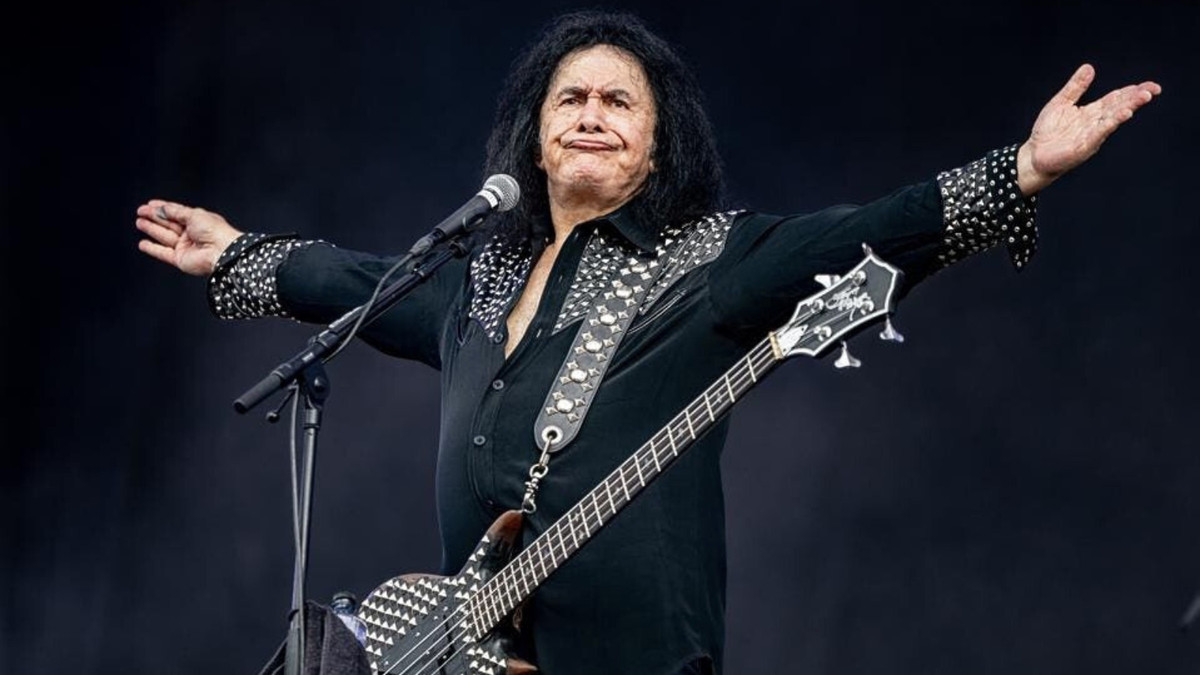
Simmons framed his comments as a cautionary tale, emphasizing that he has never used drugs or alcohol and that he sees substance abuse as a common contributing factor in rock-and-roll deaths.
He argued that lifestyle choices compound over time, creating a chain of circumstances that can eventually lead to tragedy.
But critics note that Simmons offered no evidence, spoke before toxicology results were released, and contradicted the official cause of death.
For many, this raised questions about whether the comments reflected concern, frustration, long-standing resentment—or simply poor judgment.
Regardless of the controversy, what remains indisputable is that Ace Frehley lived a long, complex, and influential life.
His guitar work shaped the sound and identity of KISS.
His character—the “Space Ace”—became one of the most beloved personas in rock.
And despite personal struggles, he maintained devoted fan loyalty for nearly fifty years.
The tragedy of his death lies not only in the accident itself, but in the renewed public conflict now orbiting his memory.
Many fans believe the moment calls for unity, empathy, and respect—not speculation or insinuation.
As the toxicology results remain pending and the backlash continues to unfold, one question lingers over the rock community:
Was Gene Simmons “just being honest,” or did he go too far?
For now, the debate rages on—and Ace Frehley’s legacy rests at the center of a storm he never asked for and cannot answer.
News
The Song that Bob Dylan Wrote About Elvis Presley
Bob Dylan and Elvis Presley are two of the most legendary figures in American music history. One is known as…
Raul Malo, Lead Singer of The Mavericks, has died at age 60
The music world is mourning the loss of Raul Malo, the charismatic lead singer of The Mavericks, who passed away…
At 69, Steve Perry Confessed This Was the Song He Couldn’t Finish
Steve Perry’s voice is one of rock’s most iconic and enduring sounds. As the lead singer of Journey, he gave…
Top 6 SHOCKING Things Axl Rose Said About Other Rock Legends!
Axl Rose, the legendary frontman of Guns N’ Roses, is known not only for his iconic voice and music but…
‘You Had ONE Job!’ How Powerman 5000 FUMBLED a Platinum Future
Powerman 5000’s story is one of bold creativity, underground buzz, and a dramatic crossroads that nearly derailed their ascent to…
‘He Knew Last Show Would Kill Him’ Ozzy Osbourne’s Final Moments | Sharon Osbourne Interview
Ozzy Osbourne, the legendary rock icon, cultural pioneer, and beloved family man, gave his final performance knowing it might be…
End of content
No more pages to load






