
The story of Gram Parsons is a tragic and fascinating chapter in the history of American music, one that intersects with the wild, chaotic, and ultimately deadly Altamont Free Concert of 1969.

Bernie Leadon, founding member of the Eagles and former Burritos bandmate of Parsons, offers an insider’s perspective on the enigmatic Gram Parsons and the unforgettable chaos that surrounded the Altamont festival, an event that many consider the dark end of the 1960s counterculture era.
Bernie Leadon recalls Gram Parsons as a man of contradictions — brilliant, mysterious, and deeply influenced by his Southern roots.
Parsons hailed from Waycross, Georgia, and his family had a history marked by tragedy and alcoholism.
Yet Parsons was also a Harvard dropout who tried to escape conventional life and immerse himself in the burgeoning country rock scene.
Parsons’ personality carried the mystique of the Deep South, with its Spanish moss, live oaks, and a hint of melancholy.
His music reflected this complex heritage, blending country, rock, and soul in a way that was ahead of its time.
He formed the International Submarine Band in Boston before moving to Los Angeles, where he joined forces with Chris Hillman to create The Flying Burrito Brothers, a band that would pioneer the country rock genre.
Leadon paints a vivid picture of the Burritos’ early days, including the infamous story of their extravagant Nudie suits.
These custom-made outfits were covered in marijuana leaves, pills, and sequins — a bold fashion statement that symbolized their rebellious spirit.
However, the band’s dedication to style often overshadowed their rehearsal time, resulting in performances that were more spectacle than substance.

Bernie recounts seeing the band at an open mic night at the Troubadour, where their dazzling appearance contrasted sharply with their lackluster musicianship.
This moment stuck with Leadon as a lesson in how image and reality can diverge dramatically in the music business.
Altamont was meant to be a West Coast answer to Woodstock, a massive free concert featuring some of the biggest names in rock.
But unlike Woodstock’s peaceful vibe, Altamont descended into chaos.
The concert was hastily moved to a makeshift venue — reportedly a dirt track speedway — with no infrastructure, no toilets, and no real security plan.
Bernie Leadon recalls the logistical nightmare: traffic jams miles long, fans abandoning cars on the freeway, and a general sense of confusion.
The Rolling Stones, headlining the event, had hired the Hell’s Angels motorcycle club as security — a decision that would prove catastrophic.
The Hell’s Angels were drunk, violent, and ill-equipped for crowd control.
Leadon describes how they rode their motorcycles through the crowd, intimidating fans and even attacking performers.
Marty Balin of Jefferson Airplane was beaten on stage by the Angels wielding pool cues, a shocking moment that underscored the festival’s descent into violence.

Leadon recounts the surreal atmosphere as the Stones played “Sympathy for the Devil” with the Hell’s Angels looming ominously nearby.
The tension was palpable, and the Angels seemed ready to pounce on the skinny British rockers at any moment.
The darkest moment of Altamont was the fatal stabbing of Meredith Hunter by a Hell’s Angel right in front of the stage.
This brutal act was captured in the documentary *Gimme Shelter* and symbolized the violent end of the 1960s idealism.
For many, Altamont marked the death knell of the peace-and-love counterculture.
Bernie Leadon’s reflections emphasize how unprepared everyone was for the scale and intensity of the event.
Unlike Woodstock, which had some semblance of organization, Altamont was a “wild west” free-for-all with disastrous consequences.
Parsons himself was caught in the whirlwind of the Burritos’ chaotic lifestyle.
Leadon explains that Parsons was drifting away from the band, more interested in hanging out with the Rolling Stones and their circle than in rehearsals or band commitments.
This behavior eventually led to Parsons being dropped from the Burritos.
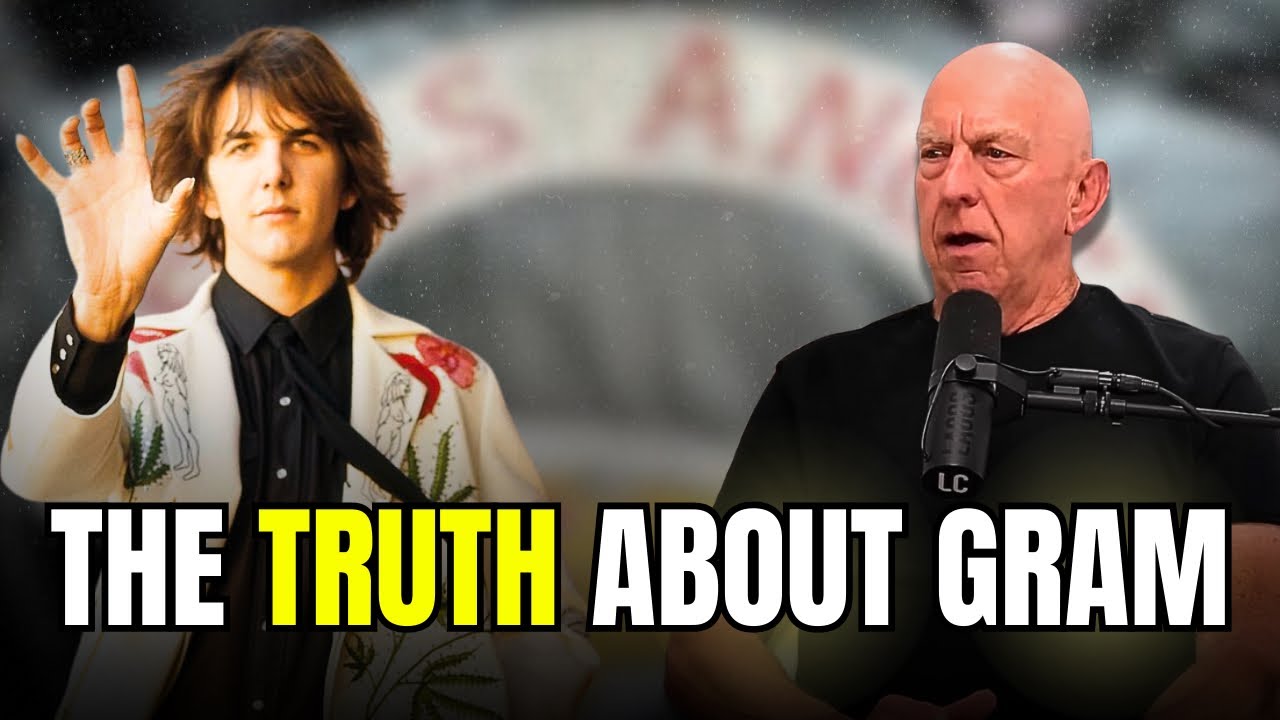
Despite this, Parsons’ influence on country rock was undeniable, and his tragic early death at 26 only added to his mythic status.
Leadon’s account provides a humanizing glimpse into Parsons’ struggles and the turbulent times he lived in.
The Altamont disaster remains a cautionary tale about the dangers of poor planning, unchecked violence, and the limits of the 1960s counterculture dream.
Gram Parsons’ story, intertwined with this event, reminds us of the fragile line between genius and self-destruction.
Bernie Leadon’s interview shines a light on the complex personalities and chaotic events that shaped a pivotal moment in rock history, offering fans and historians alike a deeper understanding of what really went down at Altamont and the legacy of one of country rock’s most enigmatic figures.
News
The Song that Bob Dylan Wrote About Elvis Presley
Bob Dylan and Elvis Presley are two of the most legendary figures in American music history. One is known as…
Raul Malo, Lead Singer of The Mavericks, has died at age 60
The music world is mourning the loss of Raul Malo, the charismatic lead singer of The Mavericks, who passed away…
At 69, Steve Perry Confessed This Was the Song He Couldn’t Finish
Steve Perry’s voice is one of rock’s most iconic and enduring sounds. As the lead singer of Journey, he gave…
Top 6 SHOCKING Things Axl Rose Said About Other Rock Legends!
Axl Rose, the legendary frontman of Guns N’ Roses, is known not only for his iconic voice and music but…
‘You Had ONE Job!’ How Powerman 5000 FUMBLED a Platinum Future
Powerman 5000’s story is one of bold creativity, underground buzz, and a dramatic crossroads that nearly derailed their ascent to…
‘He Knew Last Show Would Kill Him’ Ozzy Osbourne’s Final Moments | Sharon Osbourne Interview
Ozzy Osbourne, the legendary rock icon, cultural pioneer, and beloved family man, gave his final performance knowing it might be…
End of content
No more pages to load






