
For decades, fans and music historians have speculated about the songs that truly moved John Lennon during his final, quieter years—those long, reflective days when he stepped away from fame, fathered a young child, baked bread in his apartment, and listened to the radio with the kind of gentleness the world never expected from him.
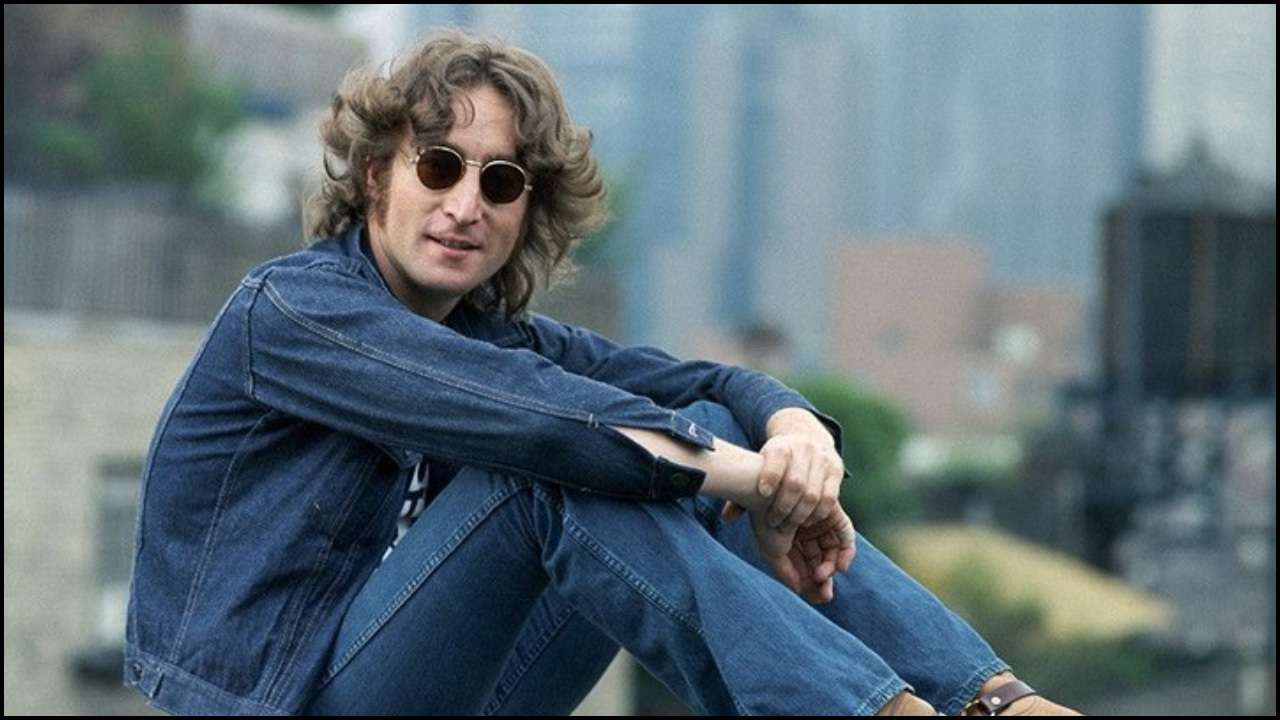
Lennon was famously impossible to impress, brutally honest, and often merciless when judging contemporary music.
Yet according to biographer Albert Goldman, there was one song that slipped past his defenses and sunk deeply into his private emotional world—a song not from a rock legend, not from a chart-dominating American band, but from a group of Australian soft-rock musicians whose biggest hit was written in under half an hour.
That song was “Reminiscing” by Little River Band, a dreamy, velvet-soft nostalgia trip created by songwriter Graham Goble, whose imagination—rather than his lived experience—built every glowing piece of it.
The irony is almost too perfect: “Reminiscing,” a song about prom nights, sweet dances, gentle streetlamps, and foggy, romantic evenings, was written by a man who had never lived any of it.
Goble never had a prom date, never danced with a girl on a ballroom floor, never walked someone home under the moonlit sky he described so vividly.
Instead, he built the entire world of the song from the black-and-white films he adored: Fred Astaire gliding through a dreamy dance number, Ginger Rogers glowing under the soft haze of studio lighting, couples strolling down beautifully lit streets as the night wrapped around them like silk.
Goble watched those scenes and longed for a life he never had, a life he could only give himself through music.
And in one extraordinary burst of inspiration, he poured that imagined world into a melody that arrived almost fully formed, its lyrics, phrasing, and emotional core tumbling out in less than thirty minutes.

What makes the story even stranger is that a conservatory-trained musician later told Goble that the chord progression in “Reminiscing” had never appeared in a song before.
He hadn’t studied complex jazz techniques or attempted to engineer a masterpiece.
He simply heard the structure in his head and wrote it down.
His rhythmic phrasing, unconsciously inspired by Cole Porter’s hypnotic single-note lines in songs like “Night and Day,” fused effortlessly with his unusual chords, creating a kind of musical magic he couldn’t explain.
It was timeless, dreamy, and instantly evocative—yet Goble himself had no idea he’d just written something extraordinary.
Little River Band recorded “Reminiscing” not once, not twice, but three times, struggling to find the right tone.
Only when keyboardist Peter Jones added the warm, shimmering Rhodes part did the track click into place.
But even then, the miracle was far from complete.
When the finished album Sleeper Catcher reached Capitol Records, the executives listened, frowned, and announced the devastating verdict: There are no singles here.
For five long weeks, the band waited in disbelief as the label insisted they “couldn’t hear a hit.” The song that would become their global signature was rejected outright.
Only when a New York office representative insisted the company was making a massive mistake did Capitol reluctantly release the track—more out of resignation than enthusiasm.
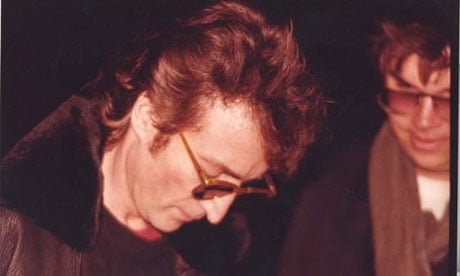
Then everything changed.
The song exploded onto the airwaves, climbing the charts, enchanting radio programmers, and ultimately becoming one of the most-played songs in American music history.
Its soft glow, like a warm film reel looping forever in the mind, resonated deeply with listeners who recognized their own memories—or fantasies—in its imagery.
And somewhere in New York, inside a quiet apartment where a former Beatle was living the most private chapter of his life, “Reminiscing” played and kept playing.
According to Albert Goldman, Lennon adored the song.
Not casually.
Not politely.
Deeply.
He listened to it repeatedly, drawn to its gentleness and its wistful dream of youth.
It may seem odd—a man who helped reinvent modern music falling in love with a soft, nostalgic tune from a band outside his own era and scene.
But when you peel back his public persona, Lennon’s connection to “Reminiscing” begins to make perfect emotional sense.
Lennon spent his later life searching for peace, tenderness, and a sense of safety he rarely felt as a young man.
His childhood was fractured.
His fame was suffocating. His relationships were turbulent.
And while he eventually built a quieter life, the longing for innocence—for a simpler, softer world—never left him.
Goble’s imaginary America, all glowing lampposts and gentle goodbyes, became a dreamscape Lennon could slip into.
Both men, in a sense, were outsiders to their own fantasies.
Goble wrote about a world he never experienced. Lennon listened to a world he wished he could have lived in.
Their longing intersected inside a single piece of music that neither could have predicted would resonate so powerfully.
Meanwhile, the band’s success didn’t stop with “Reminiscing.” They followed it with “Lady,” another massive hit that almost didn’t happen because lead singer Glenn Shorrock openly disliked the song.
Goble had pushed it forward for album after album, only to be rejected each time—until Sleeper Catcher had one open track left and the producer finally agreed to include it.
Shorrock reluctantly recorded the vocals, and the song became equally iconic, cementing Little River Band’s place in soft-rock history.
And yet, through all their hits, millions of fans, and decades of airplay, nothing compares to the surreal legacy of “Reminiscing”—a song born from longing, recorded against resistance, nearly buried by executives, yet beloved by everyday listeners and, astonishingly, by one of the greatest songwriters the world has ever known.
It remains a piece of music suspended in golden light, untouched by time, floating somewhere between what was real and what was dreamed.
It is a song for those who ache for beauty, for youth, for gentleness, and even for memories they never actually had.
Perhaps that is why John Lennon loved it.
Perhaps that is why the song endures.
And perhaps that is why, decades later, “Reminiscing” still feels like a warm doorway into a softer world—one that never existed, yet somehow belongs to all of us.
News
The Song that Bob Dylan Wrote About Elvis Presley
Bob Dylan and Elvis Presley are two of the most legendary figures in American music history. One is known as…

Raul Malo, Lead Singer of The Mavericks, has died at age 60
The music world is mourning the loss of Raul Malo, the charismatic lead singer of The Mavericks, who passed away…

At 69, Steve Perry Confessed This Was the Song He Couldn’t Finish
Steve Perry’s voice is one of rock’s most iconic and enduring sounds. As the lead singer of Journey, he gave…

Top 6 SHOCKING Things Axl Rose Said About Other Rock Legends!
Axl Rose, the legendary frontman of Guns N’ Roses, is known not only for his iconic voice and music but…

‘You Had ONE Job!’ How Powerman 5000 FUMBLED a Platinum Future
Powerman 5000’s story is one of bold creativity, underground buzz, and a dramatic crossroads that nearly derailed their ascent to…

‘He Knew Last Show Would Kill Him’ Ozzy Osbourne’s Final Moments | Sharon Osbourne Interview
Ozzy Osbourne, the legendary rock icon, cultural pioneer, and beloved family man, gave his final performance knowing it might be…
End of content
No more pages to load






