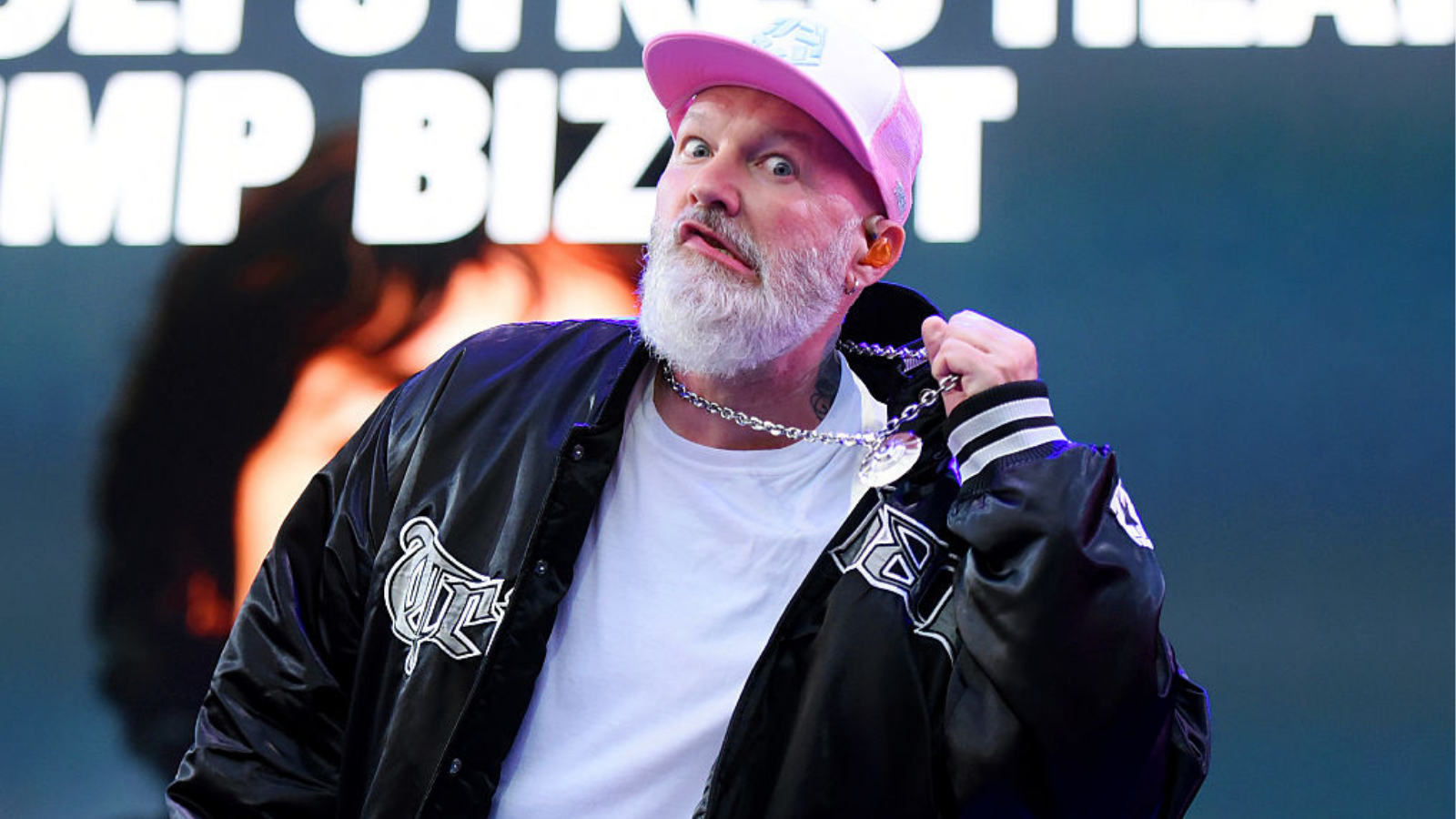
In an unexpected and controversial move, the Estonian government has officially canceled Limp Bizkit’s scheduled concert in Estonia, set for May 31st next year.
This decision has ignited a firestorm of discussion about censorship, political influence over art, and the consequences of past actions on present opportunities.

What exactly happened, and why did a government step in to halt a widely anticipated music event? The story is as complex as it is dramatic, involving a decade-old controversy tied to the band’s frontman, Fred Durst, and the sensitive geopolitical tensions surrounding Russia and Ukraine.
The announcement came shortly after the concert was publicly revealed on November 7th by the promoter Baltic Live Agency.
The statement was brief and corporate in tone, citing “circumstances beyond the organizer’s control” as the reason for the cancellation.
However, behind this vague explanation lies a politically charged decision made by Estonia’s government officials.
Estonia’s Minister of Foreign Affairs publicly condemned Fred Durst for his past support of Russia’s annexation of Crimea, a region that remains a flashpoint in international relations.
The minister stated clearly that individuals who justify Russia’s aggression and occupation have no place on Estonian stages or in its cultural spaces.
This stance led to immediate pressure on the promoters, who ultimately had to cancel the show despite strong local demand.
The controversy centers on Fred Durst’s actions and statements from around a decade ago.
Between 2012 and 2019, Durst was married to a Ukrainian-born woman and spent significant time in the region amid the escalating conflict between Russia and Ukraine.
In 2015, Durst was seen at a show holding a sign that read “Crimea equals Russia,” a clear endorsement of Russia’s claim over the annexed territory.

Further fueling the fire, Durst reportedly wrote a letter to Crimean authorities expressing his desire to move there and obtain a Russian passport.
In that letter, he praised Vladimir Putin as “a great guy with clear moral principles and a nice person.
” These remarks led to Durst being banned from entering Ukraine for five years, a sanction that has only recently expired.
To many, these actions were seen as an endorsement of Russian aggression, making Durst a deeply controversial figure in Eastern Europe.
For Estonia, a country that shares a border with Russia and has its own history of Soviet occupation, such views are particularly sensitive and politically charged.
Limp Bizkit’s canceled concert is not an isolated incident.
Over the past year, there has been a noticeable increase in government interference in live music events across Europe.
Bands like Disturbed and Marilyn Manson have also faced cancellations due to political pressure related to their members’ past or present statements.
This trend raises important questions about freedom of expression and the role governments should play in regulating cultural events.
While some argue that public figures must be held accountable for their views, others see these cancellations as dystopian censorship that punishes artists for past mistakes without considering their current stance or growth.

The Baltic Live Agency initially attempted to defend their decision to book Limp Bizkit, suggesting that Durst’s views were shaped by living in a “distorted information bubble” during his marriage to a Russian Crimean woman.
However, this explanation failed to appease government officials, who maintained a firm stance against allowing Durst to perform.
Fans in Estonia and beyond have expressed frustration and disappointment.
Many were eager to see Limp Bizkit perform live, with ticket sales reportedly strong.
The cancellation has left a void in the local music scene and sparked debate on social media about the fairness of punishing artists for decade-old opinions.
As of the latest updates, Fred Durst has not publicly responded to the cancellation or addressed his past comments in the context of this controversy.
It remains unclear whether he has changed his views or regrets the statements that led to his ban from Ukraine and now the cancellation of the Estonian show.
The lack of dialogue between Durst and the Estonian authorities has only intensified the situation, leaving fans and observers wondering if there is any path toward reconciliation or understanding.
The Limp Bizkit incident highlights the increasingly complex intersection of art, politics, and accountability in the modern world.
Artists often face scrutiny not only for their creative output but also for their personal beliefs and past actions.
While holding public figures accountable is important, the question remains: where should the line be drawn?
Should artists be permanently blacklisted for statements made years ago, especially if they have not reiterated those views? Or does a government’s duty to protect its cultural and political integrity justify such measures?
The cancellation of Limp Bizkit’s concert in Estonia serves as a stark reminder that in today’s hyper-connected and politically sensitive world, past actions can have long-lasting consequences.
It also shines a light on the growing role of governments in cultural censorship and raises critical questions about artistic freedom.
For fans, it’s a bitter pill to swallow, losing the chance to experience live music due to political conflicts beyond their control.
For musicians, it’s a cautionary tale about the power of words and the enduring impact of public statements.
As this story continues to unfold, all eyes will be on Limp Bizkit and Fred Durst to see if they address the controversy and how the music industry will navigate the delicate balance between free expression and political accountability in the years ahead.
News
The Rise and Fall of Creedence Clearwater Revival: From 9 Top 10 Hits to Brothers at War
Creedence Clearwater Revival (CCR) remains one of the most iconic American rock bands, known for their raw, rhythm-and-blues-infused sound that…
🗞️ RAIDERS IN SHOCK AS PETE CARROLL GOES “BRUTALLY HONEST” ABOUT SHEDUR SANDERS’ FIRST NFL START — LOCKER ROOM REACTS, FANS MELT DOWN, AND A NEW CONTROVERSY EXPLODES IN LAS VEGAS 🔥😱
In Las Vegas, where chaos always lives just under the surface, the Raiders were hit with a new kind of…
At 75, Lou Gramm FINALLY Reveals Why He Couldn’t Work With Mick Jones
Lou Gramm, the iconic voice behind Foreigner’s biggest hits, has spent decades in the spotlight, thrilling millions with anthems like…
🐿️ Cleveland in Chaos as Rookie Shocking Surge Triggers QB Controversy the Franchise Never Saw Coming — and the Browns’ Future Suddenly Hangs on a Decision Nobody Wants to Make 💔🔥
The Cleveland Browns, a team already staggering under the weight of bruised expectations and a restless fanbase, now find themselves…
They Had Platinum Records—But Zero Respect for Each Other
The story of Dokken is not just about hit records and sold-out tours. Behind the glitz and glam of 1980s…

🐿️ CLEVELAND ERUPTS IN SHOCK AS SHEDUR SANDERS SEIZES THE BROWNS STARTING JOB — AND FANS SAY THE FRANCHISE WILL NEVER BE THE SAME
For a team that has lived through more heartbreak, quarterback chaos, and gut-wrenching what-ifs than any franchise deserves, the Cleveland…
End of content
No more pages to load