
Before Poison was selling out arenas and signing autographs with Sharpies, they were just four broke guys in makeup, sharing motel rooms and dreaming big.
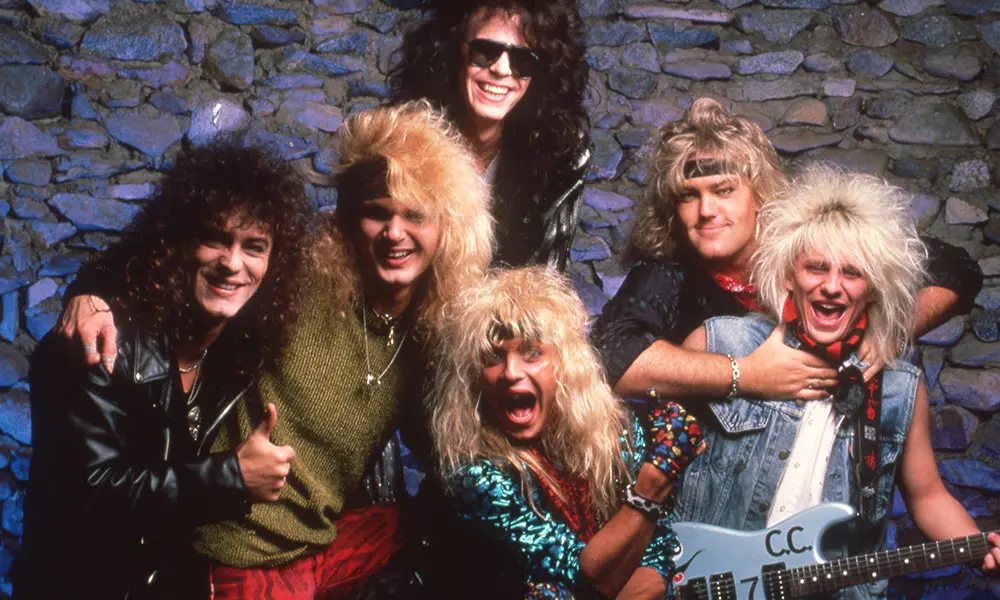
Their story is not just a rise to fame but a wild, glitter-coated train wreck that somehow stayed on track long enough to challenge rock music forever.
In the summer of 1985, three-quarters of Poison packed their dreams, spandex, and whatever wasn’t already stained with burger grease into a Ford Pinto and headed west.
The car was notorious for its mechanical issues, and fittingly, it wheezed its last breath right as they hit the Sunset Strip—an iconic hub for aspiring rock stars in Los Angeles.
Back in Pennsylvania, Poison had been playing bars that no one cared about, performing cover songs for drunk crowds who probably thought originals were just mistakes.
But Poison wanted more than just to play covers—they wanted fame, money, hit records, and maybe a Christmas without ramen noodles.
LA was the promised land, offering better weather and more women running around half-naked, which sealed the deal for the band.
The Sunset Strip was crawling with guitar slingers and addicts, all fighting for the same dream.
Poison found cheap holes to live and rehearse in—warehouses, condemned buildings, even a place behind a dry cleaner’s where bleach mixed with ambition and mildew.
The original guitarist, Matt Smith, left early on due to real-life responsibilities—his girlfriend got pregnant, and he chose to support his family over rock stardom.
Enter auditions.

Slash, who would later become the legendary Guns N’ Roses guitarist, auditioned and played every Poison song perfectly.
But Poison wanted a single guitar player, not a dual setup, so Slash was shown the door.
Then came CC Deville, who walked in like he already owned the band.
Unlike Slash, CC didn’t play their songs note for note; he hammered out a sleazy, punchy riff that nobody had heard before—the riff that would become “Talk Dirty to Me.
” Though initially disliked by some band members, CC’s unique sound and look fit perfectly with Poison’s image, and they knew they had a hit on their hands.
Poison’s look was wild—more makeup than a Revlon factory explosion, hair so big it needed FAA clearance, and outfits that screamed glam metal to the core.
They looked like a messy one-night stand between the New York Dolls and Duran Duran.
Their image was provocative, designed to offend and stand out, and it worked.
However, their music career started with rejection.
Capitol Records slammed the door on them multiple times, scared off by their eyeliner and boldness.
But Poison refused to dial it down.
Instead, they doubled down on their image and sound, determined to do it themselves.
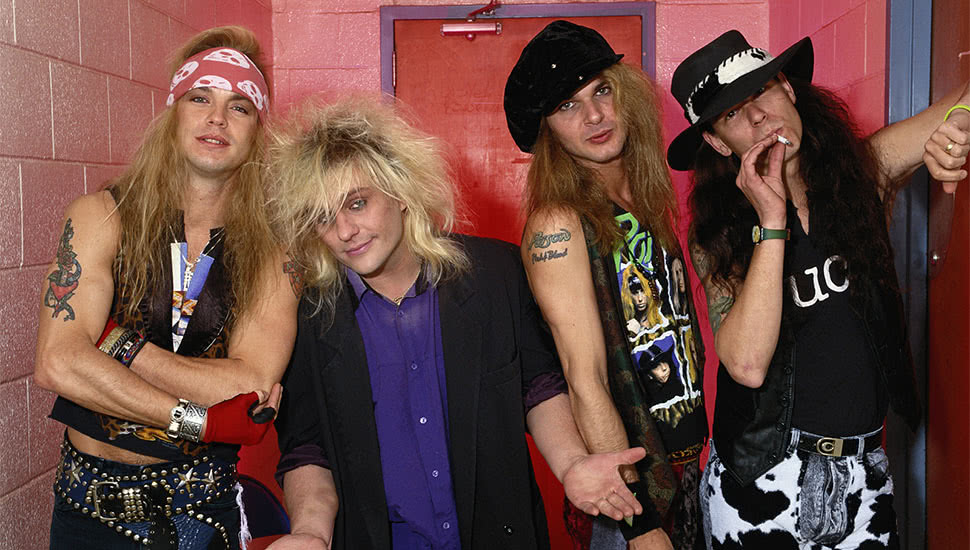
With no money or plan, Poison connected with Rick Brown, a wild-card producer linked to the band through CC Deville’s girlfriend.
The music industry in the 1980s was a cocaine-fueled Craigslist, and Poison booked studio time with a budget that barely covered a used van—just eight days and $23,000 to record their debut album.
The recording process was chaotic but filled with raw energy.
Producer Rick Brown wanted to slow down “Talk Dirty to Me” to a power ballad tempo, but the band resisted fiercely.
For Poison, that riff was “cocaine in audio form,” a fast, fiery burst of energy that couldn’t be tamed.
Rick also taunted the band by praising Guns N’ Roses as better, but Poison used that as motivation to push harder.
The final album was not polished; it was a wrecking ball of glitter, ego, and rage—a sonic hand grenade pulled with reckless abandon.
Capitol Records had passed on Poison, but Enigma Records, a smaller label, took a chance.
The album cover screamed glam with four headshots that looked like drag show royalty after a Sephora bender, complete with glitter, gloss, and teased hair.

Poison sold 30,000 copies of “Look What the Cat Dragged In” on their own, with no major promotion or radio push—just pure hustle and a lot of hairspray.
Eventually, Capitol Records snapped up the rights and pushed the album hard, as if they had believed in Poison all along.
Singles like “Cry Tough,” “Talk Dirty to Me,” and “I Won’t Forget You” hit hard.
“Talk Dirty to Me” featured a catchy guitar solo by CC Deville that would influence bands like Jimmy Eat World.
The album went triple platinum, selling over three million copies.
Brett Michaels, Poison’s lead singer, famously said they weren’t trying to make a masterpiece but a soundtrack to the party before the party—a record for getting ready to do shots and make bad decisions.
“Look What the Cat Dragged In” didn’t just define glam metal; it embodied it.
It was glitter, guts, and guitar solos you could airplay while chugging a beer.
But behind the success was the typical rockstar cocktail of booze, blow, and breakdowns.
Internal tensions grew, especially between Brett Michaels and CC Deville, whose arguments were legendary for their intensity.
The band’s lifestyle took its toll, culminating in a car accident that injured bassist Bobby Dall and eventually led to CC Deville’s departure.
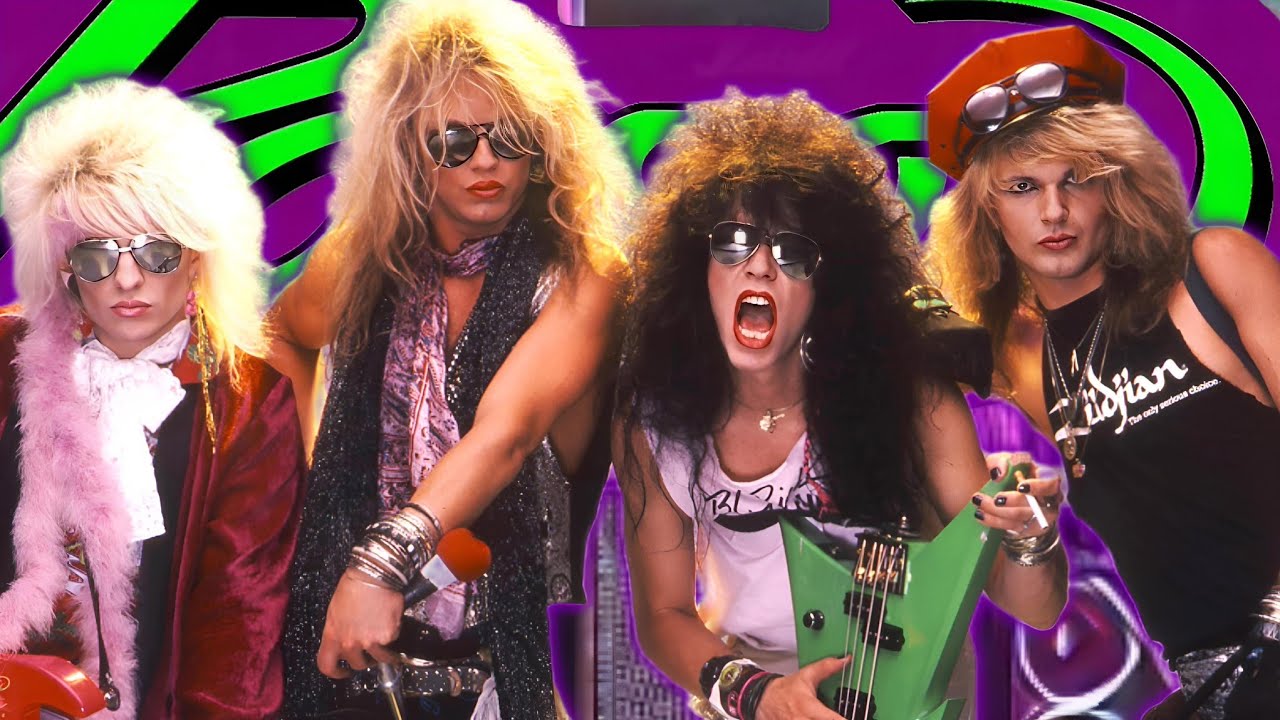
Though glam rock’s popularity waned and Poison faced setbacks, their fans never forgot.
Nostalgia brought the band back into the spotlight, and their influence on rock music remains undeniable.
Poison didn’t follow trends—they hijacked them, spray-painted the van neon pink, and drove it straight through the gates of rock snobbery.
Their unapologetic glam look and loud, fun music opened doors for bands who wanted rock to be fun again—dangerous, loud, a little stupid, but a whole lot of fun.
They influenced not just a sound but a way to exist, proving that rock could be more than serious introspection—it could be a wild, glitter-coated party that left a lasting mark on the music world.
News
The Song that Bob Dylan Wrote About Elvis Presley
Bob Dylan and Elvis Presley are two of the most legendary figures in American music history. One is known as…

Raul Malo, Lead Singer of The Mavericks, has died at age 60
The music world is mourning the loss of Raul Malo, the charismatic lead singer of The Mavericks, who passed away…

At 69, Steve Perry Confessed This Was the Song He Couldn’t Finish
Steve Perry’s voice is one of rock’s most iconic and enduring sounds. As the lead singer of Journey, he gave…
Top 6 SHOCKING Things Axl Rose Said About Other Rock Legends!
Axl Rose, the legendary frontman of Guns N’ Roses, is known not only for his iconic voice and music but…
‘You Had ONE Job!’ How Powerman 5000 FUMBLED a Platinum Future
Powerman 5000’s story is one of bold creativity, underground buzz, and a dramatic crossroads that nearly derailed their ascent to…
‘He Knew Last Show Would Kill Him’ Ozzy Osbourne’s Final Moments | Sharon Osbourne Interview
Ozzy Osbourne, the legendary rock icon, cultural pioneer, and beloved family man, gave his final performance knowing it might be…
End of content
No more pages to load






