
In 1983, Metallica unleashed *Kill ’Em All*, an album that would not only define their career but also set the cornerstone for the entire thrash metal genre.

But the path to releasing this groundbreaking record was anything but smooth.
From financial struggles and lineup chaos to tense studio sessions and creative battles, the making of *Kill ’Em All* was a story of sheer grit, raw energy, and relentless determination.
The journey began in earnest in 1982 when Metallica was still searching for the right bassist to complete their lineup.
Enter Cliff Burton, who was then playing with his band Trauma in San Francisco.
James Hetfield and Lars Ulrich caught one of his gigs at the legendary Whisky a Go Go and were blown away by Burton’s bass solo skills, especially a piece that would later become the iconic “Anesthesia (Pulling Teeth).
” Burton was already feeling disillusioned with Trauma’s direction, which he considered too commercial.
The prospect of joining Metallica excited him — but there was a catch.
Burton was a San Francisco loyalist and was reluctant to move to Los Angeles, where Metallica was based.
In a bold move, the band decided to relocate to El Cerrito, just north of San Francisco, to accommodate Burton.
This decision proved pivotal, as San Francisco was rapidly becoming the epicenter of the burgeoning thrash metal scene.
With Burton on board, Metallica recorded the *Megaforce* demo in 1983, which helped spread their underground buzz.
Before Kirk Hammett joined, Metallica’s lead guitarist was Dave Mustaine, who contributed heavily to the early songwriting.
Mustaine brought aggression and raw energy, penning early versions of songs like “The Four Horsemen” (originally “The Mechanics”), “Jump in the Fire,” and “Metal Militia.
” However, Mustaine’s volatile personality and heavy drinking caused frequent conflicts within the band.
He was known as an “angry drunk” who sparked fights, including a notorious incident where he punched James Hetfield after Hetfield kicked Mustaine’s dog for scratching bassist Ron McGovney’s car.
These tensions culminated in Mustaine’s dismissal from the band in April 1983.
Kirk Hammett, who had heard Metallica’s demo and was invited for an audition, replaced him just ten days later.
Hammett’s transition to Metallica was a shock; he had never left California before and found New York’s cold weather and the band’s early morning rehearsals a rude awakening.
Despite initial nerves, he impressed Hetfield and Ulrich with his playing, particularly on “Seek and Destroy,” and quickly became an integral part of the band.
With the lineup set, Metallica headed into Music America Studios in Rochester, New York, to record what would become *Kill ’Em All.* The recording process was far from ideal.
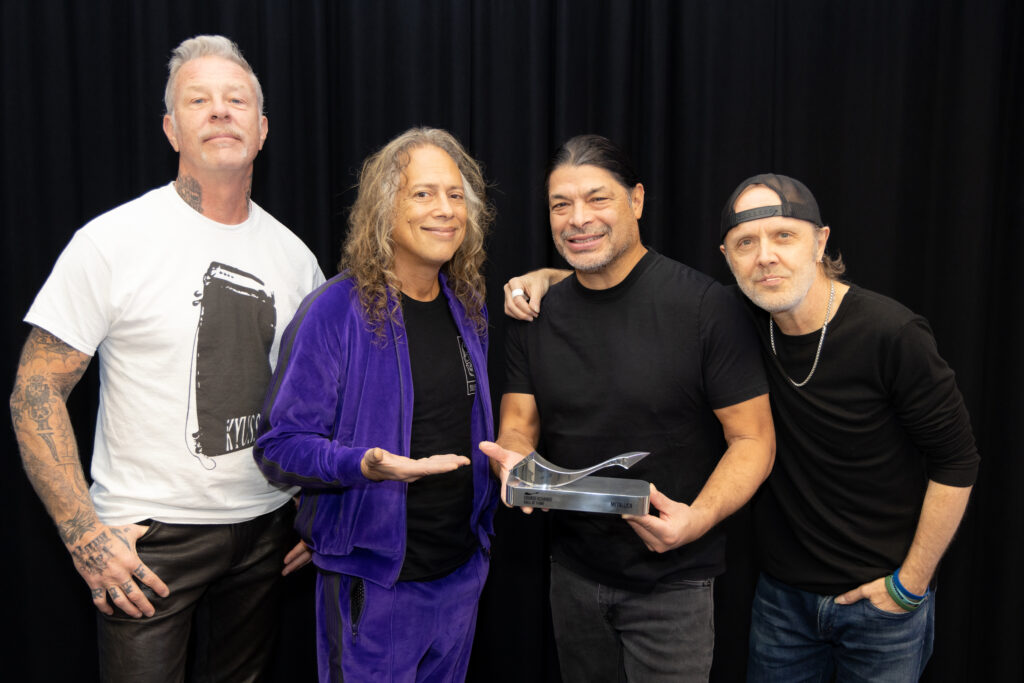
The band repeatedly overdrived the mixing board, causing technical issues.
Producer Paul Curcio, though experienced with folk and some rock acts, was unfamiliar with heavy metal’s demands and struggled to keep pace with the band’s intensity and pace.
His production style clashed with Metallica’s raw sound, and the band was dissatisfied with the results.
Johnny Zazula, owner of Megaforce Records and the man behind Metallica’s signing, took matters into his own hands by bringing in engineer Chris Bubach to remix the album.
Zazula was heavily invested in the project, even putting his mortgage on the line to fund the album’s release.
He also pushed for Kirk Hammett to replicate Dave Mustaine’s guitar solos note for note, but Hammett insisted on adding his own flair after the first few bars, a compromise that satisfied all parties.
*Kill ’Em All* opened with “Hit the Lights,” a blistering track originally called “Love of Charm.” The song’s furious tempo of 160 beats per minute and distorted guitars immediately set the tone for the album’s aggressive style.
Hammett’s solo on this track stayed faithful to Mustaine’s original but brought a cleaner tone and more precise picking.
“The Four Horsemen,” reworked from Mustaine’s “The Mechanics,” showcased Metallica’s evolving songwriting with a new apocalyptic lyrical theme by Hetfield.
The song’s intricate rhythms and galloping riffs became a blueprint for thrash metal’s complexity and speed.
“Motorbreath,” one of the shortest Metallica songs, captured the band’s ethos of living life on the edge.
Written by Hetfield and his friend Hugh Tanner, the song’s fast tempo and pounding rhythm made it a fan favorite and a staple of their early live shows.
“Jump in the Fire,” originally about sex, was reimagined by Hetfield to depict the devil’s perspective on human sinfulness.
With its G minor blues scale riffs and tight rhythm section, it added a dark, sinister vibe to the album.
Cliff Burton’s bass solo “Anesthesia (Pulling Teeth)” was a standout moment, recorded in one take.
His use of distortion, wah-wah pedal, and tapping techniques amazed the band and became a defining moment for metal bass playing.
“Whiplash,” the album’s first single, was a blistering 200 beats per minute assault that many credit as the moment thrash metal truly exploded onto the scene.
Its relentless pace and tight musicianship embodied the energy of Metallica’s live shows.
Other tracks like “Phantom Lord” and “No Remorse” delved into themes of war, power, and violence, with heavy riffs and pounding drums creating a chaotic and intense atmosphere.
“Seek and Destroy,” inspired by Diamond Head’s “Dead Reckoning,” became Metallica’s signature anthem.
Its aggressive riff and memorable solo, complete with a happy accident string bend, have made it a live show closer for decades.
The album closed with “Metal Militia,” a call to arms for metal fans to unite and spread the genre’s gospel.
Its fast tempo and rebellious lyrics perfectly encapsulated the spirit of early ’80s metal.
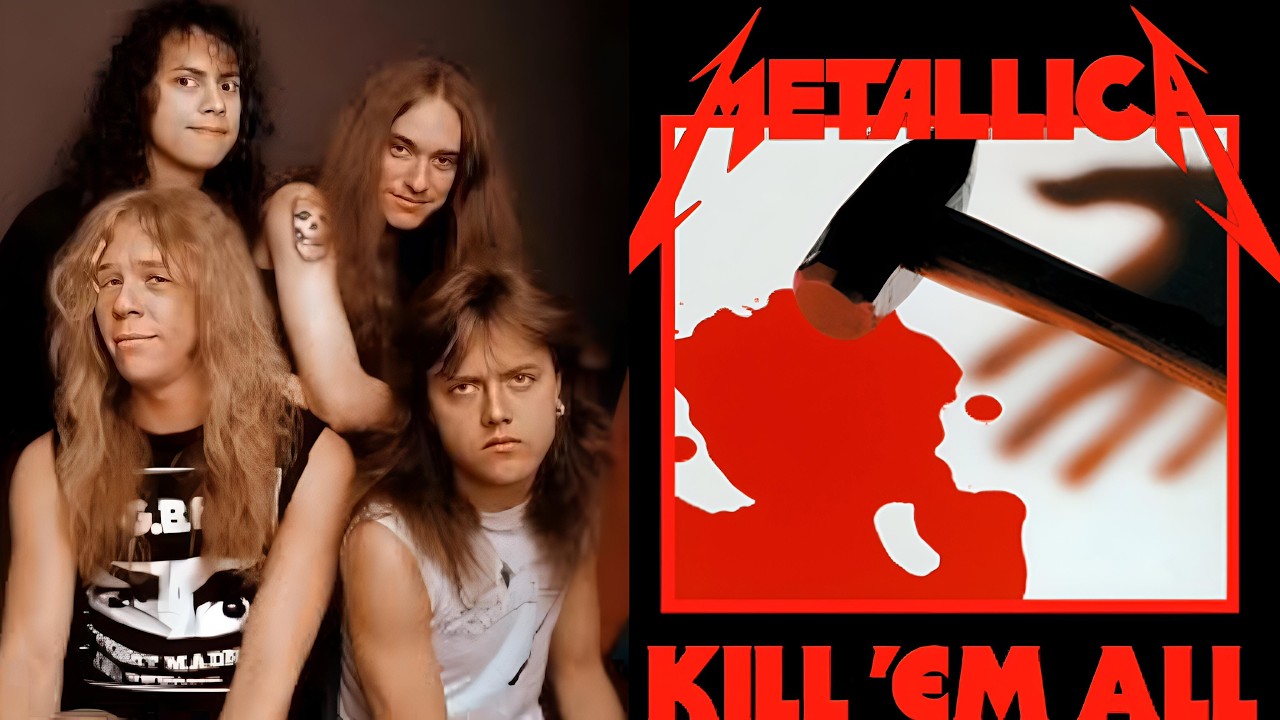
Originally, the album was to be titled *Metal Up Your Ass* with a provocative cover featuring a hand holding a dagger emerging from a toilet.
However, distributor concerns led to the change. According to Burton, the now-iconic title *Kill ’Em All* came from his frustrated remark about the distributors: “Should just kill ’em all.”
Burton also influenced the album’s cover art, suggesting the use of a bloody hammer — a lucky charm he carried everywhere.
*Kill ’Em All* was released on Megaforce Records with an initial pressing of just 15,000 copies.
The band and label were broke, pressing the album in small batches.
Despite this, the album sold over 177,000 copies in the U.S.by the end of 1983, fueled by underground tape trading and word of mouth.
Though it didn’t crack the Billboard 200 until 1986, after the success of *Master of Puppets,* *Kill ’Em All* laid the groundwork for Metallica’s rise.
It influenced countless bands and earned praise from metal legends like Anthrax’s Scott Ian and Dream Theater’s Mike Portnoy, who hailed it as faster and heavier than anything coming out of the British metal scene.
To support the album, Metallica toured relentlessly in 1983, sharing stages with bands like Fastway and Raven.
They played across Europe, including Italy, Germany, France, Belgium, and the UK, gradually building their reputation as one of the most ferocious metal acts.
After wrapping up the tour, Metallica headed to Denmark to record their second album, *Ride the Lightning,* which would further cement their status in metal history.
The making of *Kill ’Em All* was a brutal, chaotic, and often painful process.
From lineup upheavals and financial hardship to technical struggles in the studio, Metallica persevered through it all.
Their debut album wasn’t just a collection of songs — it was a declaration of war on the music scene, a raw and unfiltered expression of youthful aggression and passion.
*Kill ’Em All* set the stage for Metallica’s legendary career and helped define the thrash metal genre, inspiring generations of musicians and fans.
It’s a testament to the power of determination and the enduring spirit of metal.
News
The Song that Bob Dylan Wrote About Elvis Presley
Bob Dylan and Elvis Presley are two of the most legendary figures in American music history. One is known as…

Raul Malo, Lead Singer of The Mavericks, has died at age 60
The music world is mourning the loss of Raul Malo, the charismatic lead singer of The Mavericks, who passed away…
At 69, Steve Perry Confessed This Was the Song He Couldn’t Finish
Steve Perry’s voice is one of rock’s most iconic and enduring sounds. As the lead singer of Journey, he gave…
Top 6 SHOCKING Things Axl Rose Said About Other Rock Legends!
Axl Rose, the legendary frontman of Guns N’ Roses, is known not only for his iconic voice and music but…
‘You Had ONE Job!’ How Powerman 5000 FUMBLED a Platinum Future
Powerman 5000’s story is one of bold creativity, underground buzz, and a dramatic crossroads that nearly derailed their ascent to…
‘He Knew Last Show Would Kill Him’ Ozzy Osbourne’s Final Moments | Sharon Osbourne Interview
Ozzy Osbourne, the legendary rock icon, cultural pioneer, and beloved family man, gave his final performance knowing it might be…
End of content
No more pages to load






