
Neal Schon, legendary guitarist and founding member of Journey, has been shaping the sound of rock guitar for over five decades.
From his teenage days playing with Santana to crafting some of the most iconic and enduring melodies with Journey, Neal’s journey is a testament to passion, innovation, and musical soul.
Recently, Rick Beato had the privilege of sitting down with Neal to explore his career, his gear, his approach to guitar playing, and the magic behind Journey’s timeless hits.
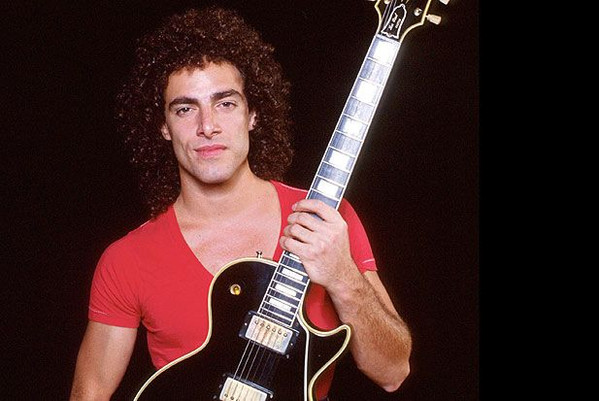
Neal’s story began as a young prodigy playing with Santana, where he learned the importance of tone and how to cut through a dense mix of percussion and other instruments.
He recalls using simple gear like a Vox Crybaby wah pedal and Fender blackface twins with cheap Radio Shack speakers to find a unique frequency that allowed him to stand out alongside the legendary Carlos Santana.
This early experience taught him to seek clarity and articulation in his sound, a hallmark that would define his playing style.
His transition to Journey marked a significant shift. With Journey, Neal had to adapt from the fiery fusion and Latin rock style of Santana to a more melodic, vocal-driven rock.
The arrival of Steve Perry as lead vocalist pushed Neal to rethink his guitar work — to craft solos and riffs that were extensions of Perry’s voice rather than competing with it.
Neal describes this period as a major adjustment, focusing on melody and simplicity without sacrificing emotional impact.
Neal’s tone is inseparable from his choice of gear.
During the recording of Journey’s iconic albums *Escape* and *Frontiers*, Neal used a combination of high watt amps, notably modded Highwatt amplifiers, which provided a fast, articulate response far different from the more rubbery feel of Marshall Plexis.
These amps allowed Neal’s fingers to express every nuance, making his solos clear and powerful even at high volume.

He also used Swedish Balders solid-state amps with tight EQ controls, producing a clean yet chunky tone that could cut through any mix.
Neal’s rig was famously large, with a pedalboard stretching nearly ten feet, including a Lexicon 224 digital reverb unit that gave his ballads like “Faithfully” their lush, endless sustain.
Interestingly, for some rhythm parts, Neal used a small Roland solid-state amp during the recording of *Escape*, adding a distinct compressed tone that blended perfectly with the Highwatt’s power.
This subtle layering of tones contributed to Journey’s rich and dynamic sound.
Neal’s picking technique is a blend of precision and relaxed fluidity.
He plays with medium to heavy picks, striking the strings off the side rather than the tip, creating a slicing sound that enhances speed and articulation.
He holds his guitar low and often sits while playing in the studio to maintain control and accuracy.
Another key to Neal’s sound is his masterful use of volume controls on the guitar itself.
He loves to manipulate the volume knob to change tone rapidly during playing, a technique that adds dynamic expression without relying heavily on pedals or effects.

Neal’s approach to solos is deeply melodic. Rather than simply shredding, he aims to make his guitar sing, mirroring the vocal lines and complementing the song’s emotional core.
He credits much of this to working with Steve Perry, whose vocal melodies inspired Neal to craft guitar parts that enhance rather than overpower.
Neal shares fascinating insights into the songwriting process behind some of Journey’s biggest hits.
For example, the track “Stone in Love” features multiple solos, each carefully placed after major song sections.
Neal used a Stratocaster with a custom ebony neck for its dark, pointed tone, blending clarity with warmth.
The band rehearsed extensively before recording *Escape*, spending around $75,000 to capture the perfect performances.
Neal recalls that Steve Perry rarely needed to punch in vocals; his takes were so precise and emotive they often went straight to the final mix.
Neal also highlights the collaborative spirit in the band, especially with keyboardist Jonathan Cain and bassist Ross Valory, who helped shape the arrangements and bring musical ideas to life.
He credits producer Mike Stone’s mastery of echo and reverb effects for adding depth and atmosphere to the recordings.
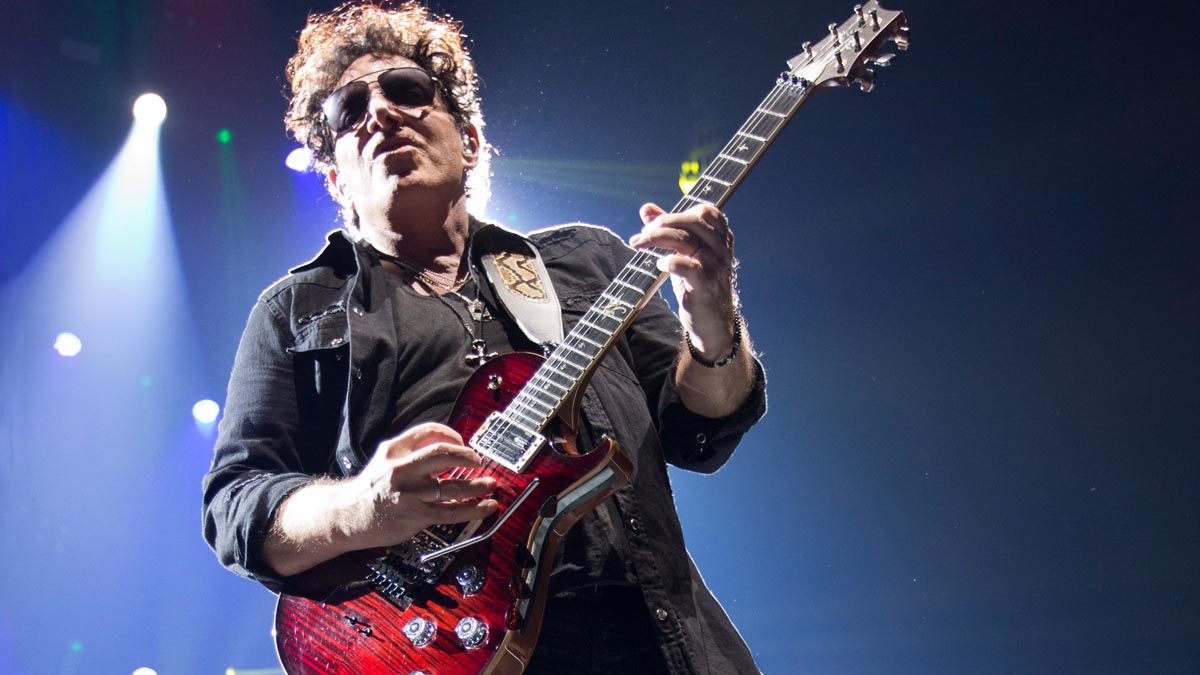
Neal’s influences span a wide range of blues, jazz, and rock guitar legends. He was deeply inspired by players like Jimmy Hendrix, Michael Bloomfield, and Wes Montgomery.
Neal admires how Wes Montgomery used his thumb for picking, producing a warm, articulate tone that influenced Neal’s own style.
He also draws from jazz fusion greats like John McLaughlin and Miles Davis, appreciating their adventurous approach to harmony and improvisation.
Neal loves blending blues roots with fusion complexity, always seeking new ways to express himself through the guitar.
Despite the massive success of Journey’s radio hits, Neal prefers live performances that surprise and challenge both the band and the audience.
He admires bands like Led Zeppelin, who jammed and improvised on stage rather than playing songs note-for-note as on records.
Neal looks forward to touring with Journey again, aiming to incorporate lesser-known riffs and jams that showcase the band’s musicianship beyond the hits.
He believes live music should be an evolving, dynamic experience that keeps fans engaged.
When asked about “Don’t Stop Believin’,” Neal admits he sensed something special during the recording sessions.
Though the single didn’t initially chart as high as expected, it eventually became a cultural anthem, played endlessly across generations.
Neal credits the song’s universal themes and memorable melody for its lasting appeal.
He also points out that the band never had an A&R executive dictate singles; instead, they trusted their instincts and the management team, which helped preserve their artistic integrity.
Neal Schon’s interview offers a rare glimpse into the mind of a guitar legend who has continually evolved while staying true to his musical roots.
From his early days with Santana to the soaring melodies of Journey, Neal’s story is one of dedication, innovation, and soulful expression.
His gear choices, picking technique, and songwriting philosophy all serve one purpose: to make the guitar a voice that sings alongside the human voice.
Neal’s legacy is not just in his riffs and solos but in the emotional connection he creates with millions of fans worldwide.
As Neal puts it, “I want my guitar to be an extension of the singer’s voice, to tell a story that words alone can’t.” And that is why, even decades later, the sound of Neal Schon’s guitar continues to inspire and move listeners everywhere.
News
The Song that Bob Dylan Wrote About Elvis Presley
Bob Dylan and Elvis Presley are two of the most legendary figures in American music history. One is known as…

Raul Malo, Lead Singer of The Mavericks, has died at age 60
The music world is mourning the loss of Raul Malo, the charismatic lead singer of The Mavericks, who passed away…
At 69, Steve Perry Confessed This Was the Song He Couldn’t Finish
Steve Perry’s voice is one of rock’s most iconic and enduring sounds. As the lead singer of Journey, he gave…

Top 6 SHOCKING Things Axl Rose Said About Other Rock Legends!
Axl Rose, the legendary frontman of Guns N’ Roses, is known not only for his iconic voice and music but…

‘You Had ONE Job!’ How Powerman 5000 FUMBLED a Platinum Future
Powerman 5000’s story is one of bold creativity, underground buzz, and a dramatic crossroads that nearly derailed their ascent to…
‘He Knew Last Show Would Kill Him’ Ozzy Osbourne’s Final Moments | Sharon Osbourne Interview
Ozzy Osbourne, the legendary rock icon, cultural pioneer, and beloved family man, gave his final performance knowing it might be…
End of content
No more pages to load






