
In the pantheon of rock guitar legends, few names shine as brightly and as tragically as Randy Rhoads.
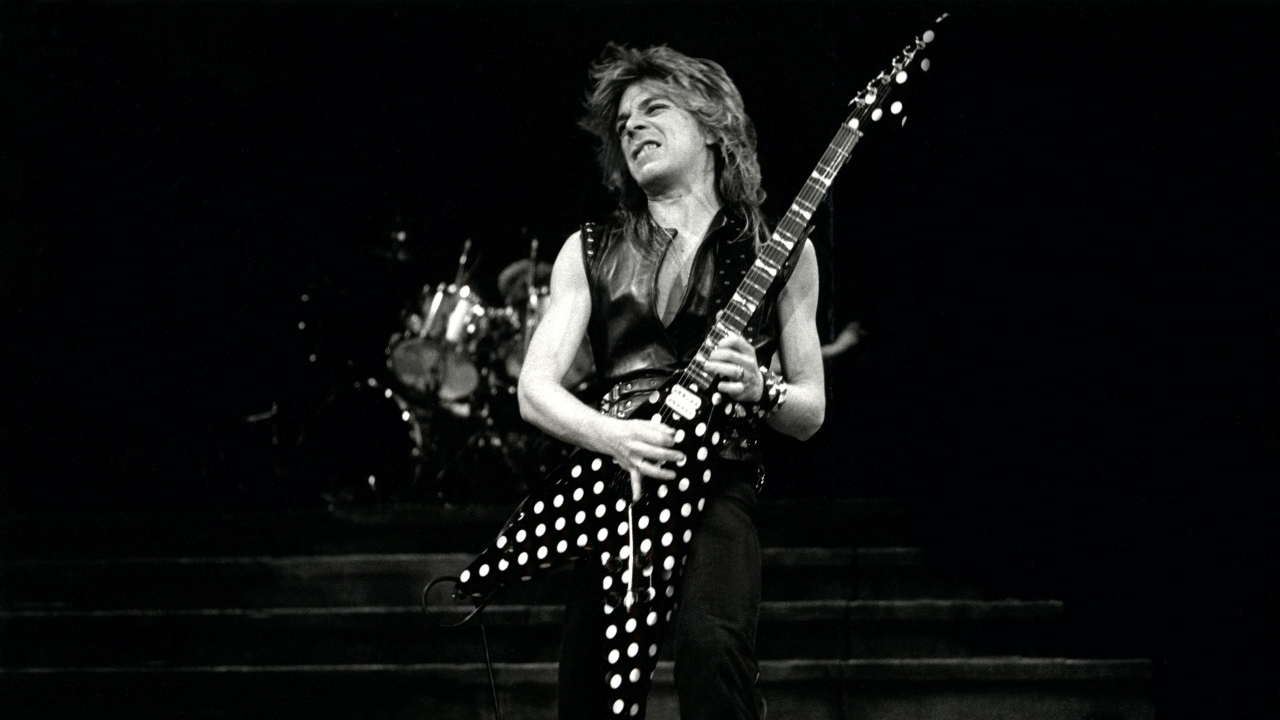
Born in Santa Monica, California in 1956, Randy’s meteoric rise from a young prodigy in Burbank to the iconic guitarist for Ozzy Osbourne’s band left an indelible mark on the world of heavy metal and rock music.
His story is one of raw talent, relentless dedication, and heartbreaking loss—a tale that continues to inspire guitarists and fans decades after his untimely death at just 25.
Randy Rhoads grew up immersed in music.
His parents were both musicians and music teachers, and his mother Dolores ran a music school in North Hollywood called Monia.
Randy started playing guitar at the tender age of six, initially on an old Spanish guitar, and quickly showed a natural gift.
His early lessons were folk-based, but Randy soon craved more—electric guitar, harder sounds, and a chance to forge his own path.
His guitar teacher, Scott Shelley, famously told Randy’s mother that he could no longer keep up with Randy’s rapid progress—an early sign of the extraordinary talent that lay within the young musician.
Randy’s dedication was relentless; he practiced constantly, absorbing blues, rock, and classical influences that would shape his distinctive style.
In his teenage years, Randy co-founded Quiet Riot with schoolmate Kelly Garni and singer Kevin DuBrow.
The band quickly gained a following in the Los Angeles club scene, known for their high-energy shows and Randy’s blistering guitar work.
Randy’s charisma and talent made him the focal point of the band, earning him early recognition as a rising star.

Despite their popularity on the club circuit, Quiet Riot struggled to secure a major record deal.
Their first album was released only in Japan, and internal tensions began to simmer—especially between Randy and Kelly.
The band members faced the typical challenges of young musicians trying to break through in a competitive scene, but Randy’s focus and professionalism set him apart.
In 1979, Randy’s life changed forever when he was invited to audition for Ozzy Osbourne’s new solo band.
Ozzy, freshly departed from Black Sabbath, was assembling a group to launch his solo career.
Randy’s audition was legendary—he showed up with just a small practice amp but blew everyone away with his skill and tone.
Ozzy immediately knew he had found something special.
Randy’s collaboration with Ozzy produced two of the most influential heavy metal albums ever: *Blizzard of Ozz* (1980) and *Diary of a Madman* (1981).
His neoclassical guitar style, blending classical music influences with blistering metal riffs and solos, redefined what metal guitar could be.
Songs like “Crazy Train” and “Mr.
Crowley” showcased Randy’s virtuosity and compositional genius.
Randy was known for his meticulous approach to tone and technique.
He spent hours practicing classical guitar, scales, and complex arrangements, always pushing himself to improve.
His solos were not just displays of speed but carefully crafted pieces that served the song.
His use of volume swells, vibrato, and classical motifs set him apart from other guitarists of the era.
Randy’s style inspired countless musicians and helped usher in the era of the “guitar hero.
” Despite his rising fame, Randy remained humble and focused on the music rather than the spotlight.
While Randy was ascending to stardom, Quiet Riot was undergoing turmoil.
His departure to join Ozzy left Quiet Riot without their lead guitarist, and tensions within the band eventually led to lineup changes.
Randy’s relationship with bandmates was complex, especially with Kevin DuBrow, whose ego and personal issues sometimes clashed with Randy’s professionalism.

Nevertheless, Randy’s impact on Quiet Riot and the LA metal scene was profound.
He was a beacon of talent and dedication in a scene that was often chaotic and unpredictable.
On March 19, 1982, tragedy struck.
While on tour with Ozzy Osbourne, Randy Rhoads died in a plane crash in Leesburg, Florida.
The small aircraft, piloted by the tour bus driver without permission, crashed after striking the tour bus and a nearby garage, killing Randy and two others instantly.
The shock of Randy’s death sent ripples throughout the music world.
Fans and fellow musicians mourned the loss of a guitarist who had already changed the face of rock music and had so much more to give.
His death at just 25 cemented his legacy as a brilliant but tragically short-lived icon.
Randy Rhoads’ influence on rock and metal guitar is immeasurable.
His fusion of classical technique with heavy metal helped define the sound of the 1980s and inspired generations of guitarists, from Yngwie Malmsteen to Zakk Wylde.
His work with Ozzy remains a benchmark for guitar excellence.
Posthumously, Randy has been honored with numerous accolades, including induction into the Hollywood Rock Walk of Fame and the Rock and Roll Hall of Fame.
His music continues to inspire new musicians, and his story is a reminder of the fleeting nature of genius.
Randy Rhoads was more than just a guitar player—he was a visionary artist whose passion, skill, and dedication transformed rock music.
From humble beginnings in Burbank to the heights of international fame, Randy’s journey was marked by brilliance and heartbreak.
Though his life was tragically cut short, his legacy burns on, eternally echoing through the riffs and solos of rock history.
News
The Song that Bob Dylan Wrote About Elvis Presley
Bob Dylan and Elvis Presley are two of the most legendary figures in American music history. One is known as…

Raul Malo, Lead Singer of The Mavericks, has died at age 60
The music world is mourning the loss of Raul Malo, the charismatic lead singer of The Mavericks, who passed away…
At 69, Steve Perry Confessed This Was the Song He Couldn’t Finish
Steve Perry’s voice is one of rock’s most iconic and enduring sounds. As the lead singer of Journey, he gave…

Top 6 SHOCKING Things Axl Rose Said About Other Rock Legends!
Axl Rose, the legendary frontman of Guns N’ Roses, is known not only for his iconic voice and music but…

‘You Had ONE Job!’ How Powerman 5000 FUMBLED a Platinum Future
Powerman 5000’s story is one of bold creativity, underground buzz, and a dramatic crossroads that nearly derailed their ascent to…
‘He Knew Last Show Would Kill Him’ Ozzy Osbourne’s Final Moments | Sharon Osbourne Interview
Ozzy Osbourne, the legendary rock icon, cultural pioneer, and beloved family man, gave his final performance knowing it might be…
End of content
No more pages to load






