
Robert Plant, the legendary frontman of Led Zeppelin, is known for his powerful voice and poetic lyrics that helped define rock music.
But behind his iconic status lies a man deeply committed to the soul and spirit of music — a man who didn’t hesitate to voice his disdain for bands he believed insulted what music should truly stand for.

This article explores Plant’s early influences, his artistic philosophy, and the bands he openly rejected, revealing the high standards and deep emotions that shaped his career and legacy.
Plant’s musical worldview was forged in post-war Britain, in the industrial town of West Bromwich.
Growing up amid reconstruction and social change, he absorbed a culture of resilience and innovation.
Crucially, he connected with American blues music — artists like Robert Johnson and Howlin’ Wolf — whose raw emotion and storytelling spoke to him on a profound level.
For Plant, blues was not mere entertainment; it was a voice for struggle, truth, and emotional depth.
This connection to authentic expression would become a cornerstone of Plant’s philosophy.
He believed music should come from the deepest parts of a person’s soul, not from commercial calculations or superficial trends.
When Plant joined Jimmy Page in 1968 to form Led Zeppelin, it was more than just a band; it was a radical new approach to music.
They rejected formulas and trends, aiming instead for constant experimentation and emotional honesty.
Each album was a journey into new territory, blending blues, folk, mythology, and rock in ways that challenged listeners.

Plant and Page cultivated a mystique around their music, weaving in references to ancient legends and spiritual themes.
For Plant, lyrics were gateways to exploring life’s mysteries, not just filler for tunes.
This artistic seriousness set Led Zeppelin apart from many contemporaries and shaped Plant’s disdain for bands he saw as shallow or gimmicky.
One of Plant’s most vocal dislikes was for the Bay City Rollers, a teen pop sensation of the early 1970s.
To Plant, the Rollers epitomized everything wrong with commercialized music: a product designed by marketing executives, polished and packaged for mass appeal without emotional authenticity.
He saw their tartan outfits and synchronized image not as harmless fun but as symbols of an industry that prioritized sales over artistry.
The Rollers’ catchy but superficial songs lacked the grit and soul that Plant revered.
His criticism was never personal against the band members but aimed squarely at the system that created such “safe” music.
Grand Funk Railroad’s loud, straightforward rock was a commercial success, but Plant felt it lacked deeper meaning.
He famously described their music as “noise without message,” criticizing the band for relying on volume and power without emotional or artistic depth.
For Plant, music should do more than entertain; it should challenge and move listeners.
He contrasted Grand Funk’s directness with Led Zeppelin’s layered compositions that mixed moods and stories, creating a rich tapestry of sound and meaning.

Kiss was another band Plant openly disliked, but his critique wasn’t about their showmanship — he admired their ability to entertain.
His issue was with how their image and merchandise overshadowed their music.
To Plant, Kiss had become more of a brand than a band, with costumes, comic books, and lunchboxes taking center stage.
He believed music should stand on its own without relying on theatrics or gimmicks.
While Led Zeppelin used dramatic performances to enhance their music, Kiss’s spectacle seemed to replace genuine artistic expression.
Plant’s frustration was that the band’s identity was defined more by marketing than by meaningful songwriting.
Plant’s disdain for Oasis stemmed from their attitude rather than their music alone.
Emerging from the ’90s Britpop scene, Oasis was known for arrogance, public feuds, and self-promotion.
Plant saw this as a hollow version of rock rebellion, focused more on fame and headlines than on honest artistry.
He famously likened Oasis to “the Spice Girls with guitars,” criticizing their manufactured image and drama-driven publicity.
While Oasis admired Led Zeppelin musically, Plant felt they only copied the surface swagger without embracing Zeppelin’s deeper spirit of experimentation and humility.

The Knack’s hit “My Sharona” was a radio staple, but Plant’s problem was that the band sounded like a pale imitation of the Beatles without adding anything new.
He believed true artists transform their influences, pushing boundaries and creating fresh expressions.
To Plant, the Knack’s reliance on catchy hooks and familiar styles represented playing it safe.
He saw imitation as worse than bad music because it lacked risk and creativity.
In the late ’70s, a time of punk and experimentation, Plant felt the Knack’s polished sound was out of step with the era’s bold artistic challenges.
Plant’s artistic convictions were deeply personal, shaped by tragedy and loss.
In 1975, he survived a severe car accident that left him in a wheelchair for months.
During this time, music became a lifeline, a way to express pain and hope beyond words.
This experience reinforced his belief that music must be honest and meaningful.
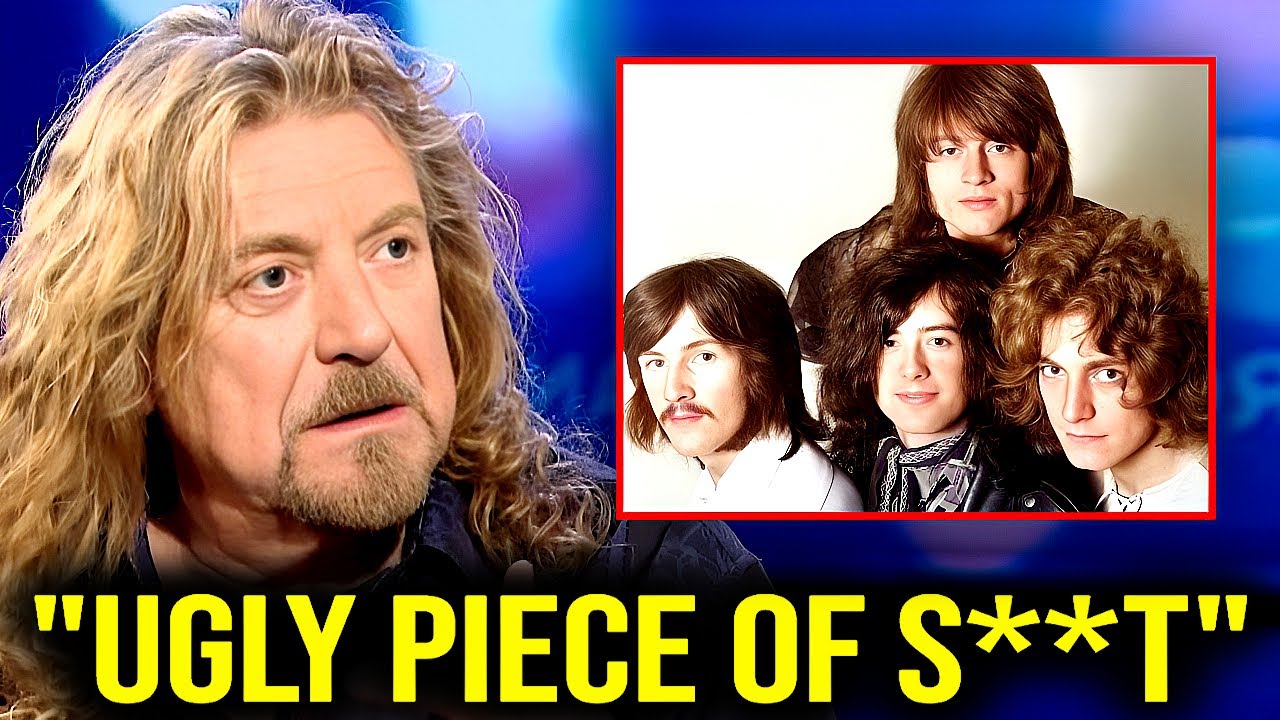
In 1977, Plant’s five-year-old son died suddenly, a loss that transformed his relationship with music.
It ceased to be entertainment and became a form of spiritual survival.
This grief made him fiercely protective of what music represented and intolerant of anything he saw as shallow or exploitative.
The death of drummer John Bonham in 1980 further deepened Plant’s resolve.
The band could not continue without Bonham, and Plant refused to reunite Led Zeppelin without him, believing that trying to recreate the past would dishonor their legacy.
Robert Plant’s criticisms of certain bands reveal a man with uncompromising standards and a deep love for music as an art form.
He rejected superficiality, imitation, and commercialization, valuing emotional truth, artistic risk, and spiritual depth.
His views remind us that rock music is not just about loud guitars and catchy hooks but about connection, challenge, and meaning.
Plant’s legacy is not only in the songs he sang but in the passionate defense of music’s soul he carried throughout his life.
News
The Song that Bob Dylan Wrote About Elvis Presley
Bob Dylan and Elvis Presley are two of the most legendary figures in American music history. One is known as…
Raul Malo, Lead Singer of The Mavericks, has died at age 60
The music world is mourning the loss of Raul Malo, the charismatic lead singer of The Mavericks, who passed away…
At 69, Steve Perry Confessed This Was the Song He Couldn’t Finish
Steve Perry’s voice is one of rock’s most iconic and enduring sounds. As the lead singer of Journey, he gave…
Top 6 SHOCKING Things Axl Rose Said About Other Rock Legends!
Axl Rose, the legendary frontman of Guns N’ Roses, is known not only for his iconic voice and music but…
‘You Had ONE Job!’ How Powerman 5000 FUMBLED a Platinum Future
Powerman 5000’s story is one of bold creativity, underground buzz, and a dramatic crossroads that nearly derailed their ascent to…
‘He Knew Last Show Would Kill Him’ Ozzy Osbourne’s Final Moments | Sharon Osbourne Interview
Ozzy Osbourne, the legendary rock icon, cultural pioneer, and beloved family man, gave his final performance knowing it might be…
End of content
No more pages to load






