
The Police, one of the biggest bands to emerge from the late 1970s and early 1980s, created some of the most iconic hits in rock history—songs like *Roxanne*, *Every Breath You Take*, and *Message in a Bottle* remain staples decades later.
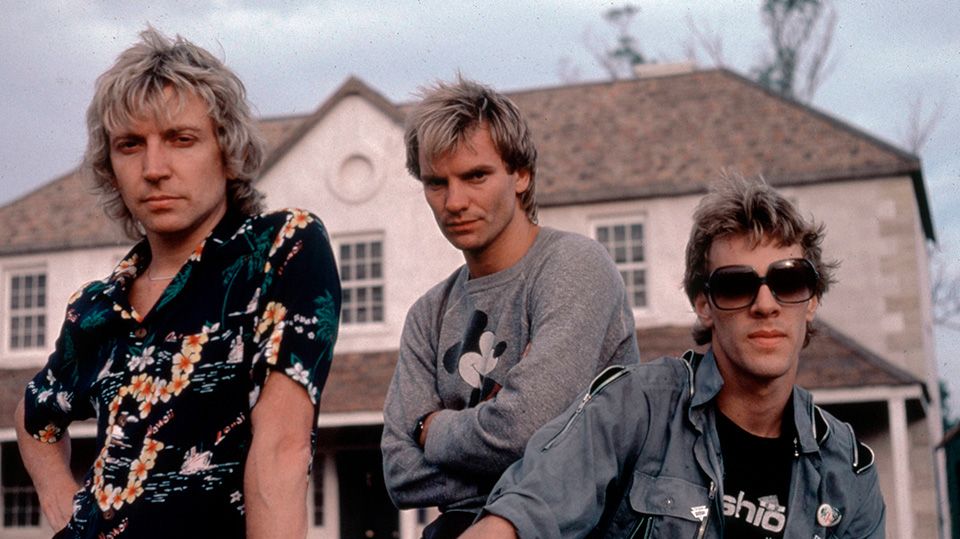
But behind the polished hits and sold-out stadiums was a band riddled with tension, conflict, and egos so large they nearly destroyed the group from within.
At the center of the storm was Sting, the band’s frontman, songwriter, and ultimately its downfall.
The Police began in 1977 with Stewart Copeland, an American drummer with a take-charge attitude and a vision to start a punk band.
He recruited Gordon Sumner, better known as Sting, a former schoolteacher and jazz fusion bassist.
Adding guitarist Henry Padovani, the band started as a punk outfit, even bleaching their hair for a Wrigley’s chewing gum commercial—a total punk sellout move before they even had a record.
However, Padovani’s skills were limited, and when Andy Summers, a seasoned guitarist, saw the band, he insisted Padovani be replaced.
This marked the formation of the real Police lineup: Sting, Stewart Copeland, and Andy Summers.
From the start, the band’s dynamics were fraught.
Stewart, loud and aggressive, clashed with Sting, who was quiet but possessed a massive ego.
Andy Summers acted as a mediator, trying to keep peace between two alpha personalities.
Their manager, Miles Copeland (Stewart’s brother), was a shrewd businessman who secured their first record deal by promising a punk band, even though their sound was evolving.

The Police’s early tours were grueling and tense.
Packed into a tiny van, the three members fought constantly—bloody fistfights were not uncommon, especially between Sting and Stewart.
They drew a line down the van seat to mark their territory and would physically brawl over musical disagreements.
One infamous incident saw Stewart dump a plate of curry over Sting’s head in a restaurant, leading to a violent scuffle that destroyed half the dining room.
Despite these conflicts, their music began to break through.
Sting’s song *Roxanne*, inspired by prostitutes he saw in Paris, was initially rejected by their label for being too weird and un-punk.
Yet, persistent promotion led to its massive success, catapulting the band to stardom.
As the band grew, so did Sting’s control. He wrote all the songs, which meant he controlled the publishing rights—a source of millions in revenue.
Stewart and Andy only earned performance royalties, a fraction of Sting’s income.
This financial imbalance bred resentment.
Sting’s ego was legendary. He saw his bandmates increasingly as hired hands rather than equals. Recording sessions became cold and isolated.
By the time they recorded *Ghost in the Machine* in 1981, they were recording parts separately.
Sting even brought in a saxophone player without informing Stewart or Andy, deepening the divide.

In 1983, The Police recorded *Synchronicity*, their masterpiece, at George Martin’s studio on the island of Monserrat.
But by then, the band members could barely stand each other.
They recorded in separate rooms: Stewart in the dining room, Andy in the main studio, and Sting isolated in the control room, acting like a king on his throne.
Tensions exploded during recording.
Sting’s perfectionism drove him to redo bass parts dozens of times.
Stewart, frustrated, taunted him over the talkback mic, sparking a brutal fight where the two men physically wrestled in the studio, covered in blood and sweat.
Despite the chaos, *Synchronicity* became one of the best-selling albums of the era.
Yet, the damage was done. Sting’s dominance and the toxic environment made it impossible to continue.
After their final show in Melbourne in 1984, Sting abruptly ended the band without a proper farewell, calling Stewart and Andy separately to say he was done.

Post-breakup, Sting launched a successful solo career, shedding his pop star image for a serious artist persona.
Meanwhile, Stewart and Andy were left in limbo.
In 1986, the record label pressured the band to reunite for a greatest hits album with one new track.
The recording session was disastrous.
Sting, obsessed with the Fairlight CMI synthesizer, replaced Stewart’s energetic drumming with cold, programmed beats.
Stewart was horrified—his raw, human style was replaced by a sterile machine sound.
To make matters worse, Stewart broke his collarbone after a polo accident and couldn’t play drums, giving Sting an excuse to use the drum machine exclusively.
Stewart tried desperately to program the machine himself, but Sting and the producer took over, erasing the band’s signature energy.
The resulting re-recorded single was lifeless and flopped, confirming the band’s demise.
Sting had effectively erased his bandmates and taken full control.
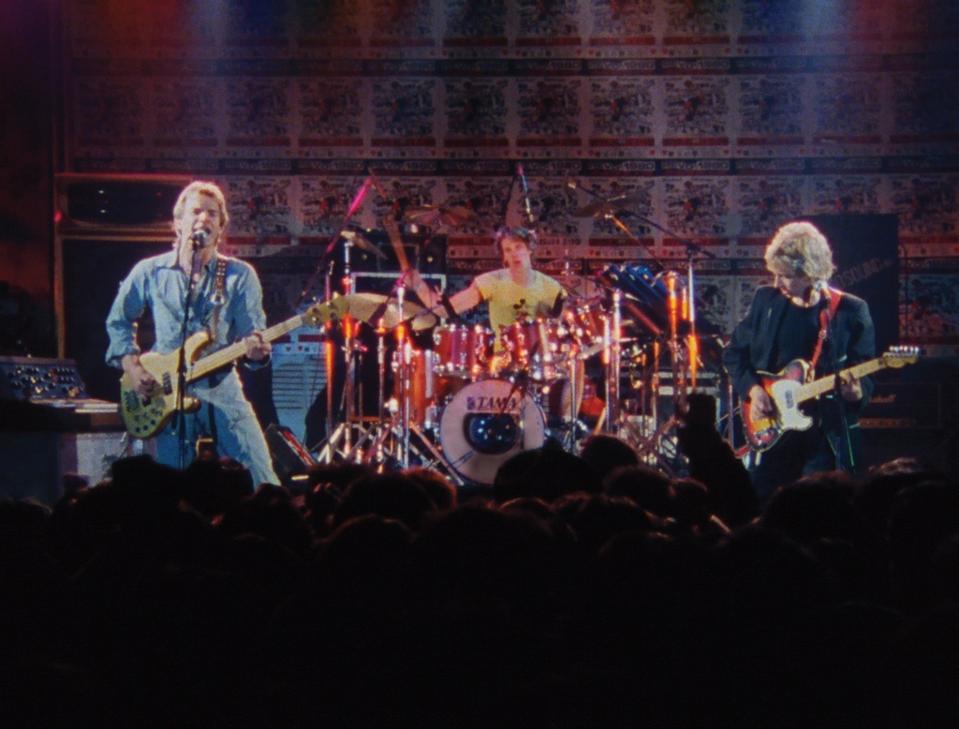
In 2007, The Police reunited for a massive tour, reportedly earning over $150 million.
But the old grudges remained. They traveled separately, stayed on different hotel floors, and refused to see each other except on stage.
Stewart publicly criticized Sting’s diva behavior, calling him a “petulant primadonna.” Sting retaliated by fining Stewart, a humiliating move for a rock star.
The tour was a financial success but a personal failure, ending with the band members going their separate ways once again.
The Police’s story is one of incredible musical achievement shadowed by personal destruction.
Their hits remain timeless, but behind the scenes was a band torn apart by egos, money, and control—centered around Sting’s overwhelming dominance.
Their legacy is a cautionary tale: even the greatest bands can implode when personal ambition eclipses friendship and collaboration.
The Police accidentally made magic while locked in a war of wills, but in the end, Sting’s ego won, and the band was lost.
News
The Song that Bob Dylan Wrote About Elvis Presley
Bob Dylan and Elvis Presley are two of the most legendary figures in American music history. One is known as…

Raul Malo, Lead Singer of The Mavericks, has died at age 60
The music world is mourning the loss of Raul Malo, the charismatic lead singer of The Mavericks, who passed away…
At 69, Steve Perry Confessed This Was the Song He Couldn’t Finish
Steve Perry’s voice is one of rock’s most iconic and enduring sounds. As the lead singer of Journey, he gave…
Top 6 SHOCKING Things Axl Rose Said About Other Rock Legends!
Axl Rose, the legendary frontman of Guns N’ Roses, is known not only for his iconic voice and music but…
‘You Had ONE Job!’ How Powerman 5000 FUMBLED a Platinum Future
Powerman 5000’s story is one of bold creativity, underground buzz, and a dramatic crossroads that nearly derailed their ascent to…
‘He Knew Last Show Would Kill Him’ Ozzy Osbourne’s Final Moments | Sharon Osbourne Interview
Ozzy Osbourne, the legendary rock icon, cultural pioneer, and beloved family man, gave his final performance knowing it might be…
End of content
No more pages to load






