
In the whirlwind world of pop music, lightning strikes fast and often fades just as quickly.
Tal Bachmann’s 1999 smash hit, “She’s So High,” was one such moment—a song that exploded onto the airwaves and catapulted him into global stardom almost overnight.

Yet, as many know, the dazzling flash of a one-hit wonder can be both a blessing and a curse.
But Tal Bachmann’s story is far richer and more complex than that label suggests.
It’s a tale of legacy, faith, perseverance, and a surprising return to rock royalty that few saw coming.
Tal Bachmann was born into a family where music was more than a passion—it was a way of life.
Hailing from Winnipeg, Manitoba, Tal’s father, Randy Bachmann, is a Canadian rock legend.
Randy co-founded iconic bands The Guess Who and Bachman Turner Overdrive (BTO), groups that defined classic rock for generations.
Growing up surrounded by music, Tal absorbed the sounds of his father’s record collection, from British Invasion bands to the lush melodies of ELO, and even shoegaze groups.
Tal taught himself guitar by ear and got an early taste of the music business when he played drums with BTO during a tour opening for Van Halen.
With such a legacy, it seemed inevitable that Tal would follow in his father’s footsteps.
But life, as always, had its own plans.
Religion played a significant role in Tal’s upbringing.
Randy Bachmann had converted to Mormonism in the late 1960s, a decision that famously caused friction within The Guess Who due to the band’s rock-and-roll lifestyle clashing with his faith.
Tal himself was raised a devout Mormon, and this spiritual foundation shaped much of his worldview and music.
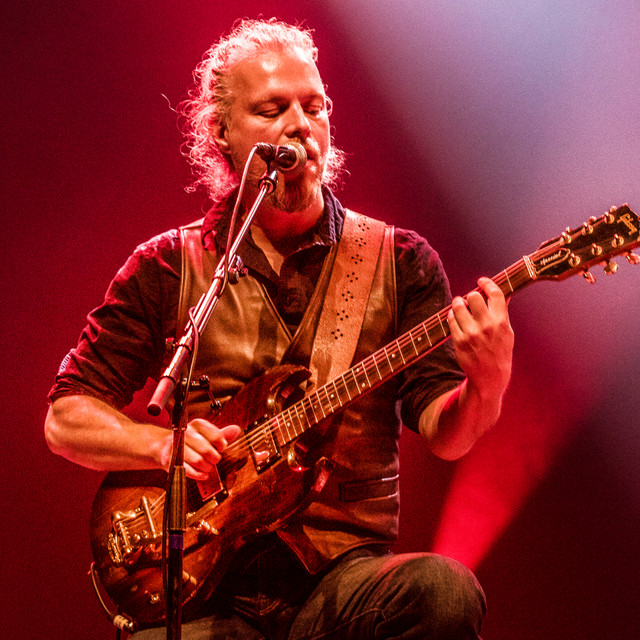
However, by 1987, Tal hit a creative wall.
He found himself disconnected from the new wave of music and determined to forge his own path—one that initially led him away from music altogether.
Rebelling in the Bachmann family meant choosing a conventional life: wearing a suit, going to university, and seeking a “normal” job.
Tal enrolled in a small college in Utah, studying political science, much to the surprise of his rockstar dad, who regularly called to urge him back to music.
It was in a philosophy class, while reading Plato’s thoughts on the power of music, that Tal’s passion reignited.
Inspired by ancient wisdom, he decided to quit school and pursue songwriting full-time.
Returning to Canada in the mid-1990s, Tal dedicated himself fully to music.
He cut out distractions, including cable TV, and spent nearly two years writing songs, splitting time between his father’s studio and his home on Salt Spring Island, British Columbia.
Despite his efforts, Tal’s early demos were met mostly with rejection—labels in Canada, the U. S., and abroad showed little interest.
Even Randy Bachmann’s attempts to promote his son’s demos to industry bigwigs were initially unsuccessful.
The prevailing trend at the time was grunge, and Tal’s melodic, radio-friendly style was out of step with the market.

A turning point came when Jeff Lynne of Electric Light Orchestra (ELO) became an early fan after hearing Tal’s demos, offering reassurance that his sound had value.
Soon after, EMI Publishing showed interest, initially drawn to a ballad called “If You Sleep.”
However, Tal knew he needed a bigger, catchier song to seal the deal—and that song was “She’s So High.”
Inspired by classic radio hits from The Beatles, The Beach Boys, and The Kinks, Tal crafted a song with soaring falsetto leaps and a provocative title designed to make listeners curious.
The lyrics drew on his own high school experiences and were peppered with historical references inspired by ELO’s “Can’t Get It Out of My Head.”
When EMI executive Evan Lamberg heard “She’s So High,” he immediately declared it a smash hit, setting the stage for Tal’s breakthrough.
Signed to Columbia Records in late 1996, Tal’s debut album was co-produced with Bob Rock, famed for working with Metallica and David Lee Roth.
Released in April 1999, the album featured “She’s So High” as its lead single, which quickly became ubiquitous on radio and MTV.
The song soared to number one on Billboard’s Adult Top 40 and cracked the top 15 on the Hot 100 chart.
Tal appeared on major platforms like The Tonight Show and even Melrose Place, opening for Canadian superstars like Bryan Adams and Barenaked Ladies.
For a brief moment, Tal Bachmann stepped out of his father’s shadow and into the spotlight as a pop-rock sensation.

However, the follow-up singles failed to replicate that success. “If You Sleep” and “Strong Enough” charted modestly in Canada but didn’t make waves internationally.
The debut album peaked at a modest number 124 in the U. S.and surprisingly never achieved gold certification.
Industry insiders noted that Tal’s clean-cut image and spiritual background contrasted with the rebellious rock icons of the day, potentially limiting his appeal to certain audiences.
Yet Tal remained committed to making music that was meaningful and thought-provoking, emphasizing that rock and roll could be revolutionary without succumbing to clichés of excess.
The early 2000s brought massive upheaval in the music industry—corporate mergers, downsizing, and the rise of online piracy disrupted traditional models.
Columbia Records, like many labels, began dropping artists who didn’t deliver consistent hits.
Tal found himself caught in this maelstrom.
Despite continuing to write and demo songs, he struggled to gain traction.
By 2004, he revealed the difficulties of maintaining momentum without label support.
His management and publishing deals eventually dissolved, leaving him to focus on family, faith, and a makeshift barn studio where he quietly continued creating music.

During this period, Tal also grappled with doubts about his Mormon faith, a journey shared with his father.
While his wife advocated for exploring other religious paths, Tal remained steadfast in his beliefs.
Tal’s second album, *Staring Down the Sun*, was released independently and digitally through a novel platform called the Music Crypt System.
The lead single “Aeroplane” charted in Canada’s top 20, but the album overall failed to capture widespread attention, partly due to the lack of major label backing and a five-year gap since his debut.
Gradually, Tal faded from mainstream view, focusing on family life, political commentary, and participating in documentaries about Mormonism, including Bill Maher’s *Religulous*.
In 2005, he served as a musical ambassador for Canada in Africa, showing his continued commitment to music beyond commercial success.
Many assumed Tal Bachmann’s pop stardom was a brief chapter, but the story took an unexpected turn in 2023.
Following the deaths of original Bachman Turner Overdrive members Robbie and Tim Bachmann, Randy Bachmann decided to revive the band for its 50th anniversary.
Keeping it in the family, Randy recruited Tal as a guitarist and vocalist, with Tal’s wife Koko joining on drums.
The new BTO lineup recorded fresh material, including a tribute single featuring a legendary guitar solo by Neil Young, a fellow Winnipeg native.
The band launched the *Back in Overdrive* tour in 2025, playing to enthusiastic crowds across North America.
Their setlists celebrated the full Bachmann legacy, blending classic BTO and Guess Who hits with Tal’s own iconic “She’s So High”

Today, Tal Bachmann lives a balanced life on Vancouver Island, combining family time with nights on the road as part of a legendary rock band.
His journey illustrates that being labeled a one-hit wonder is only part of the story.
From his early struggles and faith-driven rebellion to his pop breakthrough and quiet perseverance, Tal’s career reflects the complex realities of the music industry.
His return to BTO is not just a nostalgic revival but a meaningful continuation of a family legacy.
Tal himself has expressed a pragmatic view of success in music: whether one has one hit or ten, the pressure and expectations remain relentless.
Yet he embraces the journey, proving that sometimes the most unexpected paths lead you right back home—still taking care of business.
News
The Song that Bob Dylan Wrote About Elvis Presley
Bob Dylan and Elvis Presley are two of the most legendary figures in American music history. One is known as…

Raul Malo, Lead Singer of The Mavericks, has died at age 60
The music world is mourning the loss of Raul Malo, the charismatic lead singer of The Mavericks, who passed away…

At 69, Steve Perry Confessed This Was the Song He Couldn’t Finish
Steve Perry’s voice is one of rock’s most iconic and enduring sounds. As the lead singer of Journey, he gave…
Top 6 SHOCKING Things Axl Rose Said About Other Rock Legends!
Axl Rose, the legendary frontman of Guns N’ Roses, is known not only for his iconic voice and music but…

‘You Had ONE Job!’ How Powerman 5000 FUMBLED a Platinum Future
Powerman 5000’s story is one of bold creativity, underground buzz, and a dramatic crossroads that nearly derailed their ascent to…
‘He Knew Last Show Would Kill Him’ Ozzy Osbourne’s Final Moments | Sharon Osbourne Interview
Ozzy Osbourne, the legendary rock icon, cultural pioneer, and beloved family man, gave his final performance knowing it might be…
End of content
No more pages to load






