
In the late 1980s and early 1990s, hair metal was the dominant force on rock radio and MTV, but as the decade turned, the genre faced a steep decline thanks to the rise of alternative rock.
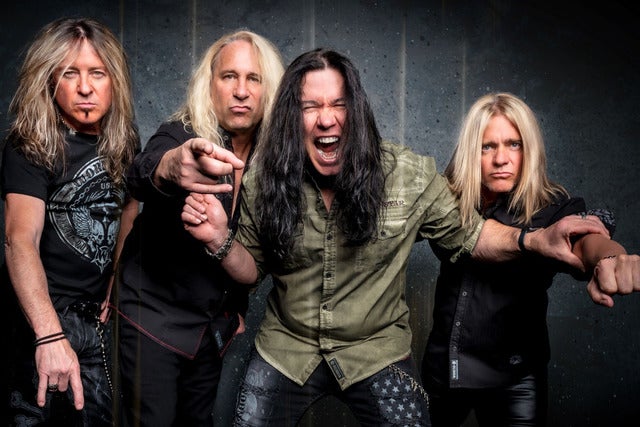
Among the last bands to find success in this fading era was Slaughter, a group whose journey was marked by resilience, talent, and tragedy.
From humble beginnings to platinum albums, and heartbreaking losses, the story of Slaughter is one of both triumph and tragedy.
Slaughter’s story begins with vocalist Mark Slaughter and bassist Dana Strum.
Mark, a Las Vegas native, was once a guitar teacher and fronted a band called Xcursion.
Despite his pride in his hometown, Mark admitted that in the 1980s, Las Vegas was not known as a hotbed for rock talent.
As he told the *Las Vegas Sun*, “In those days, you high-tailed it out of Vegas as fast as you could to go be a rock star in L.A., New York or whatever.”
Coming from Vegas was almost a joke in the rock world, but Mark was determined to make his mark.
Dana Strum, at the time, was a studio engineer with notable credits, including work with ex-KISS guitarist Vinnie Vincent.
Dana famously encouraged Randy Rhoads to audition for Ozzy Osbourne, showing his eye for talent.
The two met while Mark was recording backing vocals for a band called Sin, who were trying to break into the Japanese market.
Dana was immediately impressed by Mark’s unique high-register voice, asking him if it was an act or his natural singing style.
Mark replied that he was “kind of like a soprano in the choir.”

This meeting would prove pivotal.
Dana helped Mark land a gig fronting the Vinnie Vincent Invasion in the mid to late ‘80s.
However, the band eventually lost their record deal with Chrysalis Records due to Vincent’s difficult personality and business dealings.
Mark recalled how the label was unhappy with Vincent but liked Mark’s singing, which led them to sign Mark and Dana to form a new band.
After the breakup of Vinnie Vincent Invasion, Mark Slaughter and Dana Strum relocated back to Las Vegas to write and record what would become Slaughter’s debut album.
They recruited guitarist Tim Kelly and drummer Blas Elias, and the band self-produced their first record, *Stick It To Ya*, released in January 1990.
Despite being one of the last hair metal bands to emerge before the genre’s decline, Slaughter quickly found success.
Their label Chrysalis Records conducted focus groups across major cities, playing 20 songs for fans to help select the final tracklist.
Dana Strum defended this approach, telling the *Chicago Tribune*, “We’re proud that our fans helped pick our songs.” This fan involvement helped build a loyal base.
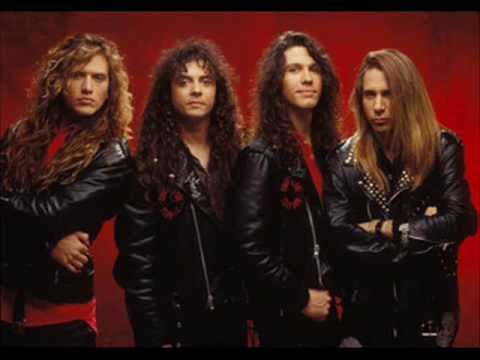
Remarkably, Slaughter had only played one live show before their debut album went gold.
That first show was an opening slot for Kiss and Faster Pussycat in Lubbock, Texas, on May 4, 1990.
After the performance, representatives from Chrysalis presented the band with gold records — a dream come true for a band that had barely performed live.
MTV also played a crucial role in their rise, with the video for their single “Up All Night” becoming one of the most requested videos in April 1990.
The album produced additional hits like “Fly to the Angels” and “Spend My Life,” ultimately going double platinum in the U.S., selling over two million copies.
Slaughter’s second album, *The Wild Life* (1992), came out as hair metal’s popularity waned, but it still peaked at number 8 on the U.S.charts.
The band toured with legends like Ozzy Osbourne and Ugly Kid Joe, continuing to build their reputation.
However, challenges soon emerged. During the tour, Mark Slaughter developed a vocal nodule and had to undergo surgery.
Despite the setback, his voice returned stronger than ever.
The band released a home video documenting the making of *The Wild Life*, which went gold.
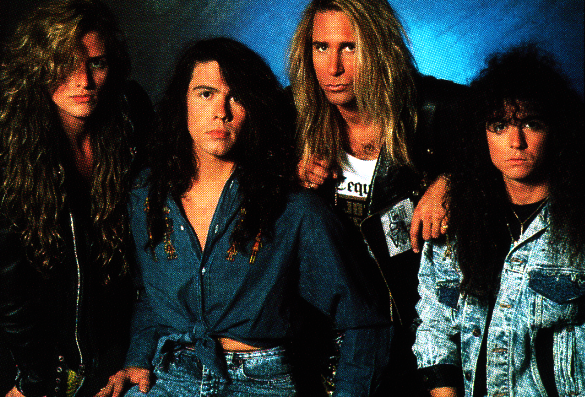
In an unusual move, Slaughter joined the bill with Poison and Trixter without pay, hoping to keep active and connect with fans.
Dana Strum described it as a gamble on earning enough from merchandise sales to cover expenses.
Their appeal was unique; they attracted both male and female fans across a broad age range.
The band was known for their down-to-earth approach, often sleeping at fans’ homes, playing impromptu concerts on flatbed trucks, and maintaining close fan interactions.
Despite their success, Slaughter faced personal and professional hardships.
Guitarist Tim Kelly was arrested in 1993 for drug trafficking related to a case dating back to 1987.
Meanwhile, Dana Strum suffered a hand injury in a motorcycle accident, delaying the band’s third album.
Their label Chrysalis was absorbed by EMI, which went through rapid leadership changes.
The new president reportedly had little knowledge of the band, leading to poor marketing and frustration.
Slaughter exercised a contract clause to leave EMI and signed with CMC International, a label known for supporting ‘80s rock acts flying under the radar.

In 1995, EMI released a greatest hits album without the band’s consent, using poor artwork and even lifting autographs from previous releases.
This betrayal added to the band’s woes.
The third album, *Fear No Evil* (1995), marked a commercial decline, peaking at 182 on the charts.
Mark Slaughter lamented the impact of the grunge movement and industry politics, blaming MTV’s new programming decisions for cutting off airplay for bands like theirs.
Tragedy struck in 1998 when Tim Kelly died in a horrific car accident in the Arizona desert.
His vehicle was hit by an 18-wheeler crossing into his lane, causing a fatal rollover crash.
Kelly died at the scene. Jeff Blando replaced him on guitar.
The band released *Eternal Live* in 1998, featuring Kelly’s last performances.
Their final studio album, *Back to Reality* (1999), failed to chart, but the band continued touring.
Dana Strum and Jeff Blando contributed to Vince Neil’s 2010 album *Tattoos and Tequila*.
Mark Slaughter pursued solo projects, moved to Nashville, and ventured into music composition for children’s shows and voice-over work.
Slaughter’s story is one of perseverance amid a shifting musical landscape and personal tragedies.
They managed to carve out a unique space in rock history, blending fan engagement with solid musicianship and a grounded approach to the rock lifestyle.
Their hits like “Fly to the Angels” remain beloved by fans, and their journey reflects the challenges many ‘80s bands faced during the ‘90s transition.
Despite setbacks, Slaughter’s dedication to their craft and fans has kept their legacy alive.
News
The Song that Bob Dylan Wrote About Elvis Presley
Bob Dylan and Elvis Presley are two of the most legendary figures in American music history. One is known as…
Raul Malo, Lead Singer of The Mavericks, has died at age 60
The music world is mourning the loss of Raul Malo, the charismatic lead singer of The Mavericks, who passed away…
At 69, Steve Perry Confessed This Was the Song He Couldn’t Finish
Steve Perry’s voice is one of rock’s most iconic and enduring sounds. As the lead singer of Journey, he gave…
Top 6 SHOCKING Things Axl Rose Said About Other Rock Legends!
Axl Rose, the legendary frontman of Guns N’ Roses, is known not only for his iconic voice and music but…

‘You Had ONE Job!’ How Powerman 5000 FUMBLED a Platinum Future
Powerman 5000’s story is one of bold creativity, underground buzz, and a dramatic crossroads that nearly derailed their ascent to…
‘He Knew Last Show Would Kill Him’ Ozzy Osbourne’s Final Moments | Sharon Osbourne Interview
Ozzy Osbourne, the legendary rock icon, cultural pioneer, and beloved family man, gave his final performance knowing it might be…
End of content
No more pages to load






