
In the late 1970s and early 1980s, a band emerged from the underground punk scene of Orange County, California, that would become one of the most influential acts in American punk rock history.

Known to their fans simply as Social D, Social Distortion combined the raw energy of punk with elements of blues, country, and rockabilly, creating a sound uniquely their own.
Central to this story is Mike Ness, the band’s frontman and sole original member, whose life and struggles have shaped the band’s legacy over four decades.
Mike Ness was born in Lynn, Massachusetts, in 1963 but moved to Fullerton, Orange County, California, with his family as a baby.
Growing up, Ness was influenced by classic rock bands like The Rolling Stones and Creedence Clearwater Revival before discovering punk rock.
His teenage years were marked by turmoil: his parents divorced when he was around 15 or 16, and he was eventually kicked out of his father’s home due to worsening behavior.
Ness found solace in the rebellious figures of history like John Dillinger and Bonnie and Clyde, as well as the punk movement, Chicago blues, and rockabilly music.
Ness idolized punk icons such as The Clash, Johnny Thunders, and The Ramones, admiring their showmanship and style.
He began experimenting with drugs and alcohol at a very young age, a habit that would follow him into adulthood and deeply impact his life and music.
In the late 1970s, Ness formed Social Distortion with drummer Casey Royer.
The band’s name reportedly came from Royer’s distortion pedal, which he lent to Ness during early rehearsals.
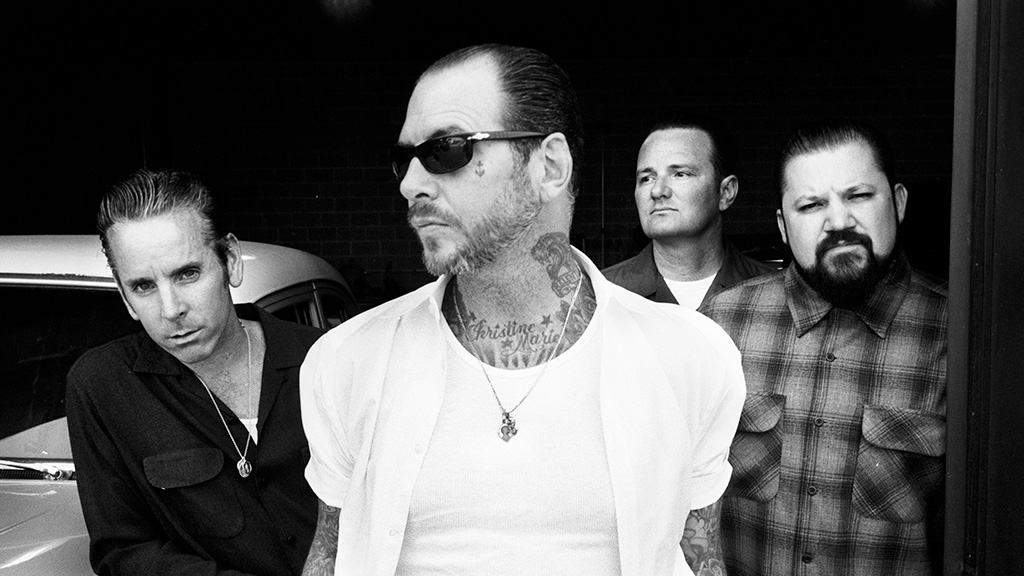
The band’s early days were chaotic and marked by frequent lineup changes.
Childhood friend Dennis Danell joined the band in 1979, despite initially lacking musical experience, strengthening the band’s core.
Social Distortion rehearsed in Danell’s garage and played local clubs alongside other Orange County punk bands like The Circle Jerks, The Blasters, and X.
The band’s sound was evolving, blending punk with country and blues influences, setting them apart from many of their contemporaries.
The punk scene in Orange County was tough, and Ness often faced bullying and violence for his appearance and lifestyle.
The band’s first gig in 1979 ended with Ness being arrested after spitting in the face of a plainclothes police officer.
Over the next few years, Ness’s heroin addiction worsened, leading to multiple arrests and near-death overdoses.
Despite these struggles, Social Distortion continued to build a following.
Their debut album, *Mommy’s Little Monster*, was recorded in 1982 and released independently in 1983.
The album captured the raw energy and emotion of the band’s early years and became a critical success within punk circles.
Songs like “Another State of Mind” reflected the band’s experiences on tour and the challenges of life as young punk musicians.
Social Distortion never fully embraced the heavily political themes common in punk at the time.
Ness described the band as apolitical, attributing this to his lack of formal education and learning about politics through life experiences rather than school.
The band’s music began to mature, incorporating more country and blues elements, especially evident on their second album, *Prison Bound* (1988).
By the mid-1980s, Ness’s addiction had become a serious problem, affecting the band’s stability.
After a tumultuous New Year’s Eve show in 1983 where the rhythm section quit mid-performance, the band went on hiatus.
Ness faced a choice between jail or rehab and chose rehabilitation, a turning point that helped save both his life and the band’s future.
Following rehab, Social Distortion recorded *Prison Bound*, which showcased a more mature sound and introspective lyrics drawn from Ness’s personal struggles.
The album was well received and helped the band gain a wider audience, particularly on college radio.
Their self-titled third album, released in 1990, is often considered their magnum opus.
It dealt with themes of struggle, survival, and redemption, featuring hits like “Ball and Chain” and “Drug Train.” The album brought Social Distortion to MTV and the Billboard charts, marking their transition from underground punk heroes to mainstream success.
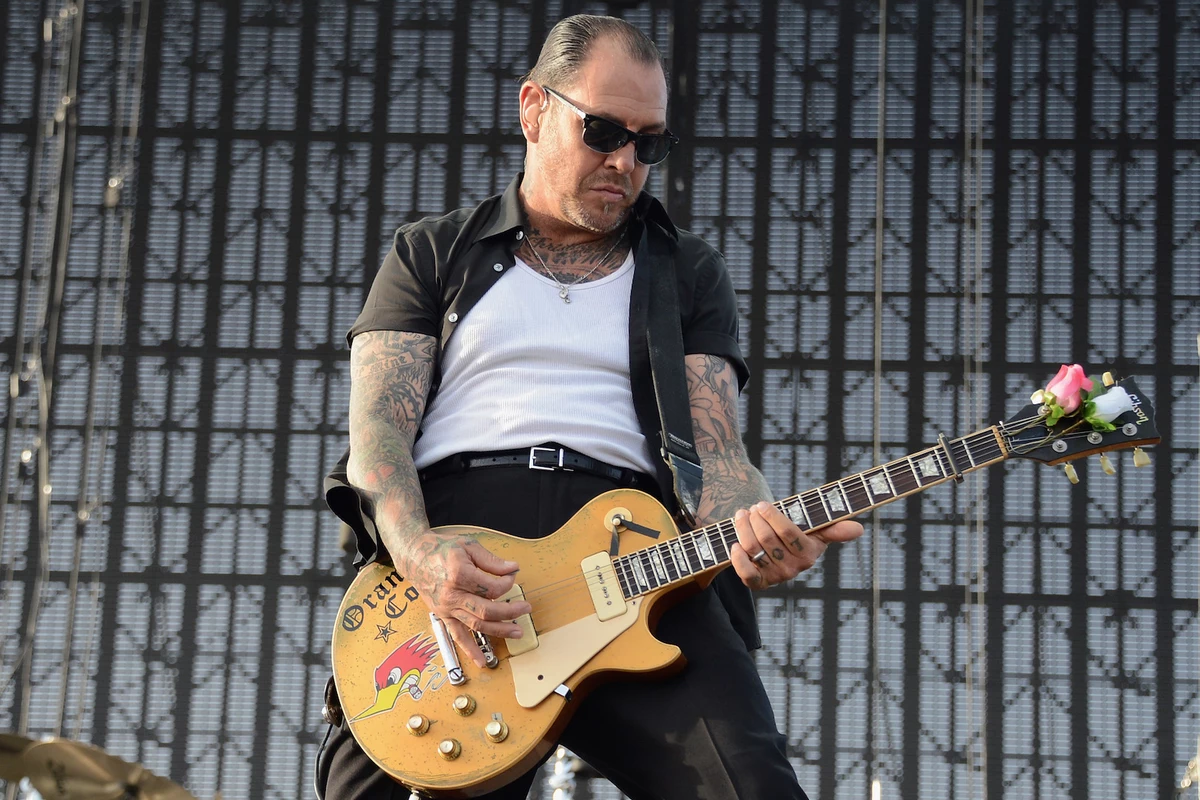
The band’s fourth album, *Somewhere Between Heaven and Hell* (1992), continued their blend of punk, country, and rock.
It produced hit singles such as “Bad Luck,” which became a modern rock radio staple.
Despite rising popularity, Social Distortion faced criticism from some punk purists who accused them of “selling out” after signing with a major label.
In the mid-1990s, Social Distortion released *White Light, White Heat, White Trash* (1996), an ambitious album reflecting the punk revival of the era.
Though it didn’t achieve the commercial success expected, singles like “I Was Wrong” gained significant airplay and the band maintained a loyal fan base.
In 2000, tragedy struck when Dennis Danell died suddenly from a brain aneurysm at the age of 38.
His death was a heavy blow to the band and to Ness personally.
Despite this, Social Distortion continued to make music and tour, releasing *Sex, Love and Rock ’n’ Roll* in 2004 and a greatest hits compilation in 2007 featuring new material.
Mike Ness also pursued solo projects, including country covers and original solo albums, demonstrating his wide musical influences and talents beyond punk rock.
Social Distortion remains active, with Mike Ness as the enduring heart and soul of the band.
Their last studio album, *Hard Times and Nursery Rhymes* (2011), continued to showcase their signature blend of punk, rockabilly, and country.
The band has been working on new material, with expectations for a new release in the near future.
Ness reflects on his journey with gratitude and a sense of survival, often remarking that every day above ground is a good day.
Social Distortion’s story is one of resilience, evolution, and the enduring power of music to transform pain into art.
News
The Song that Bob Dylan Wrote About Elvis Presley
Bob Dylan and Elvis Presley are two of the most legendary figures in American music history. One is known as…

Raul Malo, Lead Singer of The Mavericks, has died at age 60
The music world is mourning the loss of Raul Malo, the charismatic lead singer of The Mavericks, who passed away…
At 69, Steve Perry Confessed This Was the Song He Couldn’t Finish
Steve Perry’s voice is one of rock’s most iconic and enduring sounds. As the lead singer of Journey, he gave…
Top 6 SHOCKING Things Axl Rose Said About Other Rock Legends!
Axl Rose, the legendary frontman of Guns N’ Roses, is known not only for his iconic voice and music but…
‘You Had ONE Job!’ How Powerman 5000 FUMBLED a Platinum Future
Powerman 5000’s story is one of bold creativity, underground buzz, and a dramatic crossroads that nearly derailed their ascent to…
‘He Knew Last Show Would Kill Him’ Ozzy Osbourne’s Final Moments | Sharon Osbourne Interview
Ozzy Osbourne, the legendary rock icon, cultural pioneer, and beloved family man, gave his final performance knowing it might be…
End of content
No more pages to load






