
In the late 1970s and early 1980s, a punk rock band emerged from the underground scene of Orange County, California, that would go on to leave an indelible mark on American punk and rock music.
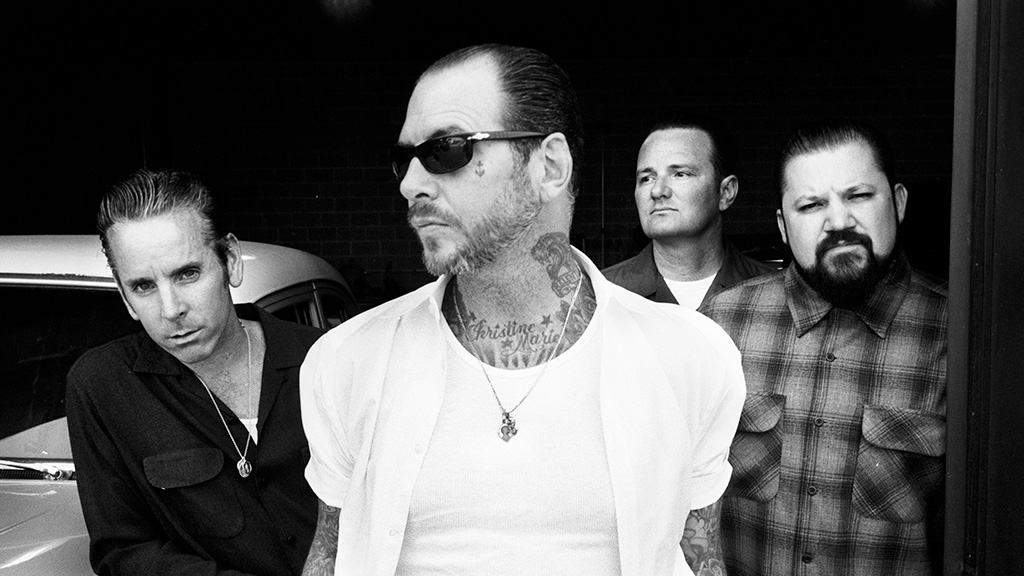
Known affectionately as Social D by their fans, Social Distortion blended punk with blues, country, and rockabilly, creating a sound that was uniquely their own and helped them achieve mainstream success in the 1990s.
At the heart of this band’s enduring legacy is frontman Mike Ness, the sole original member who has carried the band through decades of highs and lows.
This is the untold story of Social Distortion and the turbulent life and career of Mike Ness.
Mike Ness was born in Lynn, Massachusetts, but moved to Fullerton, Orange County, California, with his family at just one year old.
Growing up, Ness was influenced by classic rock bands like The Rolling Stones and Creedence Clearwater Revival before discovering punk rock.
His youth was far from idyllic; his parents divorced when he was a teenager, and his rebellious behavior led to him being kicked out of his father’s home.
Ness found solace in the outlaw legends John Dillinger and Bonnie and Clyde, as well as the raw energy of punk rock, Chicago blues, and rockabilly.
Inspired by punk icons such as The Clash, Johnny Thunders, and The Ramones, Ness admired their showmanship and attitude.
However, his early years were plagued by drug and alcohol abuse, starting as early as age 11.
Ness has described his teenage homes as “shooting galleries” filled with drug addicts, and he identified with the self-destructive lifestyle of punk icon Sid Vicious.
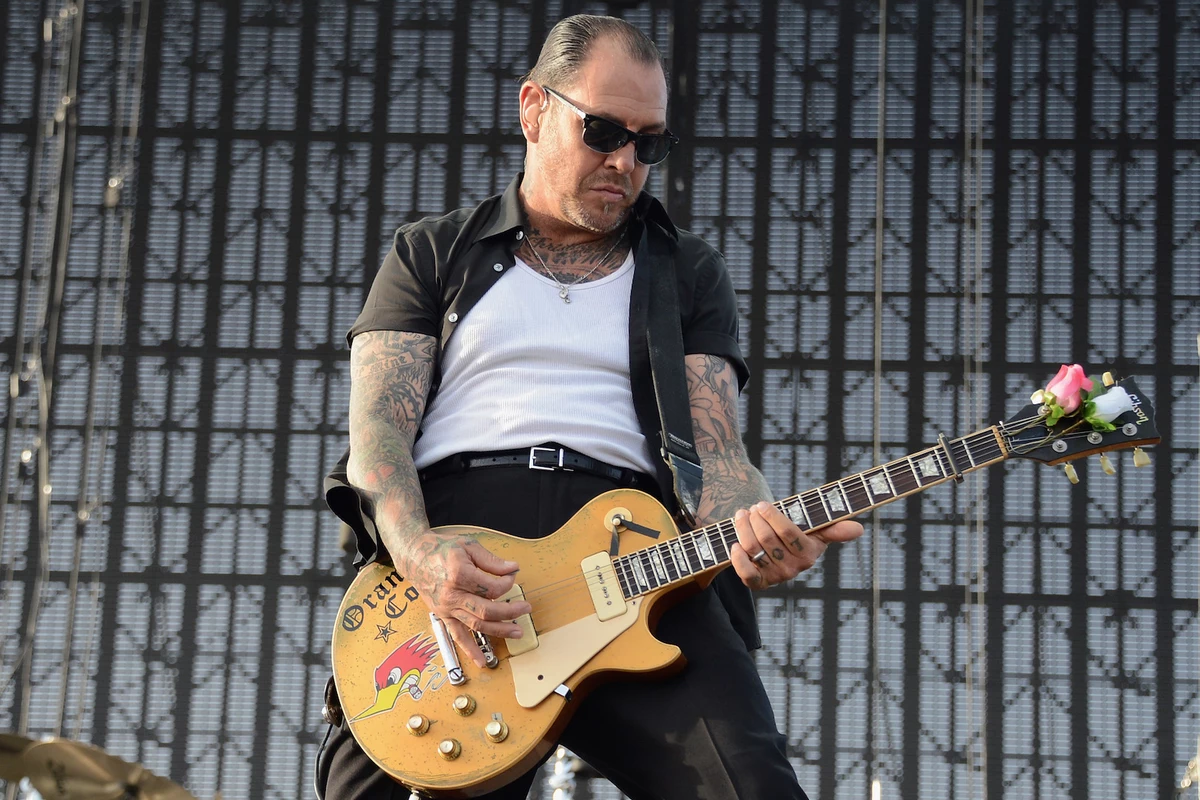
In the late 1970s, Ness formed Social Distortion, recruiting drummer Casey Royer and later childhood friend Dennis Danell, who despite initially lacking guitar skills, became a key member.
The band’s name reportedly came from Royer’s distortion pedal, which he lent to Ness during the early days when Ness was still learning guitar.
Social Distortion’s early days were wild and chaotic.
Ness lived in what became known as “the black hole,” a notorious apartment complex immortalized in The Adolescents’ song “Kids of the Black Hole.
” It was a refuge for punk kids escaping abusive homes but also a place of frequent rages and mayhem.
The band’s lineup shifted frequently, and their first gigs were marked by confrontations with police and bouncers, including incidents where Ness was arrested or physically assaulted.
By 1981, Ness’s heroin addiction had taken hold, costing him upwards of $150 a day and leading to multiple jail stints.
Despite these challenges, Social Distortion released their first single “Mainliner/Playpen” in 1981, gaining traction in the punk scene thanks in part to airplay on influential radio stations.
Social Distortion’s debut album, *Mommy’s Little Monster* (1983), recorded independently, showcased their blend of punk and melodic rock with Ness’s gritty vocals.
The album, along with their inclusion in the punk documentary *Another State of Mind*, raised their profile.
Though part of the punk scene, Social Distortion resisted heavy political themes, with Ness admitting his early songwriting was shaped more by street smarts than formal education.
However, Ness’s addiction was becoming a serious problem, affecting performances and band dynamics.
The rhythm section quit mid-show on New Year’s Eve 1983, and Ness’s erratic behavior nearly led to the band’s collapse.
Longtime friends John Maurer (bass) and Christopher Reece (drums) joined to stabilize the group during Ness’s darkest times.
In 1985, Ness faced a choice between jail and rehab, choosing the latter.
This hiatus allowed Ness to get clean and the band to regroup.
Their 1988 album *Prison Bound* marked a stylistic shift toward cowpunk, incorporating more country and blues influences and reflecting Ness’s personal growth.
The album was critically acclaimed and helped the band gain a foothold outside punk circles.
Signing with Epic Records, Social Distortion released their self-titled album in 1990, often regarded as their magnum opus.
It tackled themes of struggle and survival with hits like “Ball and Chain” and “Drug Train.” The band’s sound matured, and their music gained MTV exposure and commercial success, with singles charting on modern rock lists.
Despite accusations of “selling out” for signing to a major label, Ness defended the band’s evolution, emphasizing that their authenticity remained intact.
Their 1992 album *Somewhere Between Heaven and Hell* continued in a similar vein, exploring hard times of the heart and life’s harsh realities.

The album’s single “Bad Luck” became a fan favorite and received heavy airplay.
Throughout the 1990s and 2000s, Social Distortion continued to tour, release music, and influence a new generation of punk and rock bands like Rancid and The Offspring.
Ness also pursued solo projects, exploring country and acoustic sounds, while the band maintained a loyal fan base.
Tragedy struck in 2000 when Dennis Danell died suddenly from a brain aneurysm. The loss deeply affected Ness and the band but didn’t stop their creative momentum.
Their 2004 album *Sex, Love and Rock ‘n’ Roll* reflected themes of re-evaluation and perseverance.
Social Distortion’s 2007 greatest hits compilation included new material, signaling the band’s ongoing commitment to their music and fans.
Their most recent album, *Hard Times and Nursery Rhymes* (2011), continued their legacy of blending punk with American roots music.
Mike Ness’s journey from troubled youth to punk rock icon is a testament to resilience and artistic evolution.
His raw honesty about addiction, recovery, and personal growth resonates through Social Distortion’s music, which remains relevant decades after their formation.
The band’s willingness to blend genres and evolve musically while staying true to their roots has earned them a unique place in American rock history.
Mike Ness continues to work on new material, promising that Social Distortion’s story is far from over.
News

The Song that Bob Dylan Wrote About Elvis Presley
Bob Dylan and Elvis Presley are two of the most legendary figures in American music history. One is known as…

Raul Malo, Lead Singer of The Mavericks, has died at age 60
The music world is mourning the loss of Raul Malo, the charismatic lead singer of The Mavericks, who passed away…

At 69, Steve Perry Confessed This Was the Song He Couldn’t Finish
Steve Perry’s voice is one of rock’s most iconic and enduring sounds. As the lead singer of Journey, he gave…

Top 6 SHOCKING Things Axl Rose Said About Other Rock Legends!
Axl Rose, the legendary frontman of Guns N’ Roses, is known not only for his iconic voice and music but…

‘You Had ONE Job!’ How Powerman 5000 FUMBLED a Platinum Future
Powerman 5000’s story is one of bold creativity, underground buzz, and a dramatic crossroads that nearly derailed their ascent to…
‘He Knew Last Show Would Kill Him’ Ozzy Osbourne’s Final Moments | Sharon Osbourne Interview
Ozzy Osbourne, the legendary rock icon, cultural pioneer, and beloved family man, gave his final performance knowing it might be…
End of content
No more pages to load






