
Dave Burgess, the quiet studio craftsman whose steady guitar groove helped launch one of the most unexpected and enduring hits in rock history, has died at the age of 90, leaving behind a legacy far larger than the single word that made him famous.
For generations of listeners, “Tequila” has been a party anthem, a jukebox classic, a movie soundtrack staple, and a cultural touchstone recognizable in just a few seconds.
But behind the iconic sax riff and the playful shouted hook stood a musician whose steady hand, deep musical intuition, and tireless work ethic shaped not only the recording itself but the band that carried it into history.
Burgess, despite being neither the one shouting the song’s title nor the saxman blowing its immortal melody, was the glue, the anchor, and the uncredited architect who ensured the spontaneous B-side experiment became a phenomenon that would echo through decades.
Born on December 3, 1934, in the sprawling entertainment landscape of Los Angeles, Dave Burgess grew up surrounded by the energy of a city that seemed to breathe music and ambition.
By his teenage years, he was already immersed in the world he would eventually help shape, working on the local circuit, recording singles, and absorbing the lessons that only studios, late-night sessions, and seasoned musicians could teach.
In those small, smoke-filled rooms, he learned how to tighten arrangements, how to guide a band’s rhythm section, and how to maintain a groove that held everything together, lessons that would later become the backbone of his career.
His early work with OKeh Records in 1953, followed by time at Topps Records, showed his determination to master every corner of the industry, while his brief experimentation with the name “Dave Duprè” revealed an artist exploring not only his identity but the many creative paths available to him.
By the mid-1950s, Burgess had become a highly reliable and respected figure inside the Los Angeles recording community, known for his sharp instincts, professionalism, and ability to turn even modest studio sessions into tight, well-executed performances.
Yet nothing in his growing résumé hinted at the explosion that was coming.
In 1958, Challenge Records, founded by western icon Gene Autry, needed a band to record Burgess’s new single “Train to Nowhere.”

The solution was to assemble a group of talented studio musicians, christen them “The Champs,” and send them into the studio to capture the A-side that the label hoped would draw attention.
But sessions always require a B-side, something fast, simple, and inexpensive to fill the record.
No one expected this second track to matter.
Saxophonist Danny Flores—credited as Chuck Rio due to contractual issues—had been toying with a Latin-styled riff, a loose, bouncing melody anchored by a percussive groove and punctuated by the single shouted word “Tequila!” The vibe was fun, off-the-cuff, and completely unpolished, but it was enough to fill tape.
With Burgess locking down the rhythm guitar line that gave the track its heartbeat, the band recorded it in a single take—raw, imperfect, spontaneous, and, as everyone assumed, totally forgettable.
When the session ended, they set their sights back on the A-side, never imagining they had just tracked one of the most recognizable instrumentals ever made.
But the public had other plans.
When DJs across the country began flipping the single and playing the B-side instead, the response was electrifying.
“Tequila” exploded from jukeboxes in diners, bars, and dance halls from Los Angeles to New York.
Teenagers could not get enough of its irresistible groove; adults found themselves laughing at its playful repetition; musicians admired its simplicity and swagger.
Within weeks, the song soared to Number One on the Billboard charts, sold over a million copies, and earned the Grammy Award for Best R&B Performance—a groundbreaking achievement for an instrumental track built on improvisation.
The Champs suddenly became the first rock band in history to hit Number One with its debut release, and while Dave Burgess’s name was absent from the songwriting credit, his musical leadership, discipline, and direction had made the record possible.
The spotlight may have shined most brightly on Flores’s sax hook, but insiders knew the truth: Dave Burgess was the foundation, the engine, and the steady presence that turned chaotic musical ideas into polished recordings.
Throughout the late 1950s and beyond, he remained not only the bandleader and guitarist but also a prolific songwriter who contributed dozens of original compositions, including “Lucky Star,” later recorded by Ricky Nelson and Gene Vincent.
Over the course of his career, more than 700 songs would be registered under his name, while his behind-the-scenes work as a producer shaped projects across genres.
Burgess belonged to the class of musicians whose fingerprints were everywhere, yet whose contributions rarely made the headlines.
Even after the first wave of rock and roll began to fade, Burgess refused to disappear into nostalgia.
Reinvention became part of his identity.
For a time, he and his wife shifted into a completely different world by running an art gallery in Montana, far removed from the studios and sessions that had filled his younger years.
But the gravitational pull of music never loosened its hold on him, and eventually he found himself back in the Nashville area, returning to the world where he felt most at home.
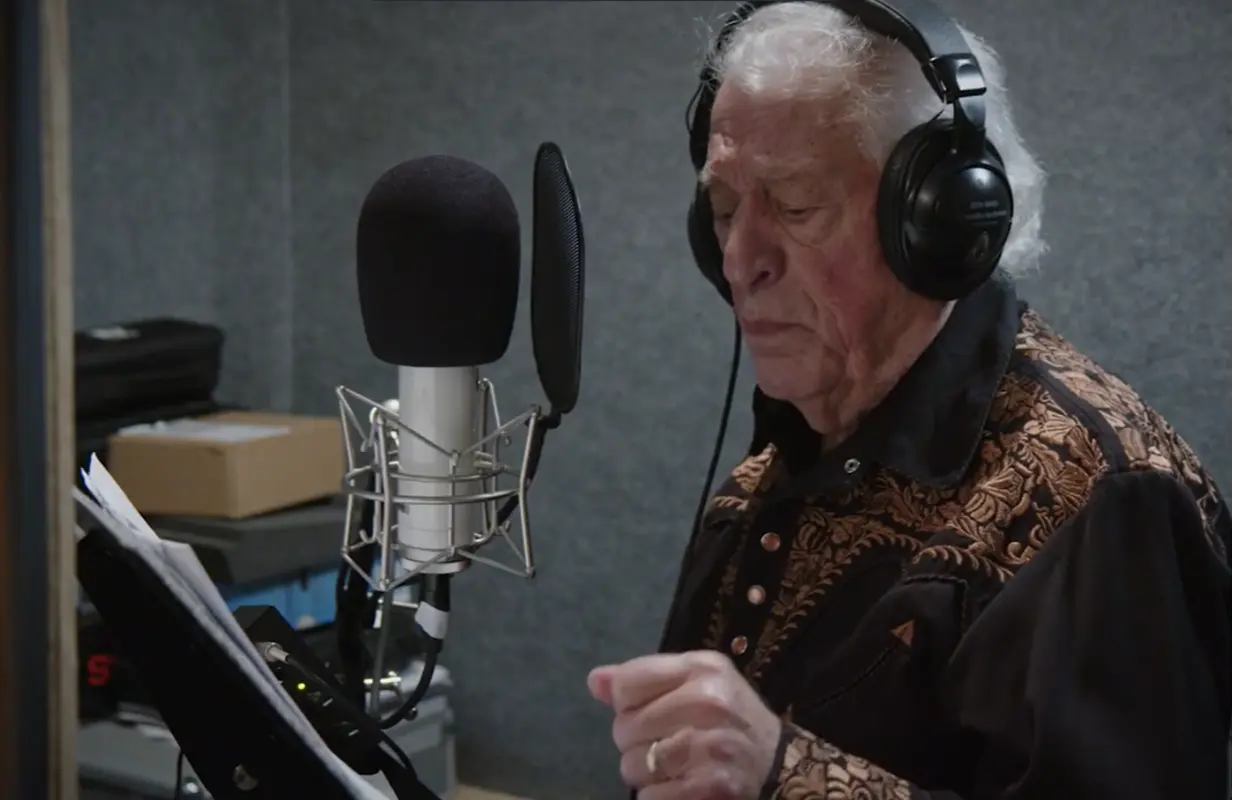
More than sixty years after “Tequila” shook American pop culture, Burgess revived The Champs with a 2020 album titled Tequila Party, proving that his creativity had outlived the decades and that he still possessed the instinctive musical spark that defined his youth.

Of course, “Tequila” itself enjoyed multiple lives, resurfacing through countless films, commercials, and cultural parodies, the most iconic being its unforgettable appearance in Pee-wee’s Big Adventure, which transformed the track into a meme that continues to circulate online today.
Burgess, whether he intended it or not, had created something immortal—an accidental masterpiece that refused to age.
Dave Burgess passed away on October 19, 2025, in Dover, Tennessee, at the age of 90.
His family, friends, and fans honored his life on November 8, though news of his death reached the public only in recent days.
For most listeners, his legacy will forever be tied to that irresistible B-side and the single word that became a worldwide sensation.
But those who understand the inner workings of the music industry know that his contributions reached far beyond one hit.
He was the architect behind an enduring sound, the guitarist who kept the groove steady, the songwriter whose catalog spanned decades, and the bandleader who transformed a last-minute filler track into global rock immortality.
In remembering Dave Burgess, we are reminded that no hit is ever the product of a single voice or a single star.
Rock and roll has always been built on many hands—rhythm players, producers, arrangers, studio musicians, and quiet leaders who never seek the spotlight but make the music possible.
“Tequila” may be the song everyone recognizes, regardless of age, but the man behind its heartbeat was Dave Burgess, a musician whose steady presence shaped not only a band but a piece of music history that shows no sign of fading.
News

The Song that Bob Dylan Wrote About Elvis Presley
Bob Dylan and Elvis Presley are two of the most legendary figures in American music history. One is known as…

Raul Malo, Lead Singer of The Mavericks, has died at age 60
The music world is mourning the loss of Raul Malo, the charismatic lead singer of The Mavericks, who passed away…

At 69, Steve Perry Confessed This Was the Song He Couldn’t Finish
Steve Perry’s voice is one of rock’s most iconic and enduring sounds. As the lead singer of Journey, he gave…

Top 6 SHOCKING Things Axl Rose Said About Other Rock Legends!
Axl Rose, the legendary frontman of Guns N’ Roses, is known not only for his iconic voice and music but…

‘You Had ONE Job!’ How Powerman 5000 FUMBLED a Platinum Future
Powerman 5000’s story is one of bold creativity, underground buzz, and a dramatic crossroads that nearly derailed their ascent to…

‘He Knew Last Show Would Kill Him’ Ozzy Osbourne’s Final Moments | Sharon Osbourne Interview
Ozzy Osbourne, the legendary rock icon, cultural pioneer, and beloved family man, gave his final performance knowing it might be…
End of content
No more pages to load






