
On the cold afternoon of December 8, 1980, veteran music journalist Lori Kay believed she was living the greatest day of her professional life.

Hours later, she would learn she was also living the most haunting.
Sitting in a small New York office with John Lennon and Yoko Ono—laughing, trading stories, discussing music, fame, survival, and the future—Kay had no way of knowing she would be the final reporter to interview Lennon before his shocking assassination outside the Dakota.
Forty-three years later, the weight of that afternoon, and the guilt she never asked for, still lives inside her.
Kay had interviewed many legends, but nothing prepared her for the surreal honor of spending an entire afternoon with the man who reshaped world culture.
The Beatles were not merely famous; they had become the gravitational center of Western music.
Kay, who had grown up in a childhood marked by instability, loneliness, and a desperate longing for meaning, had always looked to music—and to the Beatles—for escape.
To her, Lennon was not only a hero.
He was proof that pain could be transformed into possibility.
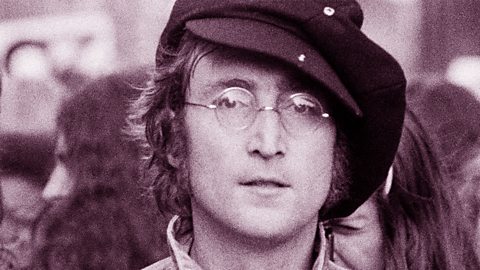
And on that December day, she suddenly found herself sitting on a love seat next to her idol as he pushed his glasses down his nose, peered at her with that unmistakable Lennon twinkle, and called her “love.”
But the day did not begin with Lennon.
Yoko Ono arrived first, gracious but serious, eager to discuss Double Fantasy, the couple’s comeback album.
They talked for half an hour about the songs—their structure, their intimacy, the way each track felt like a dialogue between two people rediscovering each other after years of fractures and healing.
Kay brought a copy of Ono’s book Grapefruit, something she had treasured for years.
Ono was stunned to see it, calling it incredible that Kay still had an original copy.
When Lennon later entered the room, he shared her surprise—neither of them had seen a copy in years.
Both insisted on signing it.
Ono gave a heartfelt signature.
Lennon added a cartoon of himself and Yoko—something Kay still calls her most valuable possession on earth.
When Lennon first peeked through the door, he offered a polite apology for being late.
Kay, half-joking and half-shocked at her own boldness, muttered, “Can’t you see we’re in the middle of an interview?” Lennon erupted in laughter and immediately joined her on the couch.
From that moment on, a connection formed—one Kay believed would continue long after that interview.
They talked for hours.

He asked about her life.
She asked about his.
They made plans for dinner in San Francisco in a few weeks.
There were rules, of course.
Representatives from Geffen Records had warned Kay and the RKO team: Absolutely no Beatles questions.
Lennon had grown tired of being dragged into the past.
He wanted to discuss his present—his family, his art, his hopes for the future.
Kay respected that.
Yet Lennon, ever unpredictable, brought up the Beatles himself.
Paul.
The formation of the band.
The way it all began.
For Kay, hearing Lennon recount the origin of the greatest musical phenomenon of the 20th century—unprompted—felt like a gift.

But the day carried a shadow that Kay did not recognize until it was too late.
As she left the Dakota after the interview, she encountered a strange man lingering outside the building.
He followed her, asked repetitive questions, and gave her an overwhelming sense of unease.
She wanted to shake him off, and eventually she did.
But the guilt never left her—because that man was the killer.
In the decades since, Kay has refused to speak his name, refusing to give him the notoriety he sought.
She is still tormented by one “what if”: What if she had told Dakota security that a man was acting strangely? Could things have been different? Could someone have discovered the gun? Could Lennon have lived?
Kay admits she will never escape that question.
It has weighed on her shoulders for 43 years.
She knows logically she could not have predicted anything, but grief is not logical.
The closer she felt to Lennon that day, the harder it became to let go of that guilt.

Later that night, after enthusiastically recounting her magical day to a friend over dinner, Kay returned to his apartment.
The radio was on.
A reporter announced that John Lennon had been shot and taken to Roosevelt Hospital.
Kay nearly collapsed.
She rushed outside, flagged down a cab, and raced to the hospital.
Through the glass doors, she saw Yoko Ono sobbing uncontrollably in the arms of David Geffen.
Kay could tell instantly—Lennon was gone.
She wanted to approach Yoko, to say she was sorry, to ask what she could do.
But she couldn’t.
Yoko’s grief was so consuming that Kay believed her presence would only force Yoko to relive the afternoon’s joy turned tragedy.
So she left, heartbroken and shaking.
Within minutes she was on the phone with the RKO network.
By morning she was on the Today show.
Within six days, she had produced a new three-hour special titled John Lennon: The Man, The Memory.
The original Valentine’s Day special about Double Fantasy was gone forever.
The world mourned Lennon.
But Kay mourned something else, too: the future she believed she was about to share with him.
A friendship.
Conversations.
The dinner that never came.
For decades, friends, fans, and colleagues asked her to write a book about her experiences.
She couldn’t.
The weight of guilt and grief made it impossible.
Only when the pandemic shut down her television production career—and the world stopped—did she finally have the space to write.
Her memoir, Confessions of a Rock and Roll Name Dropper, was published on December 8, 2023, exactly 43 years after Lennon’s death.
The book is not about exploiting tragedy.
It is about truth—one woman’s journey from a troubled childhood to a career that collided with history in a way she never expected.
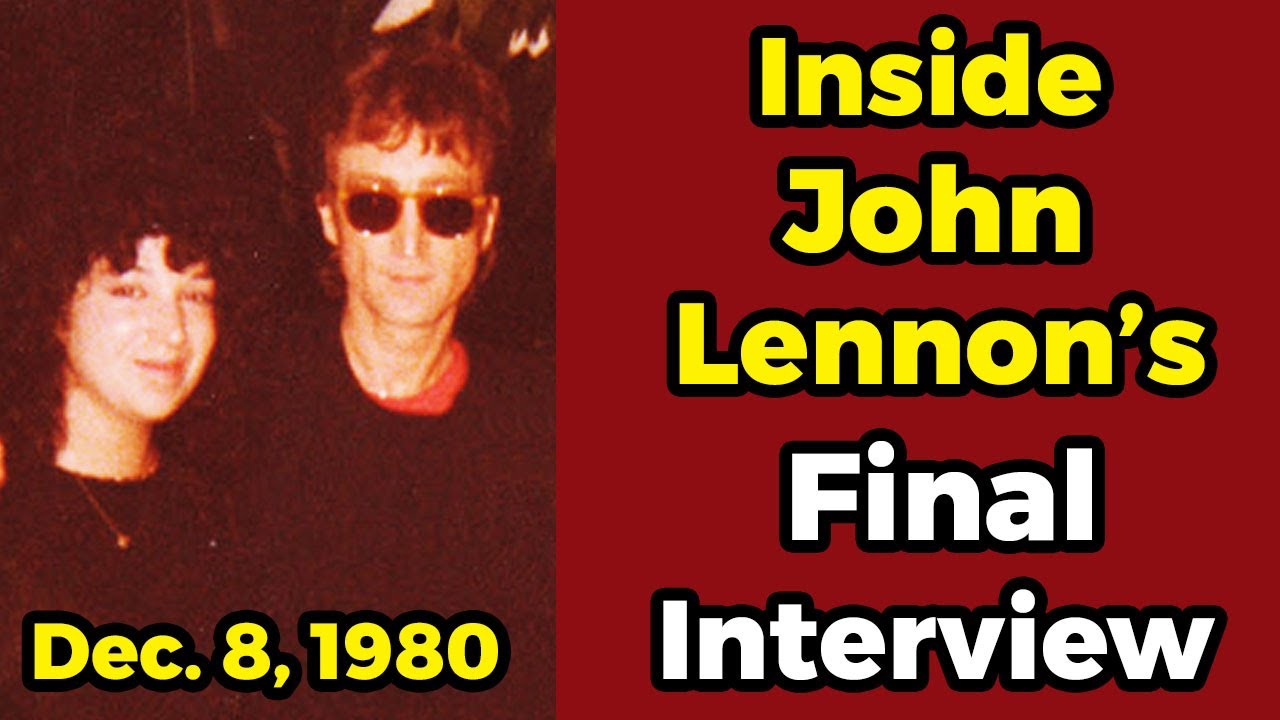
It is about the surreal responsibility of being the last person to capture Lennon’s voice.
And it is about the strange and intimate privilege of witnessing the final hours of a man whose music changed the world.
Kay still thinks about Lennon every day.
She still sees him laughing, leaning over his glasses, calling her “love.” She still hears his excitement about the future he never lived to see.
And she still remembers the profound feeling, in that room on December 8, that she had made a friend for life.
In one way, she did.
Because all these years later, John Lennon has never left her.
News
The Song that Bob Dylan Wrote About Elvis Presley
Bob Dylan and Elvis Presley are two of the most legendary figures in American music history. One is known as…
Raul Malo, Lead Singer of The Mavericks, has died at age 60
The music world is mourning the loss of Raul Malo, the charismatic lead singer of The Mavericks, who passed away…
At 69, Steve Perry Confessed This Was the Song He Couldn’t Finish
Steve Perry’s voice is one of rock’s most iconic and enduring sounds. As the lead singer of Journey, he gave…
Top 6 SHOCKING Things Axl Rose Said About Other Rock Legends!
Axl Rose, the legendary frontman of Guns N’ Roses, is known not only for his iconic voice and music but…

‘You Had ONE Job!’ How Powerman 5000 FUMBLED a Platinum Future
Powerman 5000’s story is one of bold creativity, underground buzz, and a dramatic crossroads that nearly derailed their ascent to…
‘He Knew Last Show Would Kill Him’ Ozzy Osbourne’s Final Moments | Sharon Osbourne Interview
Ozzy Osbourne, the legendary rock icon, cultural pioneer, and beloved family man, gave his final performance knowing it might be…
End of content
No more pages to load






