
In the wild world of rock and roll, where legends are made and myths grow like wildfire, few stories have ignited as much debate and intrigue as the recent controversy surrounding Mötley Crüe’s iconic bassist, Nikki Sixx.
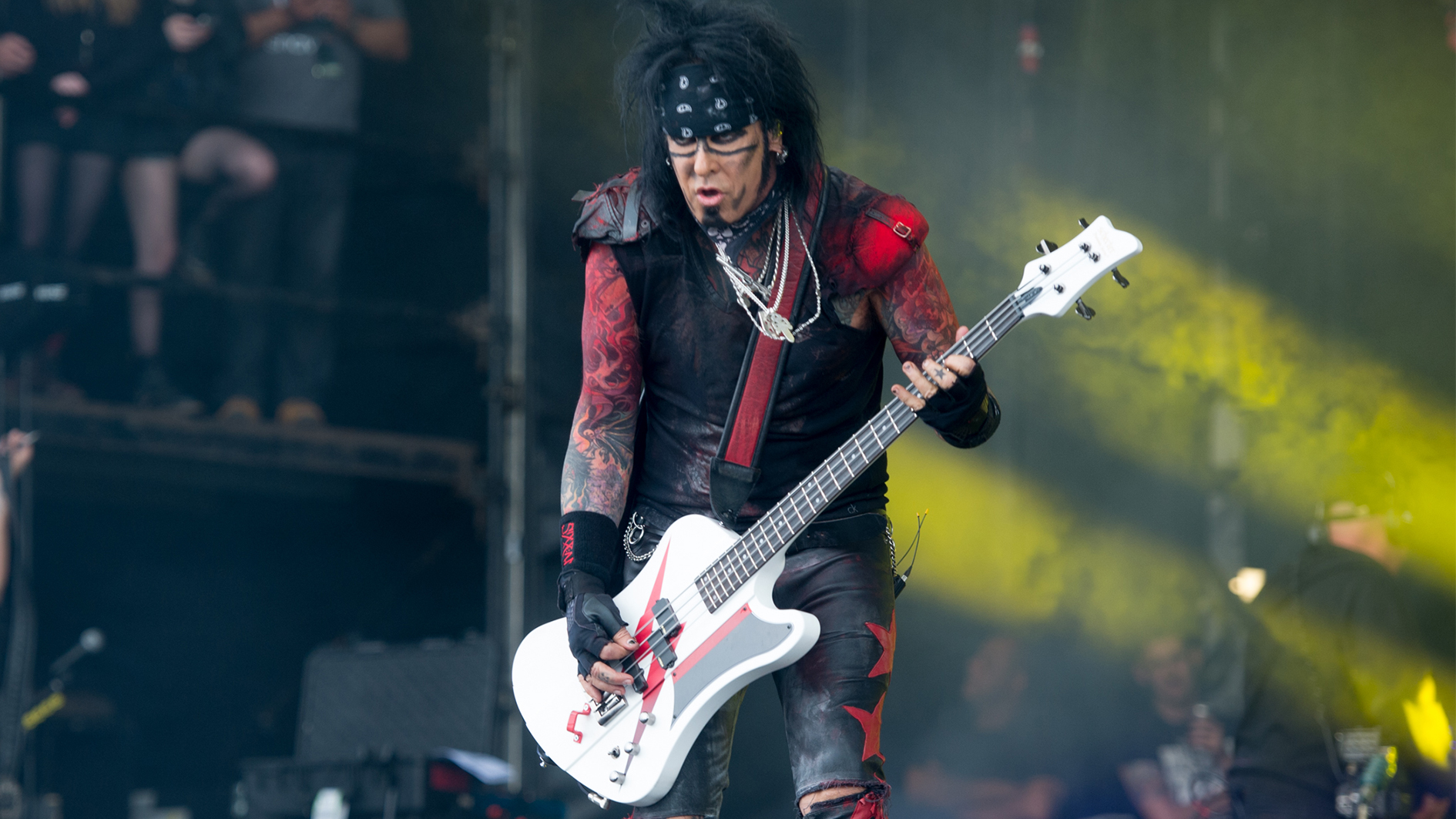
Is the man who penned some of glam metal’s most unforgettable bass lines really the one playing on the records? Or has a shadowy session bassist been pulling the strings behind the scenes? Legendary drummer Carmine Appice’s cryptic Twitter post in 2023 sent shockwaves through the music world, reigniting decades-old rumors and stirring a fierce debate among fans and insiders alike.
It all began innocuously enough in June 2023, when Carmine Appice, a revered figure in rock drumming circles, dropped a tantalizing hint on Twitter: “I rest my case regarding Nikki 6, Carol K.”
For those in the know, Carol K is a renowned session bassist who has lent her talents to hundreds of hit records across genres.
The implication was clear — could it be that Nikki Sixx’s bass parts on Mötley Crüe albums were actually played by Carol K?
This revelation sent fans into a frenzy.
The timing was particularly explosive following guitarist Mick Mars’ departure from Mötley Crüe in 2022, after he publicly criticized the band for using pre-recorded tracks during live performances.
Mars described the experience as disheartening, revealing that much of the show was “all on tape” and “planned out,” which ultimately contributed to his decision to quit touring.
Mick Mars’ candid comments added fuel to the fire.
In a March 2023 interview, Mars lamented the loss of authenticity on stage, stating, “When I was on the stadium tour, I was not happy. Basically, everything was on tape. It was all planned out and ultimately a lot of crap.”
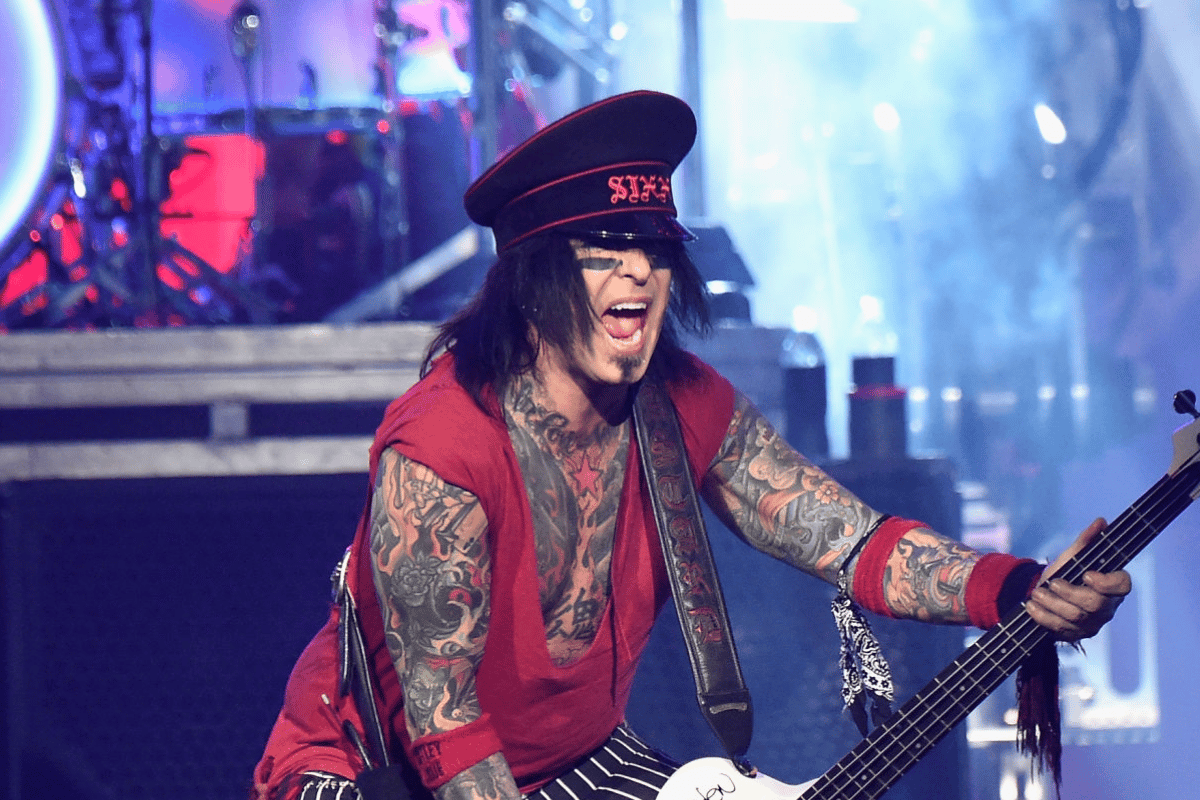
His words resonated with fans who had long suspected that some of the band’s live magic might be more illusion than reality.
Mars’ departure was a significant blow to the band’s image, and his accusations raised questions about the integrity of the performances, especially concerning the bass parts.
If Mars, the longtime guitarist, wasn’t happy with the use of backing tracks, what did that mean for Nikki Sixx’s role?
Enter Bob Rock, the famed producer behind Mötley Crüe’s 1989 album *Dr. Feelgood*, who unwittingly fanned the flames.
On the podcast *Talk is Jericho*, Rock recounted a humorous yet eyebrow-raising story.
He recalled Nikki Sixx telling him, “I don’t think I ever played on any of the Mötley Crüe records. I think somebody came in at night and replaced all my parts.” When Rock responded, “Too bad.
You’re playing bass on it,” Nikki apparently laughed it off, admitting he didn’t know how to play bass well at the time.
The story quickly went viral, but Bob Rock later clarified that Nikki’s comments were a joke taken out of context.
He affirmed Nikki’s talent, saying, “At no time did I ever actually think Nikki didn’t play bass on Mötley Crüe records. He’s one of the most unique and talented players in the world.”
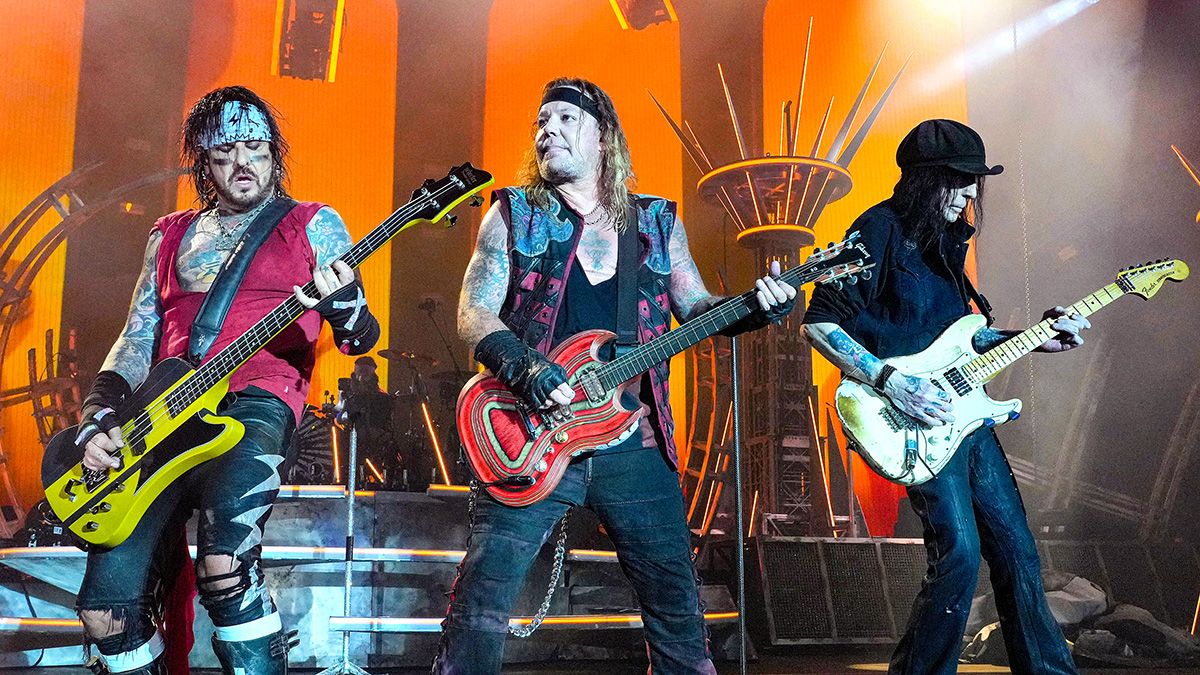
Still, the damage was done; fans remained divided between believing the joke and suspecting a deeper truth.
Adding to the complexity, guitarist John 5 publicly defended Nikki Sixx and the band’s live authenticity.
John 5 insisted that Mötley Crüe plays live and does not rely on backing tracks for the main instruments, although he acknowledged that background sounds might be supplemented.
In 2024, John 5 reiterated his stance, emphasizing that fans often misunderstand the realities of live performances.
He argued that while some elements may be enhanced for the audience’s experience, the core musicianship remains genuine.
Despite these defenses, Carmine Appice has remained steadfast in his belief that using backing tracks for main instruments like bass, drums, or guitars is wrong.
He has been vocal about maintaining authenticity in rock music, even if it means calling out respected peers.
Appice’s comments have kept the debate alive, suggesting that perhaps Nikki Sixx’s bass lines on some recordings were indeed played by session musicians like Carol K.
Whether this is a matter of practicality, artistic choice, or something more controversial remains a hot topic.
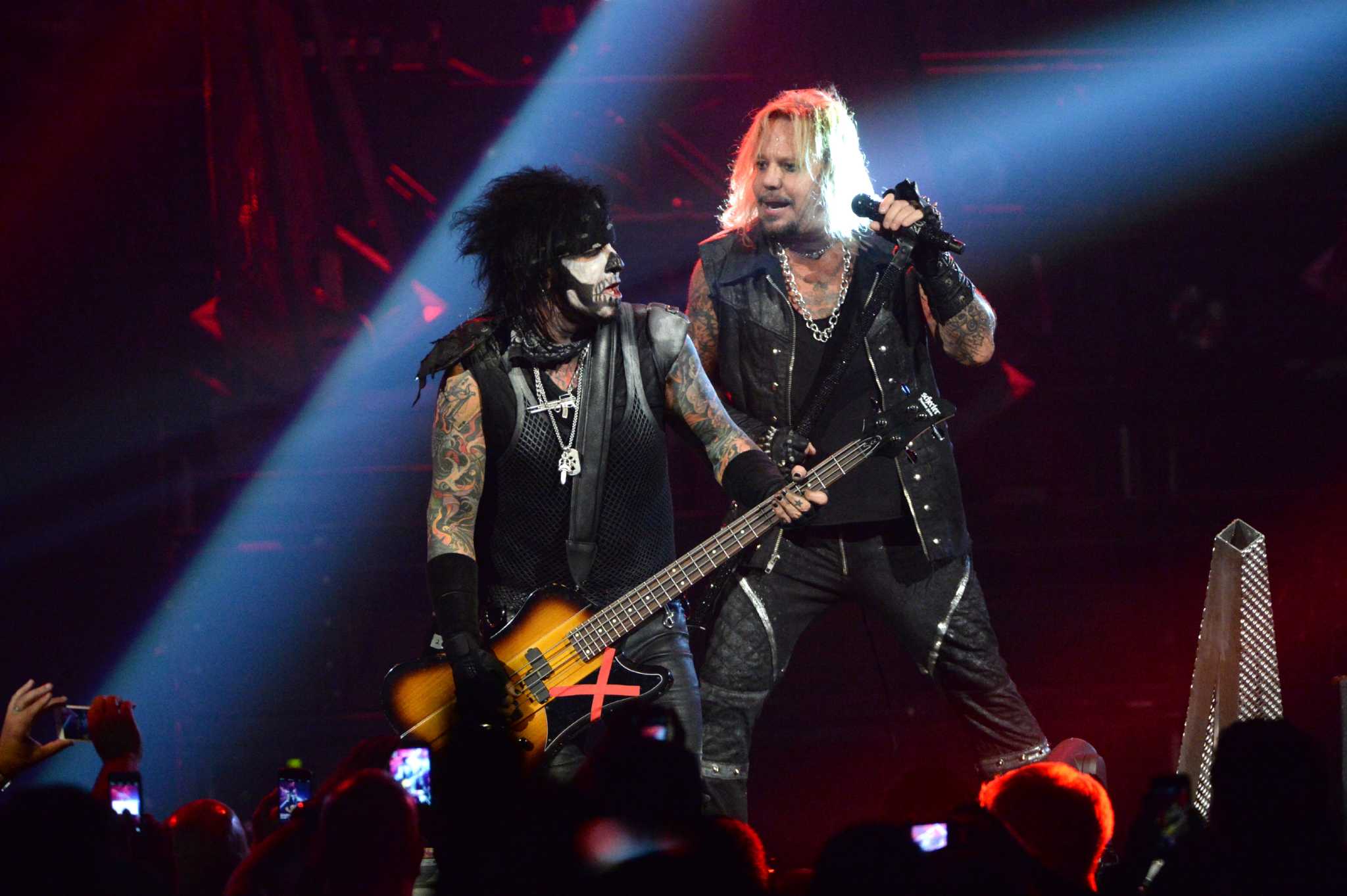
This controversy raises broader questions about rock music’s relationship with authenticity in the studio and on stage.
Many bands have faced similar accusations, and the use of session musicians is not uncommon in the industry.
However, for fans who idolize the raw energy and personal connection of rock legends, such revelations can feel like betrayals.
Mötley Crüe’s legacy as one of glam metal’s defining bands is undeniable, with hits like “Dr. Feelgood,” “Girls, Girls, Girls,” and “Kickstart My Heart” cementing their place in music history.
Whether Nikki Sixx’s bass parts were played by him or a session player, the music has inspired millions.
The fan community remains split. Some argue that the quality and impact of the music matter more than who physically played the notes.
Others feel that the heart of rock lies in the authenticity of its performers, and any use of session musicians undermines that spirit.
Social media continues to buzz with discussions, theories, and heated arguments.
The story has become a symbol of the ongoing tension between commercial success and artistic integrity in the modern music industry.
The question of Nikki Sixx’s true role in Mötley Crüe’s recordings may never be fully answered.
With conflicting accounts, jokes taken seriously, and passionate defenders on both sides, the legend grows.
What is clear is that Carmine Appice’s provocative comments reignited a conversation about honesty, talent, and the realities behind the rock ‘n’ roll curtain.
Whether you believe Nikki Sixx was the bassist behind the iconic riffs or not, the music continues to live on, loud and unapologetic.
News
The Song that Bob Dylan Wrote About Elvis Presley
Bob Dylan and Elvis Presley are two of the most legendary figures in American music history. One is known as…

Raul Malo, Lead Singer of The Mavericks, has died at age 60
The music world is mourning the loss of Raul Malo, the charismatic lead singer of The Mavericks, who passed away…
At 69, Steve Perry Confessed This Was the Song He Couldn’t Finish
Steve Perry’s voice is one of rock’s most iconic and enduring sounds. As the lead singer of Journey, he gave…
Top 6 SHOCKING Things Axl Rose Said About Other Rock Legends!
Axl Rose, the legendary frontman of Guns N’ Roses, is known not only for his iconic voice and music but…

‘You Had ONE Job!’ How Powerman 5000 FUMBLED a Platinum Future
Powerman 5000’s story is one of bold creativity, underground buzz, and a dramatic crossroads that nearly derailed their ascent to…
‘He Knew Last Show Would Kill Him’ Ozzy Osbourne’s Final Moments | Sharon Osbourne Interview
Ozzy Osbourne, the legendary rock icon, cultural pioneer, and beloved family man, gave his final performance knowing it might be…
End of content
No more pages to load






