
Chicago’s story is one of innovation, success, tragedy, and conflict—a saga that spans over five decades and reveals the complexities behind one of America’s most enduring rock bands.
From their groundbreaking fusion of horns and rock to their internal struggles and transformation into a polished pop machine, Chicago’s journey is a cautionary tale about artistic vision, commercial pressures, and personal loss.
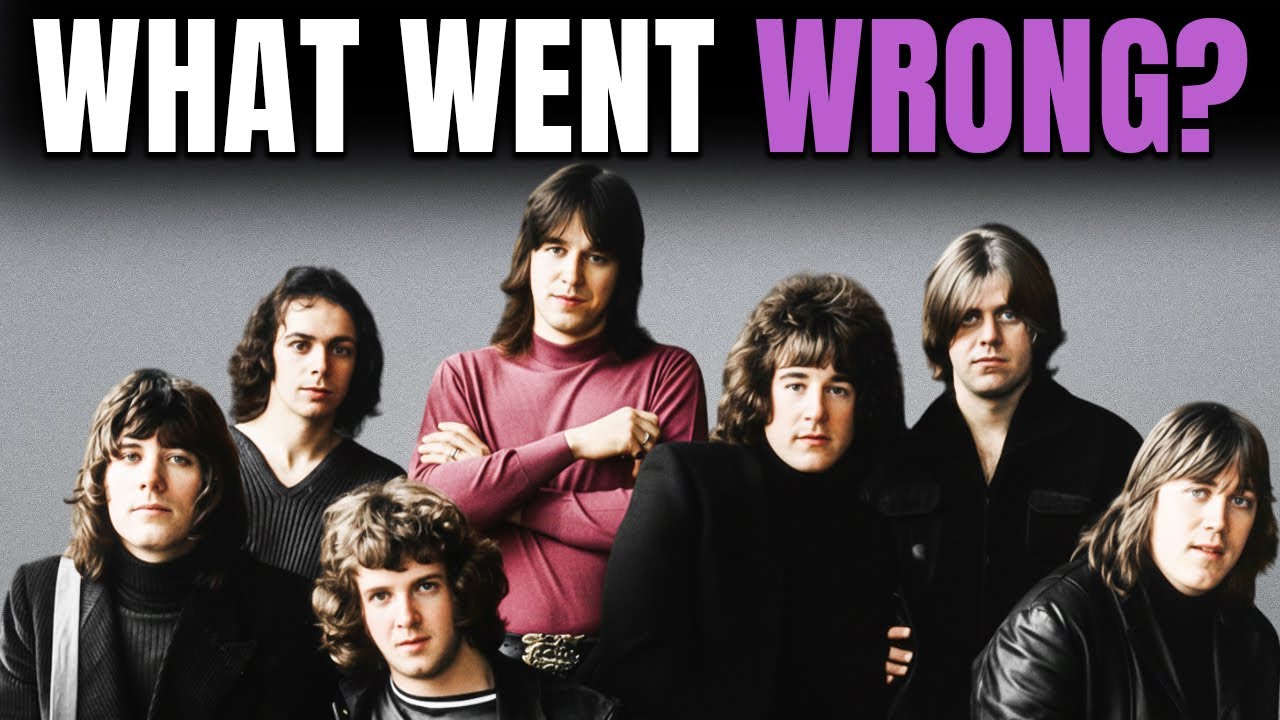
In 1967, amid the vibrant and diverse musical landscape of Chicago, seven young musicians from DePaul University dared to defy convention.
At a time when rock was dominated by guitar heroes and loud frontmen, these musicians envisioned a band where horns—trumpet, trombone, and woodwinds—would not be mere embellishments but the driving force of their sound.
This was radical, almost commercial suicide, since horns were traditionally confined to jazz clubs and Motown studios.
The founding members included Walter Parazaider on woodwinds, Lee Loughnane on trumpet, and James Pankow on trombone, who insisted their instruments lead the music rather than support it.
Guitarist Terry Kath brought a bluesy edge and a voice capable of shifting from tender whispers to primal screams.
Drummer Danny Seraphine provided thunderous rhythms, while Robert Lamm, the classically trained keyboardist, crafted politically conscious yet personal lyrics.
Peter Cetera, the bassist and tenor vocalist, completed the lineup, adding soaring harmonies that complemented the horns.
Initially named The Big Thing, then Chicago Transit Authority, they finally settled on Chicago after legal pressure from the city’s transit authority.
Their name symbolized their connection to the city’s industrial heartbeat and working soul.
Chicago’s debut album, released in 1969 as a double LP, was a bold statement.
Producer James Guercio convinced Columbia Records to take a risk on this unknown band with an ambitious project.
The album blended rock, jazz, and classical influences, featuring complex horn arrangements and political themes.
Songs like “Does Anybody Really Know What Time It Is?” challenged listeners with philosophical lyrics wrapped in catchy melodies.
Despite initial confusion from critics and radio programmers, the album slowly gained traction, staying on the Billboard charts for nearly three years.
However, radio edits were necessary to make the songs fit the three-minute format demanded by Top 40 stations.
This tension between artistic ambition and commercial viability foreshadowed future struggles.
The 1970s were Chicago’s heyday. They released albums with clockwork regularity, each multi-platinum and filled with top 10 hits.
Songs like “Make Me Smile,” “25 or 6 to 4,” and “Saturday in the Park” became anthems of the era.
Their blend of progressive rock complexity and pop accessibility won them five consecutive number one albums and 21 top 10 singles, making them the second most successful American band after The Beach Boys in terms of chart performance.
Their music captured the optimism and turmoil of the early 70s, balancing intricate horn arrangements with rock energy.
Yet beneath the success, cracks were forming.
The relentless pressure to produce hits and tour exhaustively took its toll.
Substance abuse and creative disagreements began to surface.
By the mid-1970s, producer Guercio noticed a decline in songwriting contributions from founding members like Robert Lamm and James Pankow.
Instead, Peter Cetera’s ballads gained prominence, culminating in the 1976 album *Chicago X*, featuring the Grammy-winning power ballad “If You Leave Me Now.
” This song marked a turning point, introducing a smoother, softer sound that brought massive commercial success but also shifted the band’s identity.

The democratic spirit that had defined Chicago started to erode.
Cetera’s voice and style became the focus, sidelining the band’s original rock edge.
Guitarist Terry Kath, a critical advocate for their progressive roots, felt increasingly marginalized.
On January 23, 1978, tragedy struck when Terry Kath died in a tragic accident involving a firearm at a party.
His death was a devastating blow musically and emotionally.
Kath’s guitar was the band’s rock foundation, providing grit and soul that balanced the horns’ sophistication.
More importantly, he was the last strong voice defending the band’s original artistic vision.
Without Kath, Chicago lost its creative anchor.
The band struggled to find direction, and producer Guercio was fired.
Subsequent albums failed to recapture the magic, and by the early 1980s, Columbia Records dropped them.

Faced with extinction, Chicago chose survival over artistic integrity.
In 1982, they hired producer David Foster, who transformed the band into a soft rock powerhouse.
Foster emphasized Cetera’s tenor voice and brought in outside songwriters, pushing the horns into the background and replacing the band’s signature sound with lush synthesizers and polished production.
This reinvention paid off commercially.
Albums *Chicago 16* and *Chicago 17* produced chart-topping hits like “Hard to Say I’m Sorry” and “You’re the Inspiration,” reviving the band’s fortunes.
Yet artistically, Chicago had become a different entity—essentially a vehicle for Cetera’s pop ballads under Foster’s direction.
The new direction caused internal resentment.
Founding members saw their contributions minimized.
Peter Cetera left in 1985 to pursue a solo career, proving he could succeed without the band.
By 1990, founding drummer Danny Seraphine was also fired amid bitter disputes, leaving only four original members.
The band that once thrived on musical democracy had fractured.
The original seven-member unity was gone, replaced by commercial expediency and personal conflicts.
Despite the turmoil, Chicago remains one of the longest-running and most commercially successful American rock groups, with over 100 million records sold worldwide.
Their legacy is divided between two irreconcilable eras: the horn-driven progressive rock of the 70s and the polished soft rock ballads of the 80s.
This division was publicly highlighted during their 2016 Rock and Roll Hall of Fame induction when Peter Cetera refused to attend, underscoring the lasting schism.
Founding drummer Seraphine returned to perform, but Cetera’s empty chair symbolized the unresolved conflict.
Chicago’s story is a powerful illustration of the challenges bands face balancing artistic vision with commercial pressures.
Their initial success stemmed from a bold, democratic approach that fused horns with rock in ways no one had imagined.
But the relentless demand for hits, internal dynamics, and tragic loss shifted the band away from its roots.
Terry Kath’s death silenced the band’s rock heart, and the subsequent embrace of a commercial formula ensured survival but fractured the group’s identity.
Today, Chicago’s music continues to unite millions, even as the men who created it remain divided.
The rise and fall of Chicago is a tale of innovation, tragedy, and the high cost of success in the music industry—a story that resonates far beyond the confines of rock and roll.
News
The Song that Bob Dylan Wrote About Elvis Presley
Bob Dylan and Elvis Presley are two of the most legendary figures in American music history. One is known as…

Raul Malo, Lead Singer of The Mavericks, has died at age 60
The music world is mourning the loss of Raul Malo, the charismatic lead singer of The Mavericks, who passed away…
At 69, Steve Perry Confessed This Was the Song He Couldn’t Finish
Steve Perry’s voice is one of rock’s most iconic and enduring sounds. As the lead singer of Journey, he gave…

Top 6 SHOCKING Things Axl Rose Said About Other Rock Legends!
Axl Rose, the legendary frontman of Guns N’ Roses, is known not only for his iconic voice and music but…

‘You Had ONE Job!’ How Powerman 5000 FUMBLED a Platinum Future
Powerman 5000’s story is one of bold creativity, underground buzz, and a dramatic crossroads that nearly derailed their ascent to…

‘He Knew Last Show Would Kill Him’ Ozzy Osbourne’s Final Moments | Sharon Osbourne Interview
Ozzy Osbourne, the legendary rock icon, cultural pioneer, and beloved family man, gave his final performance knowing it might be…
End of content
No more pages to load






