
Heart’s story is more than just a tale of rise, fall, and redemption.

It is a fierce battle against an industry that struggled to contain two powerful women who refused to fit its mold.
Anne and Nancy Wilson, the sisters at the core of Heart, built a career on defiance—pushing back against labels, scandals, and even their own internal storms.
Their journey is a testament to resilience, creativity, and the raw power of sisterhood in rock music.
The Wilson sisters’ musical roots stretch back to the late 1960s in Seattle, Washington.
Raised in a household steeped in the sounds of The Beatles, folk harmonies, and Led Zeppelin, Anne and Nancy developed a soaring, expressive vocal style and a distinctive acoustic guitar sound that would become the band’s signature.
By the early 1970s, Anne had joined a local rock group that soon became Heart, with Nancy following in 1974 to complete the lineup.
The band relocated to Vancouver for steady work and honed their unique blend of folk, hard rock, and acoustic-driven intensity.
This set the stage for their breakthrough.
Heart’s debut album, *Dreamboat Annie*, was recorded in Vancouver and initially released on the small Canadian label Mushroom Records.
It gained traction locally before hitting U.S.airwaves with singles like “Magic Man” and “Crazy on You.”
Anne’s powerhouse vocals and Nancy’s dynamic guitar work struck a chord with fans and critics alike, earning Heart the label of “female Led Zeppelin”—a nod to both admiration and the novelty of women leading a hard rock band in a male-dominated scene.
By 1977, *Dreamboat Annie* was on its way to multi-platinum status, and Heart seemed unstoppable.
Just as Heart’s star was rising, Mushroom Records unleashed a scandal that nearly destroyed the band.
To promote *Dreamboat Annie*, the label ran a sleazy full-page ad implying an incestuous relationship between Anne and Nancy Wilson.
The insinuation humiliated the sisters and enraged them.
At a backstage party, a record executive repeated the rumor, asking Anne if it was true.
Enraged, Anne stormed out and began writing the lyrics to “Barracuda,” a ferocious attack on industry exploitation and deceit.
The scandal pushed Heart to break their contract with Mushroom, sparking a bitter legal battle that consumed much of 1977.
Mushroom retaliated by releasing *Magazine*, a patchwork album of unfinished demos and live cuts without the band’s approval. Heart was furious.
Despite the turmoil, Heart pushed forward.
They signed with Portrait Records and quickly recorded *Little Queen* in just three weeks.
The album featured “Barracuda,” which became one of the fiercest hard rock anthems of the decade—a direct response to the industry’s manipulation.

*Little Queen* and subsequent albums like *Dog and Butterfly* solidified Heart’s place in rock history, producing hits and selling millions of records.
Yet behind the scenes, the band’s unity was fraying.
Romance and work blurred for Heart’s members.
Nancy was in a stormy relationship with guitarist Roger Fisher, while Anne dated the band’s manager.
As these relationships cracked, so did the band’s cohesion.
The men in the band often felt overshadowed by Anne and Nancy, who had become the public face of Heart.
The sisters grew frustrated with the male members’ partying and secrecy.
Tensions peaked in 1979 when Roger Fisher dramatically smashed his guitar on stage—a moment known as the “Kurbong.”
After the original lineup broke up, Anne and Nancy rebuilt Heart with new members.
The early 1980s brought challenges—attempts to modernize their sound with synths and electronic drums failed to connect with audiences.
They lost their longtime producer, and radio trends shifted.

By 1984, Heart was dropped by their label, left without a record deal for the first time since their rise.
Exhausted and uncertain, the sisters faced a crossroads.
Heart’s biggest reinvention came in 1985 when they signed with Capitol Records.
They embraced a polished arena rock sound with pop-leaning hooks and songs from outside writers.
The strategy worked beyond expectations.
Their self-titled album *Heart* rocketed to number one, went multi-platinum, and delivered a string of top 10 hits, including their first number one single.
Suddenly, the band was everywhere—on MTV, magazine covers, and sold-out arenas.
However, this success came with a hidden cost.
Capitol Records pushed a glamorous new image, spotlighting Nancy’s physique while strategically hiding Anne’s weight in music videos.
Creative control slipped away, and many hits were penned by outside writers, leaving the sisters feeling sidelined.
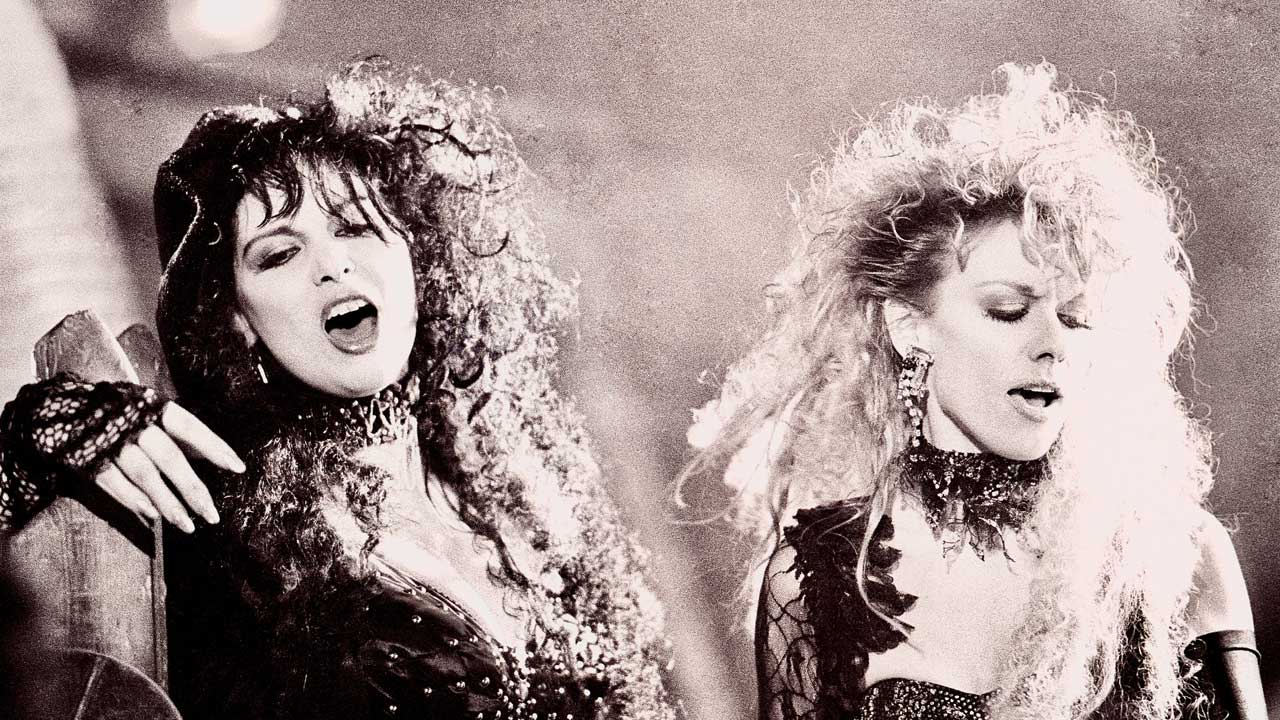
Privately, Anne and Nancy turned inward, struggling with isolation and relying on substances to dull the stress.
By 1990, burnout and shifting musical tides collided, and the glam rock era they dominated began to crumble.
As grunge exploded from Seattle in the early 1990s—a scene ironically rooted in their hometown—Heart felt out of step.
Anne and Nancy stepped away from the spotlight, unsure of their place in the new musical landscape.
To their surprise, the new generation welcomed them warmly.
Members of Pearl Jam, Alice in Chains, and others treated the Wilson sisters as icons rather than relics.
Heart released *Desire Walks On* in 1993 but soon went dormant again.
The sisters focused on personal growth, film scoring, charity work, and healing from relentless touring.
They avoided the pressures of the industry and the spotlight, choosing honesty and authenticity over commercial success.
Their 2004 comeback album *Jupiter’s Darling* was raw and organic, rooted in their original sound.
Fans and critics welcomed the honesty, and Heart toured steadily through the 2000s—not as nostalgia acts but as veterans with something to say.
Their 2010 album *Red Velvet Car* cracked the top 10, proving their relevance decades into their career.

In 2016, a backstage altercation involving Anne’s husband and Nancy’s teenage sons made headlines, creating a painful divide between the sisters.
Though they finished the tour, they kept separate dressing areas and traveled apart.
The public called it a feud, but the sisters described it as a deep personal fracture needing time to heal.
For two years, they pursued separate musical paths, uncertain if their bond could recover.
Time healed wounds. By 2019, Anne and Nancy reconciled and reunited for the *Love Alive* tour, playing packed amphitheaters and proving their chemistry was intact.
Since then, Heart has performed selectively on their own terms—free of label pressure and industry puppeteering. Rumors swirl of new music, but the sisters are in no rush.
Heart’s story is not a simple rise and fall—it is a cycle of evolution.
From Seattle clubs to global fame, lawsuits, lineup implosions, reinventions, burnout, and family trauma, Anne and Nancy Wilson always found a way forward.
Their journey mirrors the music industry itself: chaotic, brilliant, unfair, and inspiring.
Through every reinvention—from the raw fire of the 1970s to the MTV polish of the 1980s to the stripped-back honesty of recent years—the Wilson sisters prove that resilience is its own form of artistry.
Heart endures because it’s heart: sisterhood, authenticity, and sheer musical power never stopped beating.
News

The Song that Bob Dylan Wrote About Elvis Presley
Bob Dylan and Elvis Presley are two of the most legendary figures in American music history. One is known as…

Raul Malo, Lead Singer of The Mavericks, has died at age 60
The music world is mourning the loss of Raul Malo, the charismatic lead singer of The Mavericks, who passed away…

At 69, Steve Perry Confessed This Was the Song He Couldn’t Finish
Steve Perry’s voice is one of rock’s most iconic and enduring sounds. As the lead singer of Journey, he gave…
Top 6 SHOCKING Things Axl Rose Said About Other Rock Legends!
Axl Rose, the legendary frontman of Guns N’ Roses, is known not only for his iconic voice and music but…

‘You Had ONE Job!’ How Powerman 5000 FUMBLED a Platinum Future
Powerman 5000’s story is one of bold creativity, underground buzz, and a dramatic crossroads that nearly derailed their ascent to…
‘He Knew Last Show Would Kill Him’ Ozzy Osbourne’s Final Moments | Sharon Osbourne Interview
Ozzy Osbourne, the legendary rock icon, cultural pioneer, and beloved family man, gave his final performance knowing it might be…
End of content
No more pages to load






