
In the world of rock music, there are voices that become legends—not just for their power or range, but for the emotional connection they create with listeners.

For decades, one voice stood above all others, a voice so iconic that every aspiring singer both revered and feared being compared to it: Steve Perry of Journey.
Dubbed simply “The Voice,” Perry’s soaring vocals defined an era and rewrote the emotional language of rock music.
But when a young Jon Bon Jovi started his climb from the gritty club scene of New Jersey, he knew that if he wanted to rise to the top, he’d have to step out from under Perry’s immense shadow—and find a voice that was unmistakably his own.
When Steve Perry joined Journey in 1977, he didn’t just elevate the band’s sound; he transformed what rock music could express.
His voice was a perfect blend of control and vulnerability, delivering high, soaring notes that never cracked and phrasing that felt like a heartfelt confession.
Perry’s tone was so smooth it almost felt unreal, but it wasn’t just technical skill that made him great—it was how deeply he made people feel.
Rock music, once known mostly for its toughness and rebellion, suddenly became human, relatable, and profoundly emotional.
Journey’s hits like “Lights,” “Wheel in the Sky,” and “Faithfully” didn’t just sound like songs; they sounded like memories and heartbreaks listeners hadn’t even lived yet.
Perry’s voice brought emotional clarity to rock, with every word carrying weight and every note resonating like a personal story.
By the early 1980s, his voice was everywhere—from radios and bars to high school dances.
Critics didn’t say he was just a good singer; they said he was *the* voice, the standard by which all others were measured.
Into this landscape stepped Jon Bon Jovi, a teenager playing small clubs in New Jersey with dreams of stadium lights and global fame.
Unlike Perry, Jon didn’t come from a major music city or have a silver spoon in his mouth.
The stages were small, the crowds tough, and applause hard-earned.
His voice was good—strong and youthful—but it lacked the emotional depth and punch that could stop a crowd in its tracks.
He could hit the notes, but the notes didn’t yet mean anything.
Meanwhile, Perry’s voice was the soundtrack of the era, a constant reminder of the emotional power Jon aspired to.
But instead of trying to imitate Perry’s flawless smoothness, Jon studied something more subtle: how Perry held a note just long enough to let the emotion sink in, how he softened phrases instead of belting every line, and how silence and breath became part of the performance.
Jon wasn’t just a fan; he was a student of emotional expression.
The turning point in Jon’s journey came when he met songwriter and strategist Desmond Child in the mid-1980s.
Bon Jovi was on the brink of breaking through, but they lacked the songs that could catapult them beyond radio hits into arena anthems.
Desmond didn’t want to change Jon; he wanted to reveal him.
He heard something others missed: Jon’s voice wasn’t meant to glide smoothly like Perry’s—it was meant to burn with raw, urgent emotion.
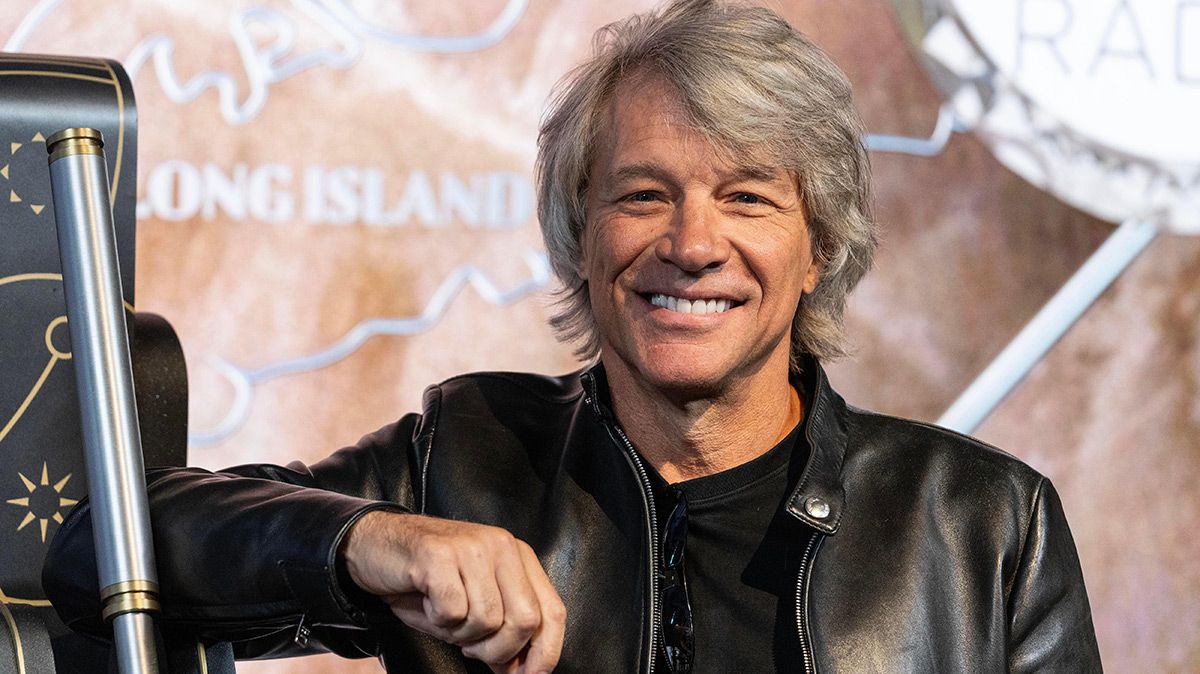
Where Perry’s voice soared like a prayer, Jon’s voice hit like a fist on a bar table—real, working-class, and alive.
Desmond helped craft songs that reflected Jon’s world: hard jobs, hard love, and hard hope.
Songs like “You Give Love a Bad Name,” “Livin’ on a Prayer,” and “Bad Medicine” weren’t just polished hits; they were stories people recognized as their own.
Tommy and Gina weren’t just characters; they were every couple clinging to love and grit.
Jon sang these songs not to sound beautiful, but to survive.
This authenticity struck a chord with audiences and marked the birth of a new kind of rock voice—one that was less about perfection and more about truth.
As Bon Jovi’s fame exploded with the release of *Slippery When Wet* in 1986, Jon’s voice evolved in ways no one expected.
Touring relentlessly, performing night after night in massive arenas, his voice grew rawer, grainier, and more alive.
The rasp that developed wasn’t a stylistic choice; it was a reflection of life on the road—the exhaustion, adrenaline, and sheer force required to shout over thousands of screaming fans.
While Steve Perry’s voice remained smooth and carefully protected, Jon’s voice bore the wear and tear of survival.
Songs like “Livin’ on a Prayer” no longer sounded polished; they sounded urgent.
“Wanted Dead or Alive” wasn’t theatrical; it was true. Jon wasn’t just singing about the road; he was living it.
This was when Jon truly stepped out of Perry’s shadow.
Critics might still compare them, but the audience no longer needed the comparison.
Steve Perry lifted people up with his voice; Jon Bon Jovi pulled them forward with his grit and resilience.
Bon Jovi became more than a band—they became a movement.
But singing with such intensity night after night came at a cost.
By the early 1990s, Jon’s vocal cords showed signs of strain. The rasp that once felt emotional sometimes turned into damage.
High notes became harder to hit, and some songs had to be lowered. Fans might not have noticed immediately, but Jon certainly did.
Rather than hide it, Jon adapted. He worked with vocal coaches to learn new techniques for breath support and longevity.
He relearned how to sing with his body, not against it. He didn’t fight to sound young again; he embraced the changes and learned to sound real.
Steve Perry faced similar challenges later in his career, proving that even the greatest voices are human and that the journey of a singer is one of constant evolution.
For Jon, this meant moving from power to presence, from perfection to honesty.

By the time Jon fully embraced his unique voice, the comparisons to Steve Perry began to fade—not because people stopped talking, but because Bon Jovi’s music became woven into the fabric of a generation.
Jon didn’t just have hits; he had anthems that echoed through stadiums, car radios, bedrooms, and memories.
Steve Perry’s legacy remained untouchable, his voice a benchmark for emotional expression.
But there was never rivalry or bitterness between the two.
Jon openly admired Perry’s emotional courage, and Perry acknowledged Jon’s impact and longevity.
They stood on different mountains but could see each other clearly.
Influence is not imitation, and admiration is not weakness. Jon Bon Jovi didn’t escape Steve Perry’s shadow—he built his own light through it.
Together, they became voices that defined how entire generations learned to feel through rock music.
This story is a powerful reminder that greatness often begins by learning from those who came before us, but true artistry is found in growing beyond comparison and becoming undeniably yourself.
Jon Bon Jovi’s journey from chasing “The Voice” to becoming a rock icon in his own right changed the sound of rock forever—and gave millions a voice to sing their own struggles and triumphs.
News
The Song that Bob Dylan Wrote About Elvis Presley
Bob Dylan and Elvis Presley are two of the most legendary figures in American music history. One is known as…

Raul Malo, Lead Singer of The Mavericks, has died at age 60
The music world is mourning the loss of Raul Malo, the charismatic lead singer of The Mavericks, who passed away…

At 69, Steve Perry Confessed This Was the Song He Couldn’t Finish
Steve Perry’s voice is one of rock’s most iconic and enduring sounds. As the lead singer of Journey, he gave…

Top 6 SHOCKING Things Axl Rose Said About Other Rock Legends!
Axl Rose, the legendary frontman of Guns N’ Roses, is known not only for his iconic voice and music but…

‘You Had ONE Job!’ How Powerman 5000 FUMBLED a Platinum Future
Powerman 5000’s story is one of bold creativity, underground buzz, and a dramatic crossroads that nearly derailed their ascent to…

‘He Knew Last Show Would Kill Him’ Ozzy Osbourne’s Final Moments | Sharon Osbourne Interview
Ozzy Osbourne, the legendary rock icon, cultural pioneer, and beloved family man, gave his final performance knowing it might be…
End of content
No more pages to load






