
In December 2025, anticipation was high among Guns N’ Roses fans worldwide.
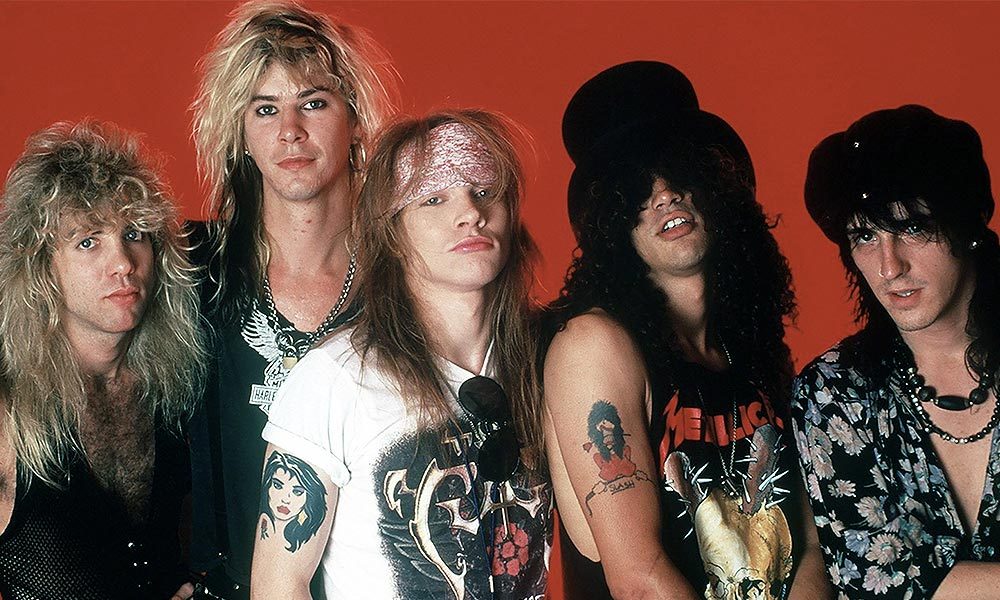
After years of reunion tours and nostalgia-driven performances, the rock legends promised not just a stadium tour in 2026 but also fresh new music.
Slash, Duff, and Axl Rose—the core of the classic lineup—seemed ready to prove that Guns N’ Roses still had the fire and creativity that once made them the most dangerous band in the world.
Yet, what arrived was far from the raw, electrifying rock that fans had been craving.
Instead, the new singles “Atlas” and “Nothing” revealed a band struggling to recapture past glory, releasing what feels more like repackaged leftovers than genuine new creations.
Guns N’ Roses built their reputation in the late 80s and early 90s with albums like *Appetite for Destruction* and *Use Your Illusion*, records that were raw, dangerous, and full of rebellious energy.
Their music was a volatile mix of blues, punk, and hard rock, driven by Slash’s searing guitar riffs, Duff’s gritty bass lines, and Axl’s unpredictable, powerful vocals.
After decades of turmoil and lineup changes, the 2016 “Not in This Lifetime” reunion tour brought a sense of hope: the band could still come together and deliver.
However, fans were waiting for more than just live renditions of classics—they wanted new music that could stand alongside the band’s legendary catalog.
The stakes were high, and the pressure was on for something authentic and fresh.

The first single, “Atlas,” dropped on December 3, 2025.
Fans eagerly put on their headphones, expecting Slash’s iconic riffs to tear through the speakers and Axl’s voice to howl with menace.
Instead, the track delivered confusion and disappointment.
While Slash’s guitar tone remained unmistakably his own—thick, melodic, and spot-on—the rest of the song felt lifeless.
The drums sounded flat and processed, lacking the organic swing and thunder that drummers like Steven Adler or Matt Sorum brought to the band’s classic sound.
The production leaned heavily on digital polish, making the percussion sound like a computer’s imitation rather than a real drum kit.
Musically, “Atlas” attempted a mid-tempo, grinding, almost post-grunge style that felt out of place for Guns N’ Roses.
It lacked the dirt and rawness that characterized the band’s earlier work.
The riff seemed to push against an invisible wall, failing to break through with the energy fans expected.
It was reminiscent of a bad Soundgarden B-side from the mid-90s rather than a fresh rock anthem.
Vocally, Axl Rose struggled to summon his former power.
His singing was thin, layered with heavy production effects to simulate strength, but the menace and rasp that once shattered glass were absent.
The lyrics, filled with generic “me against the world” themes, lacked the biting wit and emotional depth that made songs like “You Could Be Mine” so compelling.
The overall impression was of a track that had been shelved years ago and resurrected with new guitar and bass overdubs.
The second single, “Nothing,” was meant to showcase Axl’s strength as a balladeer—a role he once mastered with classics like “November Rain” and “Don’t Cry.”
Instead, it opened with a bouncy, jaunty piano line that felt more like a cheesy Elton John outtake than a Guns N’ Roses power ballad.
The production was even more problematic here, with cheap-sounding keyboards and syrupy strings washing over the track, drowning any potential grit.
Axl’s vocal performance was shaky and fragile, lacking control and emotional conviction.
The song dragged on without building to any meaningful climax, failing to capture the moody shifts and intensity that defined the band’s best ballads.

Slash’s guitar solo, though technically impressive and soulful, felt like a diamond in the rough—beautiful but ultimately unable to save the song.
The solo seemed isolated, lacking the interplay and chemistry that once made Guns N’ Roses’ music so dynamic.
The biggest disappointment is the realization that these songs are not truly new.
They are leftovers from the infamous *Chinese Democracy* sessions—an album that took over 15 years and $13 million to produce, only to become one of rock’s biggest commercial failures.
“Atlas” and “Nothing” appear to be tracks cut from that era, reworked with Slash and Duff’s contributions added later.
They were never born from the creative synergy of the reunited band jamming together in a room.
Instead, they are Frankenstein creations assembled from old files, lacking the human friction and spontaneity that once fueled the band’s fire.
This approach is insulting to fans who have waited decades for new music worthy of the Guns N’ Roses name.
It’s also unfair to Slash and Duff, who are reduced to session musicians overdubbing parts onto pre-existing tracks they had no hand in creating.
The reaction online was swift and brutal.
Comments described the songs as “AI-generated dad rock” and criticized the sterile, overprocessed sound.
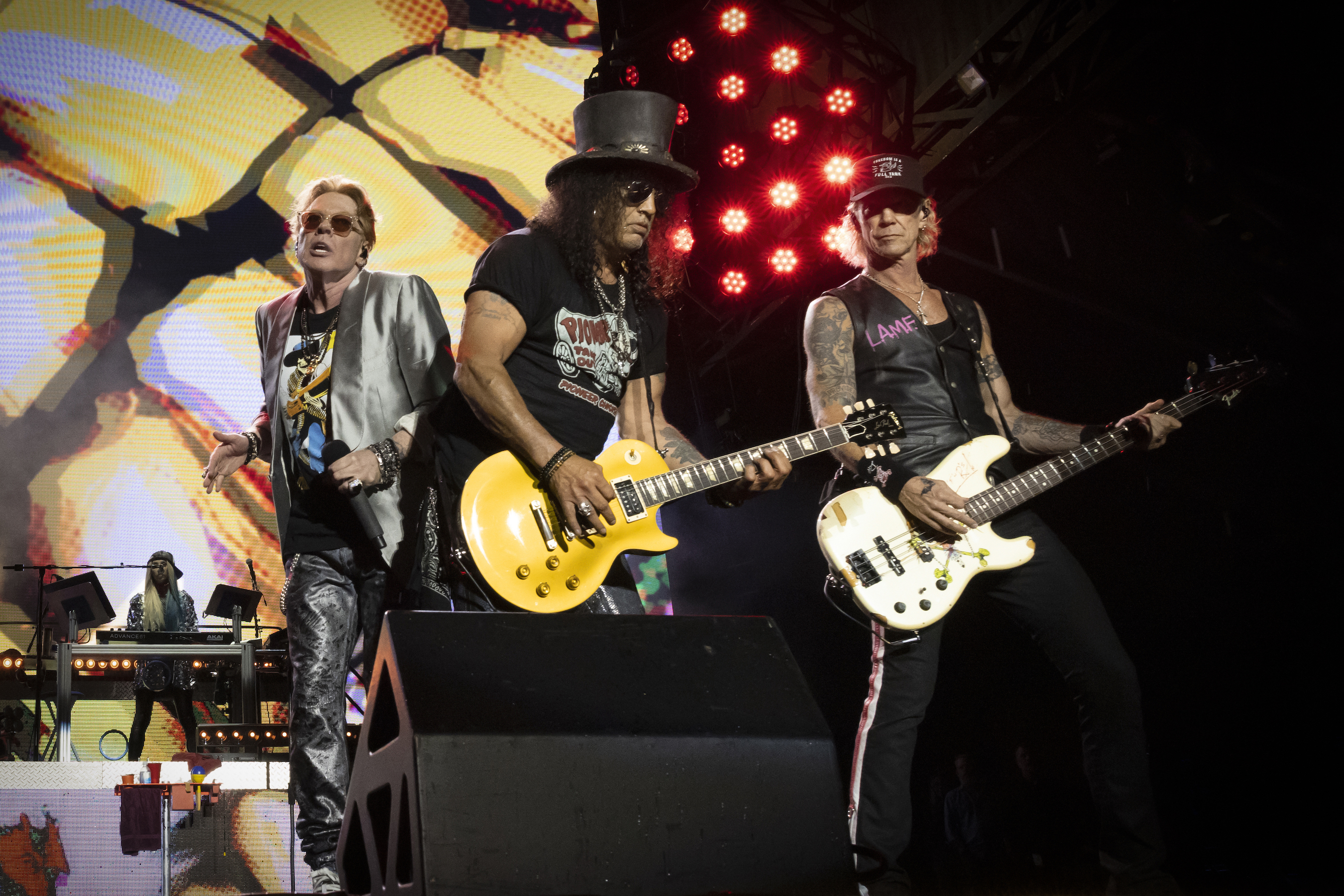
The drums, vocals, and overall production felt disconnected from the band’s legacy.
Even Slash’s tone, usually a saving grace, couldn’t mask the fundamental problems with the songs.
Some apologists tried to find positives, praising Slash’s guitar tone or Axl’s willingness to experiment.
But the consensus was clear: this was not the Guns N’ Roses fans remembered and loved.
The release of these singles coincided with the announcement of a massive 2026 world tour, with ticket prices soaring into the thousands for front-row seats.
The band’s commercial machinery is operating at full throttle—vinyl, cassettes, exclusive merchandise, and pre-orders are all lined up.
But the artistic side feels dead on arrival.
Rather than a creative renaissance, Guns N’ Roses is engaged in a salvage operation, mining the vault of Axl Rose’s most troubled and embarrassing era.
The danger and humanity that once defined the band have been replaced by polished, quantized tracks that lack soul.
Fans continue to buy tickets, driven by nostalgia and addiction to the idea of Guns N’ Roses.
The band knows this and is capitalizing on it, delivering warmed-over leftovers instead of the raw rock and roll that made them legends.
Guns N’ Roses once terrified parents and shook the establishment with their dangerous, unpredictable music.
Now, they release sanitized, dated tracks that feel like a shadow of their former selves.
The new songs “Atlas” and “Nothing” are not a return to form but a reminder of how far the band has drifted from their roots.
For fans hoping for a creative rebirth, the reality is sobering.
The new era of Guns N’ Roses is not about innovation or passion—it’s about content, commerce, and nostalgia.
And while Slash’s guitar still shines, it’s not enough to save these songs from being forgotten leftovers.
News
The Song that Bob Dylan Wrote About Elvis Presley
Bob Dylan and Elvis Presley are two of the most legendary figures in American music history. One is known as…

Raul Malo, Lead Singer of The Mavericks, has died at age 60
The music world is mourning the loss of Raul Malo, the charismatic lead singer of The Mavericks, who passed away…
At 69, Steve Perry Confessed This Was the Song He Couldn’t Finish
Steve Perry’s voice is one of rock’s most iconic and enduring sounds. As the lead singer of Journey, he gave…
Top 6 SHOCKING Things Axl Rose Said About Other Rock Legends!
Axl Rose, the legendary frontman of Guns N’ Roses, is known not only for his iconic voice and music but…
‘You Had ONE Job!’ How Powerman 5000 FUMBLED a Platinum Future
Powerman 5000’s story is one of bold creativity, underground buzz, and a dramatic crossroads that nearly derailed their ascent to…

‘He Knew Last Show Would Kill Him’ Ozzy Osbourne’s Final Moments | Sharon Osbourne Interview
Ozzy Osbourne, the legendary rock icon, cultural pioneer, and beloved family man, gave his final performance knowing it might be…
End of content
No more pages to load






