
In the world of modern rock, few bands have sparked as much heated debate and polarizing opinions as Greta Van Fleet.
Emerging seemingly out of nowhere from the quaint town of Frankenmuth, Michigan, this young quartet quickly rose to fame with a sound that stopped listeners dead in their tracks—because it sounded almost exactly like Led Zeppelin.
But what began as a meteoric rise fueled by nostalgia and record label support soon turned into a public relations nightmare marked by accusations of plagiarism, gaslighting, and a brutal critical backlash that questioned their authenticity and soul.
Frankenmuth, known as “Little Bavaria,” is far from the gritty, industrial birthplace of legendary rock bands like MC5 or The Stooges.
Instead, it is a sanitized tourist town famous for chicken dinners and Christmas stores, a place where manicured lawns and lederhosen dominate the landscape.
Out of this unlikely setting came the Kiszka brothers—Josh (vocals), Jake (guitar), Sam (bass)—and their friend Danny Wagner on drums.
Raised in a comfortable home with a musician father and a vast vinyl collection, these young men were steeped in classic rock from an early age.
Their debut single, “Highway Tune,” released in 2017, was an instant sensation.
It sounded so uncannily like Led Zeppelin that many listeners swore they were hearing a lost track from the legendary band’s archives.
Josh Kiszka’s vocals echoed Robert Plant’s iconic screams, Jake’s guitar riffs were reminiscent of Jimmy Page’s signature style, and the rhythm section mirrored John Bonham’s thunderous drumming.
The resemblance was not just musical but visual and performative—Josh dressed and moved like Plant, complete with open vests, feathers, and jewelry, creating what some called a high-budget Halloween costume.
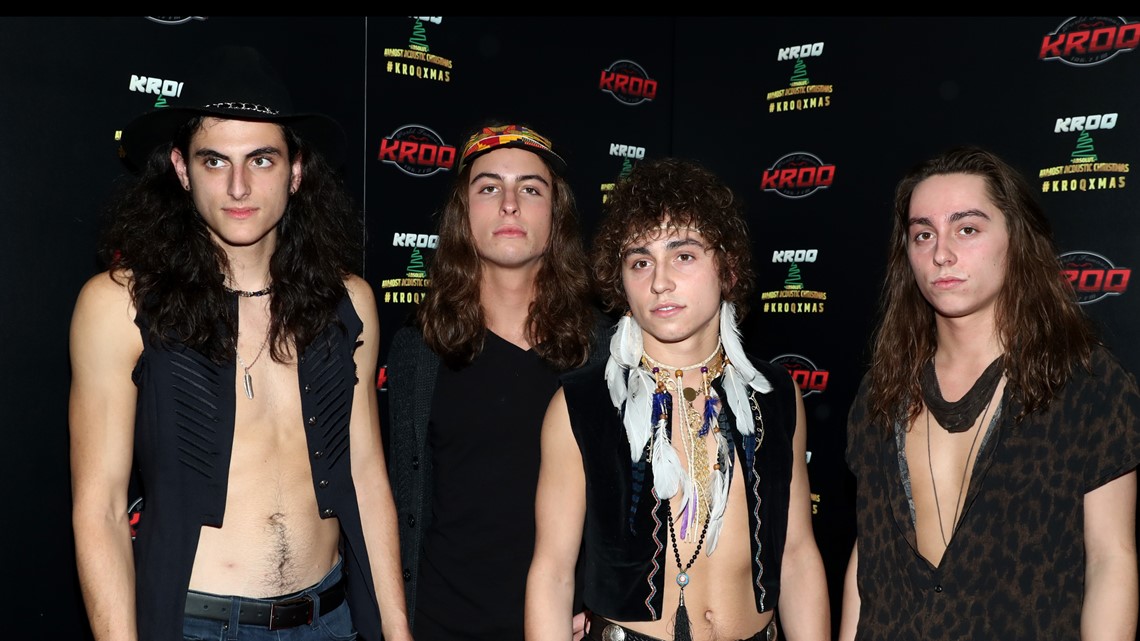
At a time when rock music was perceived as dead and overshadowed by rap and pop, record labels were desperate for a new savior.
Universal Music Group (UMG) saw potential gold in Greta Van Fleet, signing them before they were even old enough to vote.
The label’s marketing machine propelled the band onto major festival stages, magazine covers, and playlists worldwide within months.
Rolling Stone dubbed them “the saviors of rock,” Elton John championed them, and even Tom Hanks tweeted his support.
But the band’s insistence on downplaying their obvious Led Zeppelin influence was their first fatal mistake.
In interviews, the Kiszka brothers claimed their biggest influence was Aerosmith, denying the clear Zeppelin parallels.
This denial was seen as gaslighting by many fans and critics alike.
Even Robert Plant himself mocked the band, calling them “Led Zeppelin 1,” and ridiculed Josh’s claim of Aerosmith being his vocal inspiration.
Rock fans are notoriously protective of authenticity and originality.
While they might forgive bad songs or bad behavior, they do not forgive liars or fakes.
Greta Van Fleet became the target of scorn, earning nicknames like “Greta Van Fake” and “Lead Clone Algorithm Rock.
” Their performance on “Saturday Night Live” in January 2019 was widely panned.
Josh’s barefoot appearance in a curtain-like outfit, combined with his awkward stage movements and nervous eye darting, made the band look rehearsed and uncool rather than authentic rock stars.

Memes and online jokes exploded instantly, with many mocking the band’s nodding head movements and fashion choices.
Even the “Weekend Update” on SNL made a joke about their band name, cementing their status as a punchline.
The most devastating blow came from Pitchfork, a website known for its harsh but usually academic reviews.
In 2018, Jeremy D. Larson published a scathing review of their debut album *Anthem of the Peaceful Army*, giving it a near-failing score of 1.6 out of 10.
Larson didn’t just critique the music; he dismantled the band’s entire existence.
He described Greta Van Fleet as a “half-baked boomer fetish,” a “new kind of vampire” that doesn’t want your blood but your likes.
He called their music an “algorithmic fever dream” and mocked their costumes as “Costume Shop Bohemia.
” The review highlighted the disconnect between the rich kids from a sanitized tourist town playing dress-up as gritty rockers.
The review went viral, shared widely even by those who didn’t usually read music criticism, and it validated the growing chorus of haters.

The band’s response was muted and ineffective.
Sam Kiszka’s comment that the critic “had a troubled past” and deserved prayers came off as oblivious and condescending.
Fans tried to defend the band by accusing critics of gatekeeping and pretentiousness, but the damage was done.
The “cool factor” evaporated. Wearing a Greta Van Fleet t-shirt or playing their music at a party invited smirks and jokes.
Despite this, the industry continued to push the band.
They won a Grammy for Best Rock Album, which many saw as a consolation prize rather than a recognition of true artistic merit.
Their acceptance speech was awkward and unconvincing, with the band looking like kids who had just won a science fair project rather than rock legends.
Aware of the criticism, Greta Van Fleet sought to pivot on their next album.
They promised a new sound influenced by bands like Rush, wearing different clothes and trying to distance themselves from the Zeppelin comparisons.
However, the Pitchfork review and public perception hung over them like a dark cloud.

The band became a case study in how money and marketing can buy exposure but not authenticity or soul.
Vintage guitars, velvet suits, billboards, and big label backing could not mask the lack of originality that critics and fans so fiercely rejected.
Greta Van Fleet’s story is a cautionary tale about the dangers of imitation without ownership.
In an era where rock music struggles to find relevance, their initial success showed that there is still hunger for the classic sound.
But the refusal to acknowledge their influences honestly and the attempt to gaslight their audience backfired spectacularly.
The rock community values authenticity above all else.
Greta Van Fleet’s downfall was not just about sounding like Led Zeppelin—it was about pretending they didn’t, about trying to rewrite their own narrative, and ultimately, about losing the trust of the very fans they sought to captivate.
In the end, no amount of marketing muscle or industry support can buy a soul.
And in rock and roll, that soul is everything.
News
The Song that Bob Dylan Wrote About Elvis Presley
Bob Dylan and Elvis Presley are two of the most legendary figures in American music history. One is known as…
Raul Malo, Lead Singer of The Mavericks, has died at age 60
The music world is mourning the loss of Raul Malo, the charismatic lead singer of The Mavericks, who passed away…
At 69, Steve Perry Confessed This Was the Song He Couldn’t Finish
Steve Perry’s voice is one of rock’s most iconic and enduring sounds. As the lead singer of Journey, he gave…
Top 6 SHOCKING Things Axl Rose Said About Other Rock Legends!
Axl Rose, the legendary frontman of Guns N’ Roses, is known not only for his iconic voice and music but…
‘You Had ONE Job!’ How Powerman 5000 FUMBLED a Platinum Future
Powerman 5000’s story is one of bold creativity, underground buzz, and a dramatic crossroads that nearly derailed their ascent to…
‘He Knew Last Show Would Kill Him’ Ozzy Osbourne’s Final Moments | Sharon Osbourne Interview
Ozzy Osbourne, the legendary rock icon, cultural pioneer, and beloved family man, gave his final performance knowing it might be…
End of content
No more pages to load






