
In the early 1990s, Metallica stood at the pinnacle of heavy metal.
Their 1991 self-titled album, commonly known as *The Black Album*, catapulted them from thrash metal heroes playing sweaty underground venues to global superstars filling sold-out stadiums.
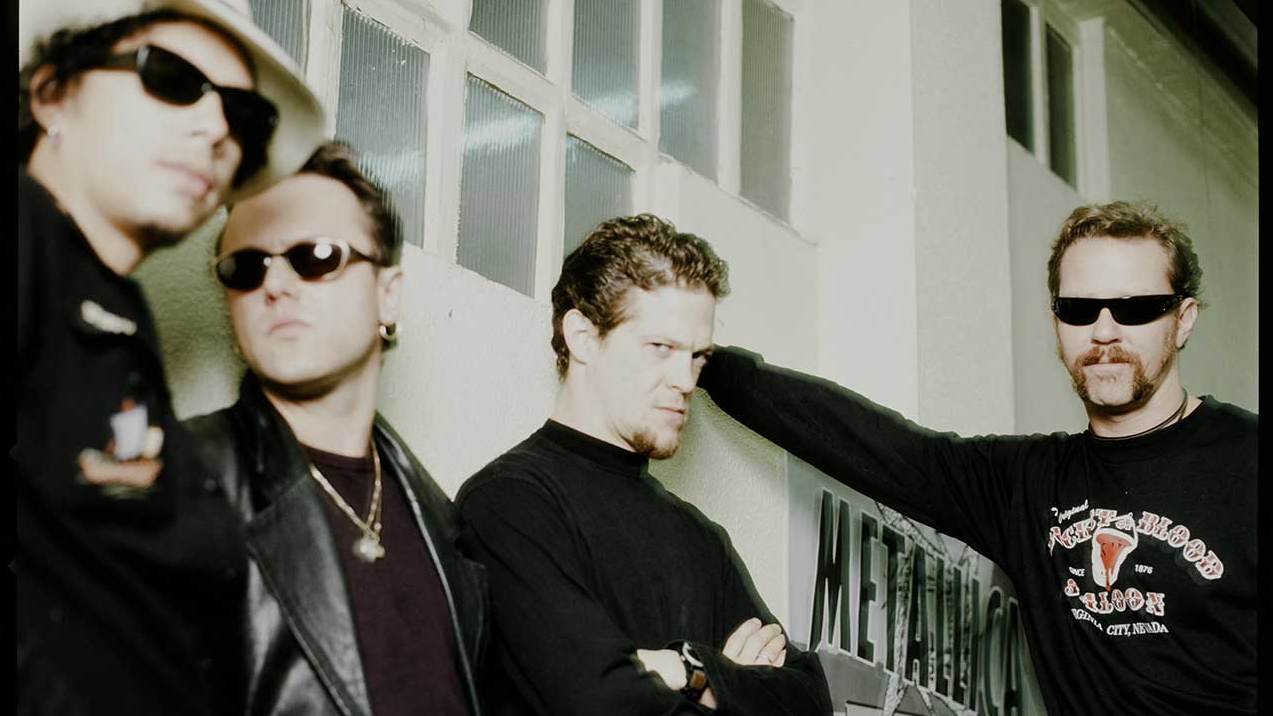
Songs like *Enter Sandman* transcended metal circles, reaching mainstream pop radio and even casual listeners, including grandmothers.
But what followed was a period of transformation that alienated many of their core fans and forever changed the band’s identity.
After the Black Album’s massive success, Metallica embarked on a relentless touring schedule, including a co-headlining tour with Guns N’ Roses in 1992.
This tour was infamous for its chaos and egos clashing, and it nearly destroyed the band.
The defining moment came in August 1992 in Montreal when frontman James Hetfield suffered severe burns after walking into a 12-foot column of flame during a pyrotechnics mishap.
He endured second- and third-degree burns on his arm, hand, back, and face.
Remarkably, Hetfield returned to the stage just 17 days later, bandages still wrapped around his hands, unable to play guitar but determined to keep the band moving forward.
The band was exhausted, burned out, and emotionally fried.
Bassist Jason Newsted felt particularly miserable, still struggling with his place in the band after years of hazing.
After finally stepping off the road in 1993, Metallica took their first real break, marking a turning point.
When Metallica returned from their hiatus, the music scene had dramatically changed.
The glam and thrash metal dominance of the 1980s was over.
Grunge and alternative rock, led by bands like Nirvana, Soundgarden, Alice in Chains, and Nine Inch Nails, ruled the airwaves.
The era demanded authenticity, angst, and groove rather than speed and technical prowess.
James Hetfield and Lars Ulrich, ever the savvy businessmen, recognized that remaining a relic of the 1980s metal scene would doom them to irrelevance.
They didn’t want to be dinosaurs; instead, they sought evolution.
However, many fans saw this as a cynical attempt to cash in on the new alternative rock wave.
Metallica returned to the studio with producer Bob Rock, who had worked on the Black Album but this time pushed them in a new direction.
Rock encouraged the band to abandon their tight, pre-planned thrash compositions in favor of jamming like a 1970s rock band, focusing on vibe and groove.
This approach conflicted with Hetfield’s traditional riff-writing style.
Meanwhile, Lars was inspired by Britpop bands like Oasis, Kirk Hammett delved into blues and the ’90s blues revival, and Hetfield explored his country and rockabilly roots.
The result was slower, bluesier, and groove-oriented music that diverged sharply from Metallica’s thrash origins.
The band’s image change was as shocking as their musical shift.
Photographer Anton Corbijn, known for his work with serious “art” bands like Depeche Mode, advised Metallica that their metal look was outdated and a costume.
The band cut their long hair, Lars adopted a spiky modern cut, Kirk Hammett slicked back his hair, and Hetfield traded his signature long locks for a cheesy 1970s mustache.
The new photoshoot featured the band in eyeliner, silk shirts, pinstriped suits, and fur coats, posing provocatively, even resembling a glam rock couple.
The reaction from fans was immediate and harsh — a global meltdown.
Metal magazines ran headlines mocking the transformation, and fans felt betrayed.
The album cover for *Load* was another flashpoint.
Instead of skulls or electric chairs, it featured a controversial photograph by artist Andres Serrano titled *Blood and Semen 3* — literally cow’s blood and the artist’s own semen pressed between glass.
Hetfield reportedly hated the cover but was overruled by Lars and Kirk, who pushed for the “high art” statement.
*Load* debuted at number one in 14 countries and sold nearly 700,000 copies in its first week.
Critics praised its maturity and depth, welcoming the band’s artistic evolution.
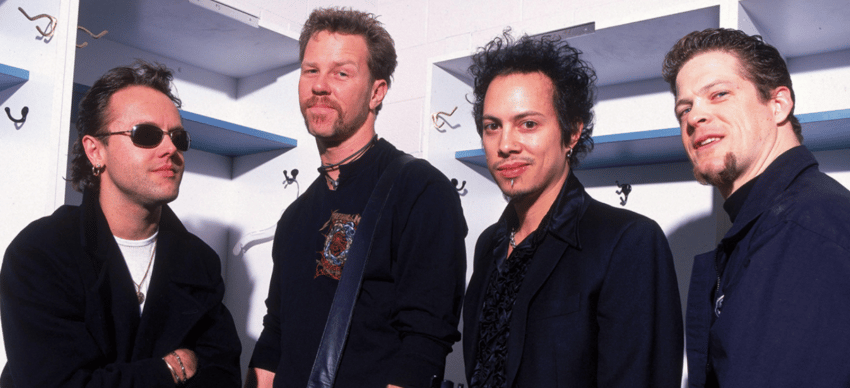
However, core fans were devastated.
The thrash metal anthems were replaced by mid-tempo blues rock and alternative songs.
Tracks like *2×4* and *Ain’t My Bitch* showed a simpler rock style, while *Hero of the Day* featured strings and a clean guitar intro.
*Mama Said* was a full-on country ballad about Hetfield’s mother, sung over slide guitar – a far cry from the rage-filled screams of earlier albums.
Metallica tried to defend their new direction.
Lars insisted they were more than a metal band now; they were “a band.” Hetfield echoed this sentiment, saying, “We just want to be artists.” But many fans weren’t buying it.
Metallica’s next album, *Reload* (1997), was essentially a continuation of *Load*, with more songs from the same jam sessions.
The press mockingly called it *Unload* or *Retread*.
The cover art, again by Serrano, was *Piss and Blood*, featuring the artist’s urine mixed with cow’s blood — another provocative statement.
Musically, *Reload* continued the bluesy, alternative rock style.
The lead single, *The Memory Remains*, featured 60-year-old British singer Marianne Faithfull, whose frail, cracking voice contrasted sharply with Metallica’s metal roots.
The follow-up single *The Unforgiven II* was a sequel to their famous Black Album ballad, but many saw it as a lazy attempt to recapture past glory.

The album also included unusual tracks like *Low Man’s Lyric*, a medieval ballad with a hurdy-gurdy instrument, further alienating metal purists.
Metallica’s reputation as metal icons was crumbling, replaced by accusations of sellout and pretentiousness.
At the 1996 Lollapalooza festival, Metallica played alongside alternative and punk bands like Soundgarden and Rage Against the Machine.
Some fans booed them, feeling betrayed by the band’s new image and sound.
Photos of the band in pinstriped suits and cigars in Cuba made them look more like businessmen than rock stars.
Lars Ulrich dismissed the backlash, saying, “We can’t keep making *Master of Puppets* over and over again.” Fans responded angrily, wanting innovation but not at the expense of Metallica’s identity.
Comedians like Beavis and Butt-Head, who once idolized Metallica, mocked their new videos.
The band was labeled sellouts everywhere they went.
Kirk Hammett’s comment that “metal is a dead genre, and I’m glad it’s dead” only fueled the fire.
Despite the backlash, Metallica continued experimenting.
They released *Garage Inc.*, a covers album that reminded fans of their metal roots by covering Black Sabbath, Thin Lizzy, and the Misfits.
It was a temporary truce with their fanbase.

Their 1999 album *S&M*, a live collaboration with the San Francisco Symphony, was commercially successful but seen by metal purists as pretentious and the final nail in the coffin of Metallica’s metal legacy.
The band remains defensive about this era.
Lars calls *Load* and *Reload* artistically necessary, a period of exploration.
But for many longtime fans, it was a sellout disaster that cost Metallica a huge chunk of their original audience.
Metallica’s *Load* and *Reload* era was a gamble that paid off commercially but fractured their fanbase.
The band bet that abandoning their core identity wouldn’t cost them their audience — they were half right.
The wider world embraced their new sound, but metalheads never forgave them.
Ultimately, the music from this era reflected four men with too much money, too much time, and too little direction, desperately trying to prove they were artists.
In the process, they forgot how to be Metallica — the kings of thrash metal who once ruled with speed, anger, and raw power.
News
The Song that Bob Dylan Wrote About Elvis Presley
Bob Dylan and Elvis Presley are two of the most legendary figures in American music history. One is known as…
Raul Malo, Lead Singer of The Mavericks, has died at age 60
The music world is mourning the loss of Raul Malo, the charismatic lead singer of The Mavericks, who passed away…
At 69, Steve Perry Confessed This Was the Song He Couldn’t Finish
Steve Perry’s voice is one of rock’s most iconic and enduring sounds. As the lead singer of Journey, he gave…
Top 6 SHOCKING Things Axl Rose Said About Other Rock Legends!
Axl Rose, the legendary frontman of Guns N’ Roses, is known not only for his iconic voice and music but…
‘You Had ONE Job!’ How Powerman 5000 FUMBLED a Platinum Future
Powerman 5000’s story is one of bold creativity, underground buzz, and a dramatic crossroads that nearly derailed their ascent to…
‘He Knew Last Show Would Kill Him’ Ozzy Osbourne’s Final Moments | Sharon Osbourne Interview
Ozzy Osbourne, the legendary rock icon, cultural pioneer, and beloved family man, gave his final performance knowing it might be…
End of content
No more pages to load






