
The 1980s rock scene was a whirlwind of hair, leather, and legendary egos, but few stories capture the chaos and charisma quite like the one White Lion’s Mike Tramp recently shared about his encounters with Van Halen’s iconic duo, Eddie Van Halen and David Lee Roth.
From a chance meeting at Madrid’s airport to backstage dramas years later, Tramp’s tale is a vivid snapshot of rock ’n’ roll’s golden era, filled with wild moments, unexpected friendships, and the unmistakable clash of personalities that defined a generation.
Mike Tramp’s journey to rock stardom was anything but typical.
Raised on the acoustic folk sounds of Bob Dylan and Neil Young, Tramp’s songwriting was rooted in heartfelt melodies and campfire sing-alongs.
When he joined the band that would become White Lion, he brought this sensibility into a hard rock world dominated by larger-than-life figures like Vince Neil and Brett Michaels.
Yet, Tramp always carved out his own identity, inspired by legends like Freddie Mercury and David Bowie, who showed him that the stage was a place for performance, persona, and theatrical flair.
In 1982, Tramp and his band arrived in New York as “Lion,” stepping into a vibrant club scene that welcomed their blend of melodic rock.
It was in this era of burgeoning American hard rock that Tramp’s path crossed with Van Halen’s, setting the stage for a memorable story that would be retold decades later.
One of the most legendary moments Mike Tramp recounts happened in 1981 at the Madrid airport.
At just 20 years old, with shoulder-length blonde hair and clad in a leather jacket, Tramp was there to greet Van Halen, who had flown in for promotional work on their *Fair Warning* album.
As the only person in the airport looking like a rockstar, Tramp stood out immediately.

When David Lee Roth emerged from security, he towered over the scene, wrapped in sunglasses and exuding an almost menacing aura.
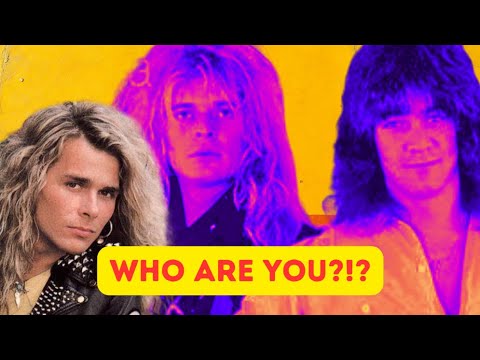
Roth’s first reaction was to size up Tramp and demand, “Who are you?!” A stunned but confident Tramp introduced himself as the record company representative tasked with picking up the band.
Roth’s skepticism quickly gave way to smiles as the rest of Van Halen arrived, and soon the group was cruising in limousines through Madrid.
Tramp’s three days with Van Halen were a mix of casual interviews, backstage camaraderie, and quirky moments—like taking Roth to a McDonald’s instead of a fancy paella dinner, where Roth casually shared wild guitar stories.
This intimate glimpse into the band’s early days painted a picture of musicians who were both legends in the making and down-to-earth guys enjoying their rise.
While living in Spain, Tramp’s band was carving out a successful career, blending their Danish roots with the Latino culture around them.
They were signed to the same record label as Van Halen, which fostered a sense of camaraderie and mutual respect between the bands.
Tramp recalls how he was heavily influenced by the burgeoning New Wave of British Heavy Metal, soaking up everything from *New Musical Express* and *Melody Maker* magazines.
This knowledge helped shape White Lion’s sound and image as they prepared to break into the American market.
When White Lion finally arrived in America, they faced the challenge of standing out in a crowded hard rock scene.
Tramp shares a humorous moment when he gave David Lee Roth a copy of White Lion’s album, only to hear Roth dismiss it as “the new Village People,” a comment that took time to understand but reflected the cultural and stylistic divides between bands.
Fast forward to the late 1990s, and Tramp found himself backstage at a Las Vegas casino with David Lee Roth and some of Roth’s closest confidants, including iconic rock photographer Neil Zlozower.
Despite their history, Roth barely acknowledged Tramp and the others, treating them like strangers despite their shared past.
Tramp was baffled by Roth’s aloofness, especially given that one of the women present had been instrumental in designing Roth’s famous red-and-white pants look that helped define Van Halen’s image in the 80s.
This incident underscored the complicated and sometimes contradictory nature of rock star personas—where friendship and fame often collide with ego and performance.
Mike Tramp’s stories offer a rare, behind-the-scenes look at the human side of rock legends.
From the youthful excitement of meeting idols in a foreign airport to the sobering realities of fame decades later, these anecdotes reveal the complexity beneath the glam and grit of 80s rock.
Eddie Van Halen’s legendary guitar innovations, David Lee Roth’s flamboyant stage presence, and White Lion’s melodic rock all contributed to a vibrant musical landscape that continues to influence artists today.
Tramp’s reflections remind us that behind every iconic riff and unforgettable performance lies a tapestry of personal stories, clashes, and memories that shaped rock history.
For fans of 80s rock and those hungry for insider tales, Mike Tramp’s account is a must-hear journey through the era’s triumphs and trials.
It’s a reminder that rock ’n’ roll is as much about the people as the music—and sometimes, the stories behind the music are the most electrifying of all.
News
The Song that Bob Dylan Wrote About Elvis Presley
Bob Dylan and Elvis Presley are two of the most legendary figures in American music history. One is known as…

Raul Malo, Lead Singer of The Mavericks, has died at age 60
The music world is mourning the loss of Raul Malo, the charismatic lead singer of The Mavericks, who passed away…
At 69, Steve Perry Confessed This Was the Song He Couldn’t Finish
Steve Perry’s voice is one of rock’s most iconic and enduring sounds. As the lead singer of Journey, he gave…
Top 6 SHOCKING Things Axl Rose Said About Other Rock Legends!
Axl Rose, the legendary frontman of Guns N’ Roses, is known not only for his iconic voice and music but…

‘You Had ONE Job!’ How Powerman 5000 FUMBLED a Platinum Future
Powerman 5000’s story is one of bold creativity, underground buzz, and a dramatic crossroads that nearly derailed their ascent to…
‘He Knew Last Show Would Kill Him’ Ozzy Osbourne’s Final Moments | Sharon Osbourne Interview
Ozzy Osbourne, the legendary rock icon, cultural pioneer, and beloved family man, gave his final performance knowing it might be…
End of content
No more pages to load






