
Powerman 5000’s story is one of bold creativity, underground buzz, and a dramatic crossroads that nearly derailed their ascent to metal stardom.
Born from the mind of Michael Cummings, aka Spider One, a Boston art school dropout with a passion for sci-fi and punk, the band carved out a unique niche in the 90s music scene.
But despite a platinum breakthrough, a fateful decision to scrap a nearly finished album led to internal chaos and a fractured lineup.
Yet, through reinvention and relentless spirit, Powerman 5000 survived — continuing to create and evolve on their own terms.
Growing up in Haverhill, Massachusetts, Michael Cummings and his older brother Robert (Rob Zombie) shared a love for music and pop culture, but their paths diverged sharply.
While Rob Zombie built a horror-metal empire, Michael embraced a blend of punk, rap, and metal that he dubbed “action rock.
” After a brief stint in Boston art school and working at Tower Records, Michael—now Spider One—began experimenting with drum machines and four-track recorders, crafting raw, sample-heavy tapes that fused hardcore punk with electronic beats and rap.
By 1991, Spider One had assembled a band with drummer Alan Pahanish (L3), bassist Dorian Hartstrong (Dorian 27), guitarist Adam Williams (Adam 12), and percussionist Jordan Cohen.
They named themselves Powerman 5000, inspired by a 1970s comic book and adding the futuristic “5000” to reflect their sci-fi leanings.
The Boston music scene was dominated by 80s-style rock groups, so Powerman 5000 stood out with their eclectic, high-energy sound.
Their early releases, including the 1994 EP *True Force* and debut album *The Blood-Splat Rating System*, earned local acclaim and a devoted fanbase.
Their live shows were electrifying, and by the mid-90s, they were headlining East Coast venues and gaining attention beyond Boston.
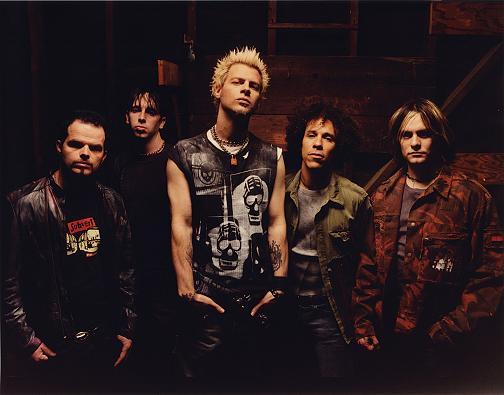
In 1996, Powerman 5000’s reputation earned them a spot on the second stage at Ozfest, exposing them to a national audience hungry for something fresh.
Their cameo on *Beverly Hills 90210* further boosted their profile, though it didn’t translate into big record sales immediately.
Still, industry insiders were watching.
DreamWorks Records, impressed by the band’s unique style and live energy, signed them in 1997.
Their debut album was remixed and re-released as *Mega Kung Fu Radio*, sharpening their industrial and electronic edge and deepening their sci-fi aesthetic.
Touring with heavy hitters like Marilyn Manson, Korn, and opening for Kiss, Powerman 5000 was poised for a breakout.
The band’s 1999 album *Tonight the Stars Revolt* was a turning point.
A concept album inspired by 1940s-50s sci-fi optimism, it fused industrial metal crunch with danceable beats and stadium-sized hooks.
The album’s futuristic artwork and space-themed stage gear created a cohesive visual universe that set them apart.
Singles like “When Worlds Collide” and “Nobody’s Real” became rock radio staples, with “When Worlds Collide” reaching the top 20 on mainstream and alternative charts.
The album went platinum, selling over a million copies, and won the Boston Music Award for Album of the Year in 2000.
Powerman 5000 was suddenly sharing stages with the biggest acts in metal and hard rock.
With the momentum building, Powerman 5000 began work on their follow-up album *Anyone for Doomsday*, scheduled for release in August 2001.
The lead single “Bombshell” was gaining traction, even becoming the entrance theme for WWE’s Dudley Boys.
Then, just two weeks before the album’s release, Spider One made a shocking decision: he pulled the album entirely.
Feeling the record was too similar to *Tonight the Stars Revolt* and unwilling to repeat themselves, Spider chose artistic integrity over commercial success.
Though the timing coincided with the tragic events of 9/11, the decision had been made a month earlier.
This move devastated the band’s internal dynamics.
Core members Dorian Hartstrong and Alan Pahanish quit, fracturing the lineup that had sold over a million records.
Spider remained determined to continue, but the band’s mainstream momentum and relationship with DreamWorks were effectively dead.
Spider quickly rebuilt Powerman 5000 with new members and shifted musical direction.
The 2003 album *Transform* marked a break from their sci-fi industrial sound, embracing raw punk rock inspired by Minor Threat, The Clash, and the Sex Pistols.
The space suits were gone, replaced with a stripped-down, guitar-driven approach.

Though DreamWorks was in turmoil due to a buyout, and the label’s support waned, *Transform* debuted respectably on the Billboard 200.
However, by the end of 2003, Powerman 5000 was dropped from the label.
Despite this setback, Spider found new opportunities in video game licensing and touring, launching his own label Megatronic Records.
The shelved *Anyone for Doomsday* became a cult collector’s item, eventually seeing a digital release years later.
Over the next two decades, Powerman 5000 continued evolving, blending their classic sci-fi and industrial sounds with punk energy.
Albums like *Destroy What You Enjoy* (2006) and *Somewhere on the Other Side of Nowhere* (2009) reflected this balance.
Spider remained the band’s driving force, releasing *Builders of the Future* (2014), *New Wave* (2017), and more recently *Noble Gas* (2020) and *Abandoned Ship* (2024).
The band still tours, playing for loyal fans who have followed them through every twist and turn.
Former members have also found success, with bassist Dorian Hartstrong touring with Jason Bonham’s Led Zeppelin Evening.
Powerman 5000’s story is a fascinating clash between art and commerce.
They stared superstardom in the face and chose to walk away rather than compromise their vision.
While they never became arena rock gods, they carved out a unique, enduring career defined by evolution and rebellion.
Spider One’s refusal to repeat past successes speaks to a rare artistic courage in an industry obsessed with formulas.
Powerman 5000 survived by staying true to themselves, constantly creating and adapting for over 30 years.
Was pulling *Anyone for Doomsday* a brave stand for artistic integrity or a career-ending misstep? Powerman 5000’s journey suggests it was both—a costly gamble that fractured the band but preserved their soul.
Today, they remain a testament to persistence, creativity, and the power of carving your own path in the music world.
For fans of sci-fi-infused metal and punk-fueled energy, Powerman 5000 still delivers the unexpected, proving that sometimes survival is the greatest success of all.
News
The Song that Bob Dylan Wrote About Elvis Presley
Bob Dylan and Elvis Presley are two of the most legendary figures in American music history. One is known as…
Raul Malo, Lead Singer of The Mavericks, has died at age 60
The music world is mourning the loss of Raul Malo, the charismatic lead singer of The Mavericks, who passed away…
At 69, Steve Perry Confessed This Was the Song He Couldn’t Finish
Steve Perry’s voice is one of rock’s most iconic and enduring sounds. As the lead singer of Journey, he gave…
Top 6 SHOCKING Things Axl Rose Said About Other Rock Legends!
Axl Rose, the legendary frontman of Guns N’ Roses, is known not only for his iconic voice and music but…
‘He Knew Last Show Would Kill Him’ Ozzy Osbourne’s Final Moments | Sharon Osbourne Interview
Ozzy Osbourne, the legendary rock icon, cultural pioneer, and beloved family man, gave his final performance knowing it might be…
At 75, Joe Perry Finally Reveals His 10 Favorite Guitarists Of All Time
At 75, Joe Perry stands not only as Aerosmith’s defining guitar force but also as one of rock’s most enduring…
End of content
No more pages to load






