
Have you ever judged a book by its cover?

Well, for the love of God, don’t do that with MC Hammer.
Stanley Kirk Burrell, known to the world as MC Hammer, experienced a meteoric rise to fame that was as dazzling as it was tragic.
At his peak, he was making a staggering $33 million a year, only to lose everything overnight.
But Hammer’s downfall wasn’t just about poor spending decisions; it was a tale woven with betrayal, greed, and the kind of dangers that rarely make the headlines.
Behind the flashy suits and million-dollar mansions, the streets of Oakland tell a story even Hammer couldn’t dance his way out of.
To understand the spectacular downfall of MC Hammer, we must first recognize just how impossibly high he climbed.
His success was not just impressive; it was unprecedented, a historical domination of the hip-hop industry.
Born on March 30, 1962, in Oakland, California, Hammer faced circumstances that would have crushed most people before they even started.
Growing up in East Oakland with eight siblings raised by a single mother, young Stanley was surrounded by poverty and struggle.
Yet, he was not like most people.
From an early age, he displayed an entrepreneurial spirit that would come to define his career and contribute to his eventual downfall.
Hammer sold stray baseballs in the Oakland Coliseum parking lot during games, hustling to make ends meet.
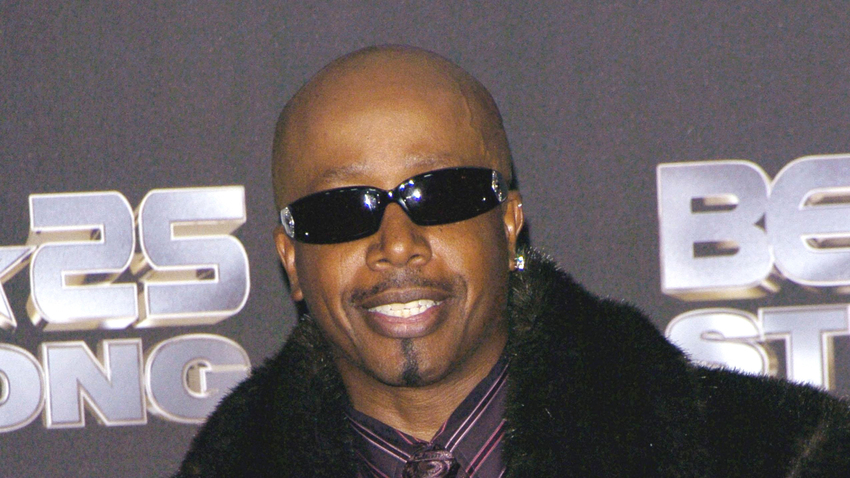
This hustle caught the attention of Oakland Athletics owner Charles O. Finley, who hired him as a bat boy and clubhouse assistant from 1973 to 1980.
It was there that players like Reggie Jackson nicknamed him “Hammer” for his resemblance to baseball legend Hank Aaron.
After graduating from McClymonds High School in 1980, Hammer briefly attended community college before enlisting in the U.S. Navy.
Even during his military service, the music industry called to him.
He honed his rapping skills in clubs, adopting “MC” for “Master of Ceremonies” and forming a Christian rap group called the Holy Ghost Boys.
His entry into music was grassroots and self-funded, a testament to his belief in himself when no one else did.
In the mid-1980s, he borrowed $20,000 from former Oakland Athletics players to launch Bust It Productions, operating from his basement.
His debut album, *Feel My Power*, released in 1986, sold over 60,000 copies independently.
This was enough to get noticed and prove that this kid from Oakland had something special.
Capital Records signed him in 1988 for a whopping $1.75 million advance, a massive deal for a hip-hop artist at that time.
They re-released *Feel My Power* as *Let’s Get It Started*, which achieved multiplatinum status with hits like “Pump It Up.”
Hammer’s unique blend of rap with funk and dance elements set him apart from contemporaries like Run DMC and LL Cool J.
He wasn’t just a rapper; he was a complete entertainer who understood that music was visual and experiential.
But nothing could prepare the world for what came next.
In 1990, Hammer released *Please Hammer, Don’t Hurt ‘Em*, which became the first hip-hop album to achieve diamond certification, selling over 18 million units globally.
This was a cultural earthquake, anchored by the massive hit “U Can’t Touch This,” which peaked at number eight on the Billboard Hot 100.
Hammer’s innovative use of sampling and signature dance moves made him a cultural phenomenon.

Kids were doing the Hammer dance in schoolyards, and adults were wearing parachute pants.
By 1991, Forbes estimated his net worth at $33 million, with annual earnings around $30 million from music and endorsements.
However, the higher you climb, the harder you fall.
Flush with cash, Hammer began spending at a rate that would make even the most extravagant celebrities blush.
The centerpiece of his extravagance was his mansion in Fremont, California, purchased for $5 million.
He demolished the existing home and built a 40,000-square-foot compound that would eventually contribute to his financial ruin.
The renovations alone cost between $12 million and $30 million.
With gold-plated gates and Italian marble floors, the mansion became a monument to excess.
But the mansion was just the beginning.
Hammer amassed a collection of 17 to 20 luxury vehicles, including a Lamborghini and multiple Mercedes-Benz models.
He even owned a private jet and two helicopters.
In 1991, Hammer founded Oaktown Stable and invested approximately $1.2 to $2.5 million in thoroughbred racehorses.
While some investments paid off, the costs of maintaining a racing stable quickly overwhelmed any winnings.
As the hip-hop landscape shifted dramatically in the mid-1990s, Hammer’s income began to decline while his expenses remained the same.
By the mid-1990s, the rise of gangster rap made Hammer’s pop-friendly style seem dated.
His attempts to adapt with albums like *The Funky Head Hunter* showed respectable numbers but were a massive decline from his diamond-certified peak.
The money that had flowed like an endless river was now slowing to a trickle.

With expenses mounting and income dwindling, Hammer filed for Chapter 11 bankruptcy protection on April 1, 1996.
The filing revealed assets valued at $9.6 million against debts exceeding $13 million.
The IRS claimed over $758,000 in unpaid federal taxes, and various creditors were named in the bankruptcy filing.
During a June 1996 bankruptcy hearing, Hammer admitted he had no steady job or reliable income stream.
The case eventually converted to Chapter 7 liquidation in September 1998.
The crown jewel of his empire, that magnificent Fremont mansion, was listed at $6.8 million and sold for just $5.36 million.
The cars were repossessed, the jet was taken back, and everything that represented his success was gone.
Hammer later reflected, “I had too much money and not enough sense.”
His story transformed from one of success to a cautionary tale of financial ruin.
But here’s where MC Hammer’s story differs from others.
This wasn’t the end.
In the late 1990s, amid the wreckage of his financial empire, Hammer underwent a profound personal transformation.
He became an ordained Pentecostal minister, dedicating himself to faith in a way that went beyond the Christian themes in his music.
He hosted *MC Hammer and Friends* on Trinity Broadcasting Network, discussing spirituality and personal growth.
His outreach extended to prison ministries and youth programs, emphasizing themes of redemption and second chances.
But Hammer’s recovery wasn’t just spiritual; he tapped into his entrepreneurial instincts.
In a surprising pivot, he became a Silicon Valley tech investor and adviser.
He co-founded dancejam.com, which raised $4.5 million in funding.
He made early investments in companies like Twitter, Square, and Pandora, demonstrating his keen business acumen.
By 2011, Hammer was honored as Social Media Marketer of the Year for his authentic engagement on platforms.
He continues to consult for companies focusing on the intersection of AI and music, showing his adaptability in an evolving industry.
Musically, Hammer never completely left the game, releasing several albums and singles over the years.
He even starred in the A&E reality series *Hammer Time*, showcasing his family life.
By 2025, Hammer’s net worth is estimated at $2 million, derived from music royalties and tech investments.
This represents a sustainable, managed financial stability built on diversified income sources.
In 2017, he resolved outstanding IRS debts from his bankruptcy era, closing that painful chapter.
However, old habits can resurface, as seen in a recent lawsuit from JP Morgan Chase over a breached financing agreement.
But here’s the thing: Hammer’s story is not tragic.
It’s about resilience, reinvention, and learning from devastating failure.
He maintains a significant social media presence, discussing technology, faith, and motivation.
His influence on hip-hop’s commercialization cannot be overstated.
He proved that rap could be family-friendly without losing authenticity.
Artists like Will Smith and Psy, who followed similar paths, owe a debt to Hammer’s trailblazing.
Recent discoveries hint at untapped legacies and chapters of Hammer’s career that remain unexplored.
His story continues to evolve, defying the simple narrative of rise and fall.
In the end, MC Hammer’s journey is profoundly human.
It’s about making mistakes, learning from them, and redefining success.
If they forget who you are, that’s all right.
But if you forget who you are, that’s a damn shame.
As Hammer himself says, “Click on one of the cards on your screen to see more videos like this.”
News

Dale Evans Final Revelation Shook the Western World in Ways No One Expected
Dale Evans, the beloved “Queen of the West,” is a name that resonates with fans of classic American entertainment. …

Behind the Fame, Freddie Starr’s Daughter Exposes a Past No One Expected
Freddy Starr, renowned for his wit and charm, enchanted audiences with his magnetic persona in the entertainment realm. …
What Freddie Starr’s Daughter Confessed Has Shocked Long-Time Fans
Freddy Starr, renowned for his wit and charm, enchanted audiences with his magnetic persona in the entertainment realm. …
After Years of Silence, Freddie Starr’s Daughter Breaks Her Story Wide Open
Freddy Starr, renowned for his wit and charm, enchanted audiences with his magnetic persona in the entertainment realm. …
The Untold Story Freddie Starr Never Wanted His Daughter to Share
Freddy Starr, renowned for his wit and charm, enchanted audiences with his magnetic persona in the entertainment realm. …
Freddie Starr’s Hidden Family Secrets Finally Come to Light
Freddy Starr, renowned for his wit and charm, enchanted audiences with his magnetic persona in the entertainment realm. …
End of content
No more pages to load






