
The Anunnaki Mystery — Between Myth, Power, and Science

The story begins over 6,000 years ago in Mesopotamia, in the land we now call Iraq — the cradle of civilization.
The Sumerians, one of the first advanced societies on Earth, built cities, invented writing, and studied the stars long before any other known culture.
But what truly fascinates historians are the stories they left behind — stories about the Anunnaki, a group of powerful beings described as “those who came down from heaven.”
According to Sumerian tablets, the Anunnaki were divine rulers who brought knowledge, law, and agriculture to humankind.
They were said to have created order out of chaos — shaping rivers, raising temples, and deciding the fate of kings.

Some tablets even describe them as descending to Earth from the sky, shimmering like fire, bringing both wisdom and fear.
For ancient Sumerians, these gods weren’t abstract — they were real forces. Each city-state had its own patron deity, its own connection to the Anunnaki.
The temples of Ur, Nippur, and Eridu weren’t just places of worship; they were centers of power, where priests served as messengers between gods and mortals.
Fast-forward to modern times, and the Anunnaki story took on a life of its own. In the 20th century, writers like Zecharia Sitchin reinterpreted the Sumerian myths in a bold new way.
In his famous book The 12th Planet (1976), Sitchin suggested that the Anunnaki weren’t gods at all — but extraterrestrials from a distant planet called Nibiru.
According to him, they came to Earth hundreds of thousands of years ago, genetically engineered early humans, and left behind traces of their technology and DNA.
It was a theory that captured the world’s imagination — blending archaeology, astronomy, and science fiction.
For some, it explained the mysteries of humanity’s sudden leap in intelligence. For others, it was simply too fantastic to believe.
But what does real science say?
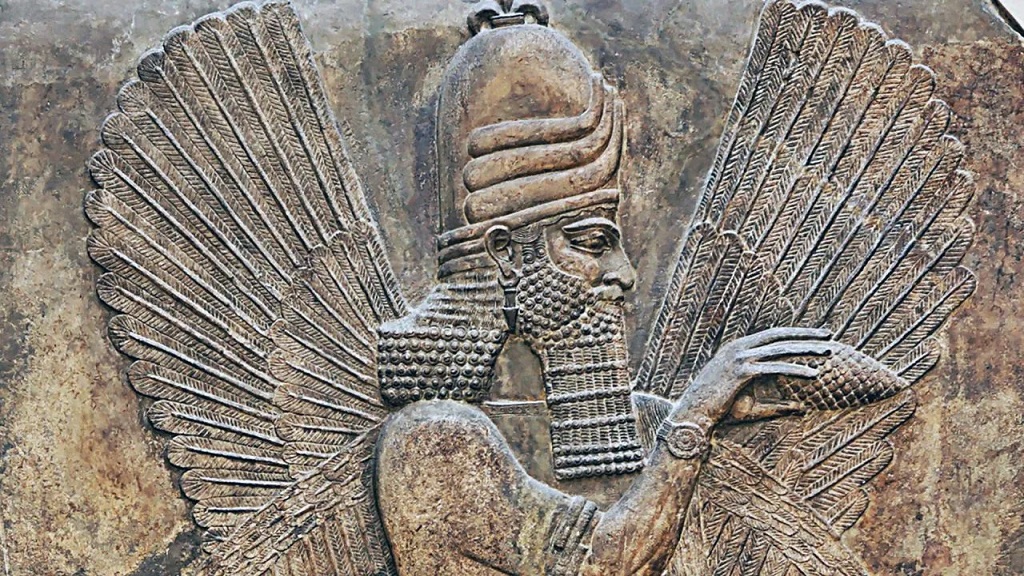
Modern archaeologists and geneticists agree that the Sumerians were extraordinarily advanced — but not because of alien help. Their brilliance came from innovation, observation, and thousands of years of gradual progress.
They developed cuneiform, the first written language, around 3200 BCE — a tool for recording trade, laws, and myths.
The “creation” of humanity by the Anunnaki, scientists say, reflects early humans’ attempt to understand their origins in a world full of mysteries.
The ancient Sumerians didn’t have modern biology, so when they imagined gods shaping humans from clay, it was their poetic way of describing creation — the same way other cultures spoke of divine breath or cosmic dust.
However, the fascination with the Anunnaki hasn’t faded. Even NASA scientists and anthropologists admit that the universe is vast and full of unknowns. Could life beyond Earth exist?

Statistically, yes. But there’s no evidence linking those possibilities to the myths of Mesopotamia.
The Anunnaki, rather than being ancient astronauts, are now seen as symbols of power, transformation, and the eternal human quest for meaning.
Still, what keeps the story alive is its mystery. When researchers uncovered thousands of clay tablets from Sumerian ruins, many of the inscriptions were so detailed that they described celestial movements with stunning accuracy.
The Sumerians tracked planets, eclipses, and the motions of stars — knowledge that seemed centuries ahead of its time. How did they know so much?
Archaeologists believe their understanding came from careful observation.
They watched the sky for generations, recording every pattern, every season, until they mapped the heavens long before telescopes existed.

But for storytellers — and dreamers — the idea that they learned this from “visitors from the sky” remains irresistible.
Even today, scholars and believers debate what the Anunnaki represent. Were they a metaphor for early rulers, elevated to divine status after death?
Were they stars, planets, or cosmic forces personified in myth?
Or were they simply humanity’s first great attempt to explain the unexplainable — the origin of life, the vastness of the universe, and the mystery of existence?
What’s certain is that the legacy of the Anunnaki shaped the world. Their myths influenced the Babylonians, Assyrians, and even the ancient Hebrews.
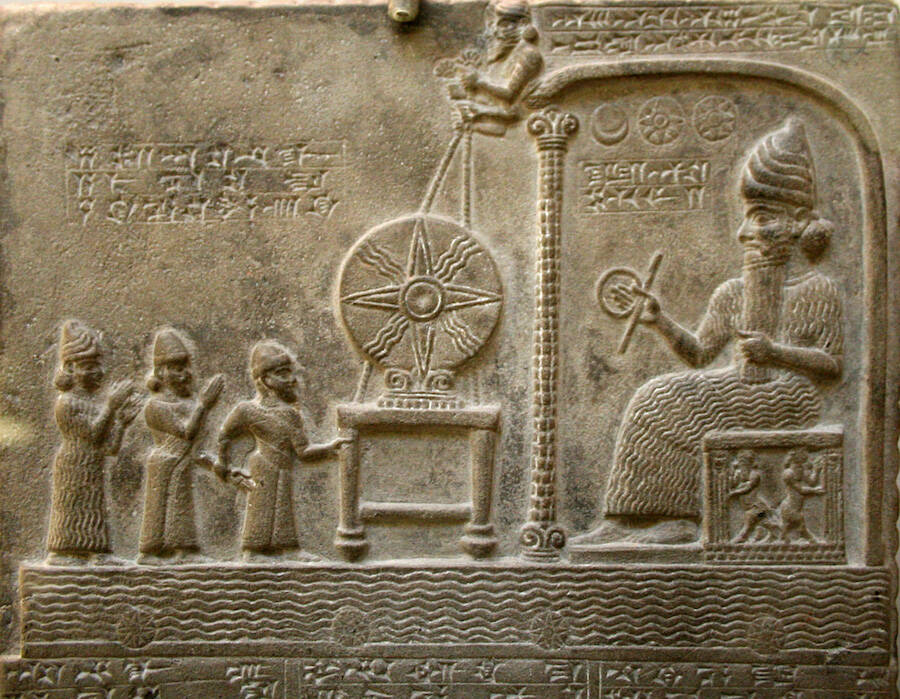
Echoes of their stories appear in later texts — the idea of divine creation, floods, and celestial judgment.
The Anunnaki may have vanished from temples, but their influence still pulses through the myths that followed.
In the end, when scientists say, “We’ve uncovered the truth about the Anunnaki,” it’s not about DNA or hidden relics — it’s about rediscovering humanity’s oldest questions.
Who are we? Where did we come from? And why do we look to the heavens for answers?
The real shock isn’t that the Anunnaki were gods or aliens — it’s that more than 6,000 years ago, humans were already asking the same cosmic questions we ask today.
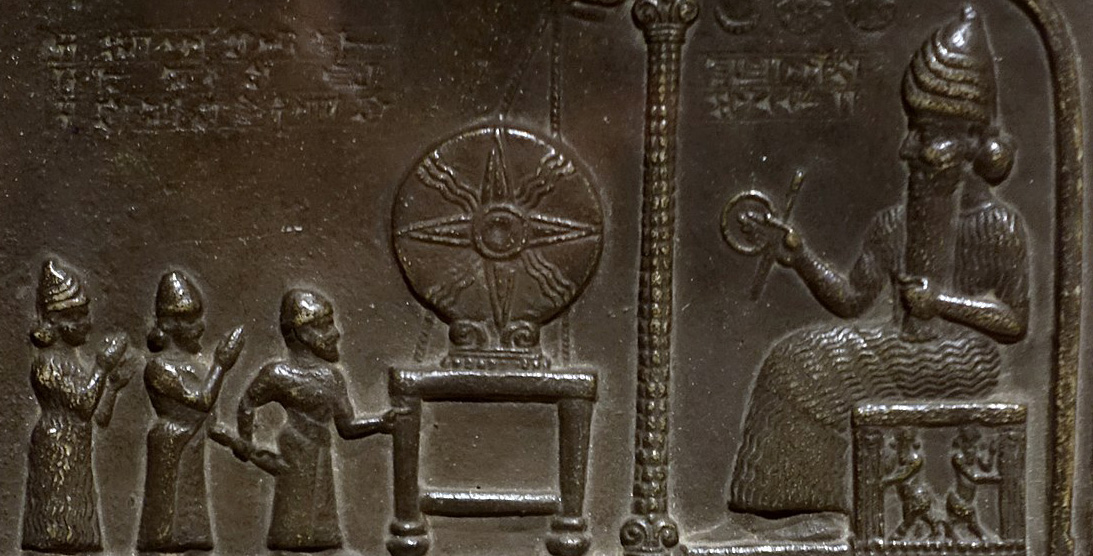
The Anunnaki remain an enigma — a reflection of both our imagination and our intelligence.
Whether they were gods, kings, or symbols, their story endures because it speaks to something timeless: our desire to connect with the stars and find our place among them.
The truth? The Anunnaki were never just about mythology — they were about humanity itself.
.
.
.
.
.
.
.
.
.
.
.
.
.
.
..
.
.
.
.
.
.
.
.
News

Ryan Clark DESTROYS Dan Orlovsky For Coming At Shedeur Sanders!
It began like any other calm afternoon in ESPN’s glittering studio — a casual chat about “generational quarterbacks.” But within…

🧿 “Scientists at CERN Accidentally Unlocked Another Universe — and It’s Watching Us Back 👁️🌀”
WORLD STUNNED — CERN’S QUANTUM SIMULATION JUST DISCOVERED EVIDENCE OF A MYSTERIOUS NEW WORLD Inside a fortified complex beneath the…

🧿🚨 Before His Last Breath, Astronaut Charles Duke SHOCKS World by Revealing What NASA HID on the Moon — The Dark, Hidden Truth That Could Change Everything We Know About Space Exploration! 🌕👽
Before His Last Breath, Astronaut Charles Duke SHOCKS World by Revealing What NASA HID on the Moon — The Dark,…

🧿✈️ Before He Dies, Rick Gillespie Reveals the SHOCKING Location Where Amelia Earhart’s Plane Was REALLY Found — The Hidden Truth That Could Rewrite Aviation History Forever! 🌍🕵️♂️
Before He Dies, Rick Gillespie Reveals the SHOCKING Location Where Amelia Earhart’s Plane Was REALLY Found — The Hidden Truth…

🧿🤖 Voynich Manuscript FINALLY Decoded by AI — The SHOCKING and DARK Secrets Hidden for Centuries That Authorities Didn’t Want You to Know! 📜🕵️♂️
Voynich Manuscript FINALLY Decoded by AI — The SHOCKING and DARK Secrets Hidden for Centuries That Authorities Didn’t Want You…

🧿 AI JUST TRANSLATED ANCIENT SUMERIAN TEXTS — THE SHOCKING REVELATIONS THAT COULD COMPLETELY REWRITE HISTORY AS WE KNOW IT 🌍📜🔥
🧿 AI JUST TRANSLATED ANCIENT SUMERIAN TEXTS — THE SHOCKING REVELATIONS THAT COULD COMPLETELY REWRITE HISTORY AS WE KNOW IT…
End of content
No more pages to load






