
An 8,000-year-old skull with remarkably preserved brain tissue was uncovered in Florida, challenging our understanding of ancient human civilizations.

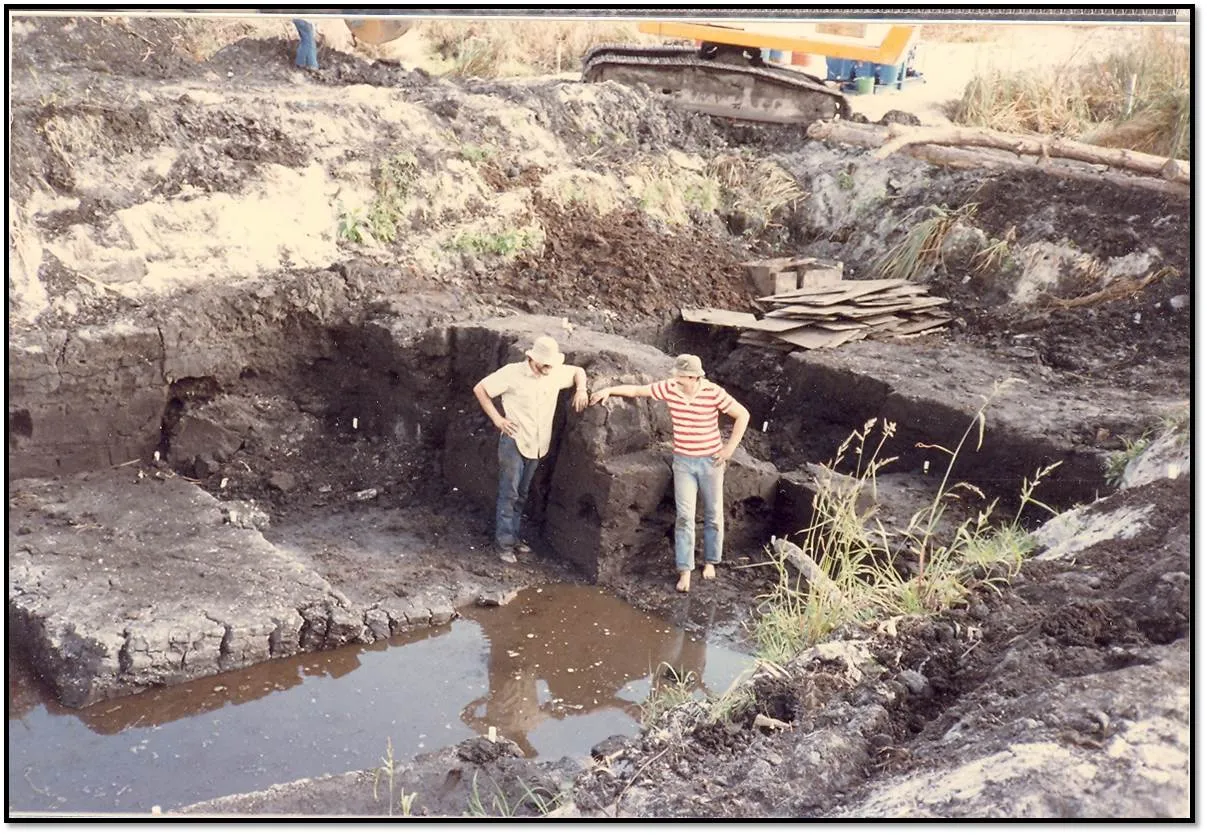
In the sweltering summer of 1982, a routine construction project in Florida took a chilling turn when heavy equipment operator Steve Vanderjacked unearthed a human skull while digging a retention pond.
This was no ordinary find; it was a skull that had remained remarkably preserved for nearly 8,000 years, nestled in the depths of Windover Bog, an archaeological site that would soon challenge everything we thought we knew about early human civilizations in the Americas.
As Steve dug into the damp earth, he felt a strange resistance that led him to investigate further. To his horror, he pulled out a skull, darkened and cold, stripped of flesh and hair. The discovery prompted immediate concerns of foul play, leading local law enforcement to the scene.
However, as the coroner examined the remains, it became evident that this was no recent crime. The skull was too soft and dark, revealing it belonged to someone who had died long before.
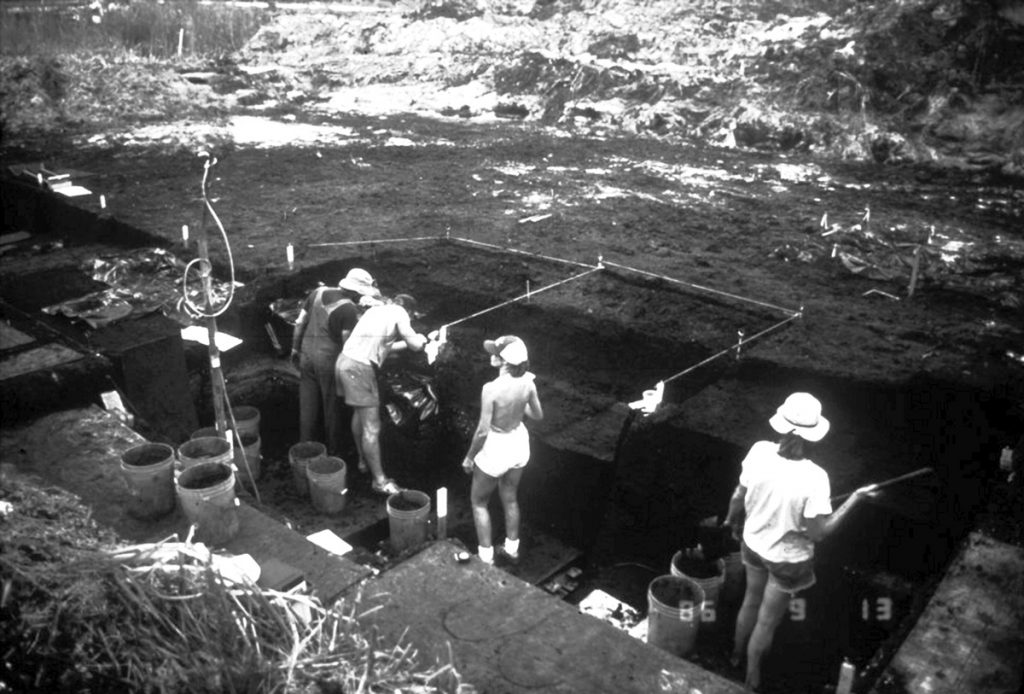
Soon, the excavation revealed over 160 human skeletons, all buried in a thick layer of peat that had preserved them in a way that defied scientific explanation.
The site, which was taped off and scrutinized by law enforcement, soon attracted the attention of archaeologists, particularly Dr. Glenn Doran from Florida State University.
Initially unimpressed by the unremarkable appearance of the bog, Dr. Doran and his team quickly realized they had stumbled upon one of the oldest known burial sites in North America.
Radiocarbon dating indicated the remains dated back nearly 7,000 to 8,000 years, a time when experts believed humans in the Americas were primarily nomadic and lacked sophisticated social structures.
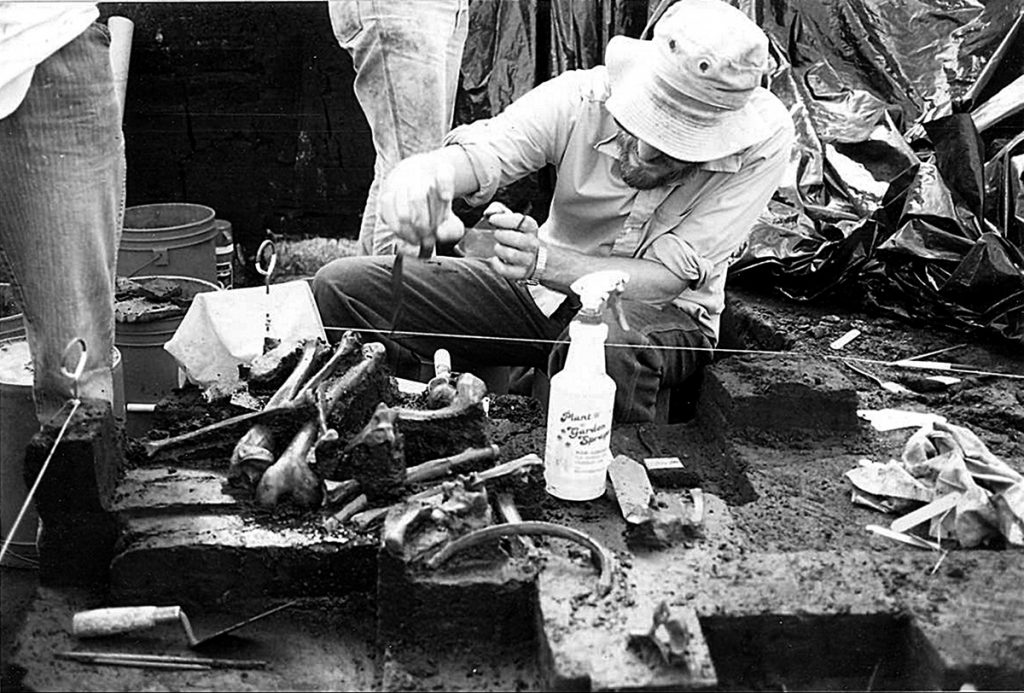
However, the discoveries at Windover Bog shattered these assumptions. The buried individuals were not mere wanderers; they were part of a settled community with advanced burial practices.
Many of the bodies were found wrapped in intricately woven textiles, accompanied by tools and jewelry, indicating a high level of skill and social organization.
This was not a random burial ground; it was a sacred site where people returned repeatedly over centuries to honor their dead.
As the excavation progressed, the team uncovered something even more astonishing—intact brain matter within nearly 90 of the skulls. This level of preservation was unprecedented, raising urgent questions among scientists.
How could human brains survive intact for millennia in Florida’s humid climate? The bog’s unique anaerobic conditions, combined with the tannins from the peat, created a natural preservative environment, halting the decay process.
Yet, the preservation of soft tissue, especially brain matter, was still considered biologically improbable.
The most shocking discovery came when researchers analyzed a particular skull, belonging to a woman estimated to be around 45 years old at the time of her death. When they opened her cranium, they found a remarkably intact brain, complete with recognizable folds and structures.
This extraordinary preservation prompted a detailed anatomical study, revealing not only the brain’s structure but also portions of the protective membrane still clinging to its surface.
However, the mystery deepened when DNA analysis was conducted on the brain tissue and bone marrow. The results were unsettling: the woman’s mitochondrial DNA revealed a rare sublineage that did not match any known genetic groups in the Americas.
Two other individuals buried at the site exhibited the same unusual marker, suggesting the presence of a genetic lineage that had vanished from history.
This discovery raised profound implications for our understanding of early human populations in North America, hinting at a previously undocumented genetic diversity that could reshape our knowledge of human migration and settlement patterns.
The findings at Windover Bog have left scientists grappling with unsettling questions. Was there once a population with genetics that we have yet to fully document?
Have entire lineages been lost to history, leaving no trace in modern DNA? The implications are staggering, challenging established migration models and timelines of human arrival in the Americas.
Moreover, the structural anomalies found in the preserved brain raised additional concerns. Subtle deviations in symmetry and size suggested possible environmental adaptations or ancient traits that have since been lost.
What do these findings mean for our understanding of human evolution and adaptation?
The Windover Bog site has become a focal point for both scientific inquiry and public fascination. As rumors and conspiracy theories swirled—ranging from paranormal explanations to connections with ancient aliens—archaeologists remained committed to uncovering the truth.
They rejected sensationalism, focusing instead on evidence and the profound implications of their discoveries.
The emotional care shown in the burials, particularly of infants wrapped in finely woven shrouds, speaks to a society with deep rituals and a strong sense of community.
This was not a random collection of remains; it was a testament to a culture that valued its members, cared for the weak, and honored its dead with elaborate ceremonies.
As scientists continue to analyze the artifacts and remains from Windover Bog, they are faced with the reality that many questions remain unanswered.
The site challenges our understanding of ancient societies and their complexities, forcing us to confront the limits of our knowledge.
What did these people call themselves? How did they live, and what ultimately happened to them? The whispers of history echo through the preserved remains, urging us to listen and learn.
The Windover Bog discovery is not just an archaeological anomaly; it is a profound reminder of the mysteries that still lie hidden beneath our feet.
As we delve deeper into the past, we are reminded that history is not a static narrative but a dynamic story filled with secrets waiting to be uncovered.
The implications of this remarkable find extend far beyond the boundaries of Florida, reshaping our understanding of human history and the complexities of ancient civilizations.
As we continue to explore the depths of our past, the legacy of Windover Bog serves as a powerful testament to the resilience of human life and the enduring quest for knowledge.
What other secrets lie buried, waiting for the right moment to reveal themselves? The journey of discovery is far from over, and the echoes of Windover will resonate for generations to come.
News

Doomsday From the Sky: The Shocking New Timeline of the Day the Dinosaurs Were Erased
A reconstructed scientific timeline details the minute-by-minute destruction unleashed when the Chicxulub asteroid struck Earth 65 million years ago. …

Descubrimiento de una Civilización Perdida Bajo Angkor Wat: Un Enigma Científico
A vast urban network buried beneath Angkor Wat has been revealed through LiDAR and radar imaging, uncovering roads, canals, reservoirs,…

Palace Denies Prince Harry Informed Them About Canada Trip, but His Team Says He Did
Prince Harry traveled to Canada for Remembrance Day events, surprising Buckingham Palace aides despite his team claiming they informed them….
Exiled and Exposed! Former Prince Andrew Spotted Riding Alone at Windsor as Royal Titles Erased and Falklands Honors Vanish!
Former Prince Andrew was spotted horseback riding at Windsor Castle for the first time since losing his royal titles and…

BBC Issues Rare Apology to Kate Middleton After Remembrance Broadcast Backlash
The network received criticism over the Princess of Wales’ titles after covering the royal family’s Remembrance tributes In…

Wall Street in ‘extreme fear’ as stocks plunge AGAIN amid fears world’s biggest company is a dud
Wall Street suffered another sharp sell-off as major indexes and Bitcoin extended their steep November declines. Investors are gripped by…
End of content
No more pages to load






