AI is transforming astronomy by analyzing massive datasets from missions like the Euclid telescope, enabling discoveries such as gravitational lensing features that humans could not detect alone.
In a world where artificial intelligence (AI) is rapidly reshaping industries and everyday life, the realm of science is not immune to its transformative power.
With AI’s integration into various fields, particularly in astronomy, the question arises: Can machines truly rival human intellect in the quest for cosmic knowledge?
As scientists harness the capabilities of AI, they are uncovering mysteries of the universe at an unprecedented pace, but this technological leap also raises concerns about the implications of relying on machines for scientific discovery.
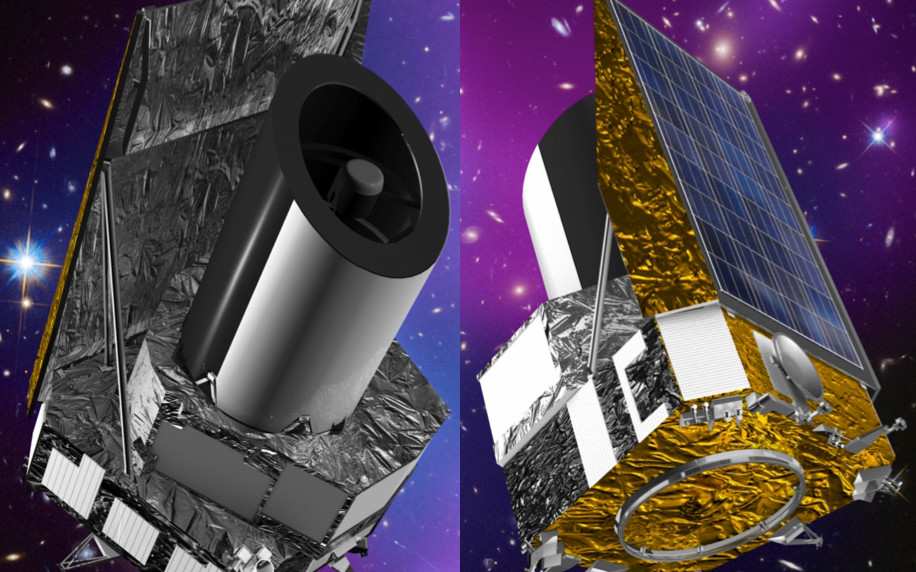
The recent launch of the Euclid telescope has opened a new frontier in astronomical research, aiming to map dark matter and dark energy across a significant portion of the night sky.
This groundbreaking mission, initiated in July 2023, has already yielded remarkable findings, including the identification of an Einstein ring—an extraordinary phenomenon that occurs when the gravitational lensing of light creates a perfect ring around a galaxy.
This discovery, made by archive scientist Bruno Altieri, showcases the potential of AI to process and analyze vast amounts of data that would be impossible for human researchers to manage alone.
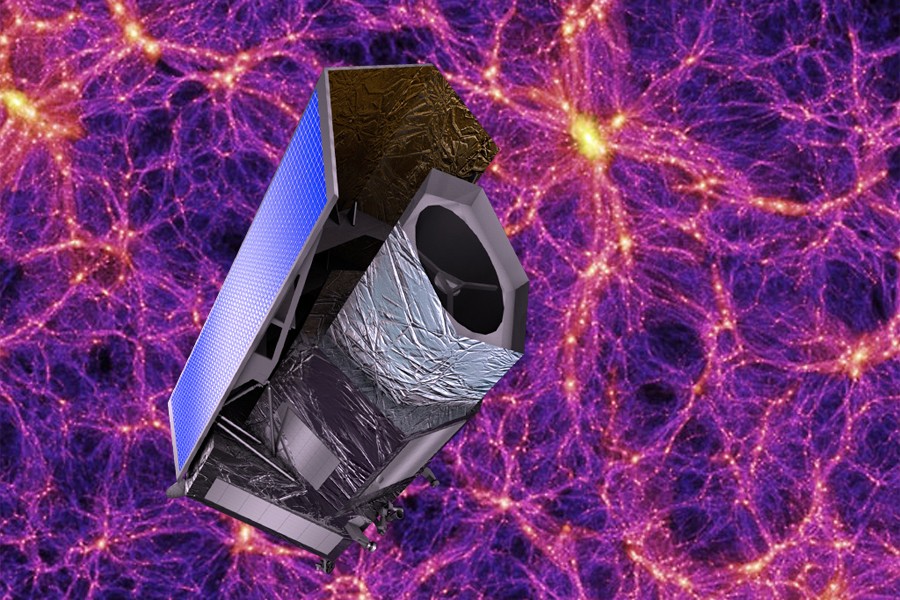
The Euclid telescope generates petabytes of data, dwarfing the storage capacity of even the most advanced personal computers. With such an overwhelming volume of information, traditional methods of data analysis fall short.
Herein lies the strength of AI, particularly machine learning, which can sift through this astronomical data to identify patterns, such as gravitational lensing events, that would otherwise remain hidden.
For instance, astronomers have previously utilized AI to detect gravitational lens candidates from images captured by telescopes, demonstrating its efficacy in recognizing complex astronomical phenomena.
However, the reliance on AI in scientific discovery is not without its challenges. While AI can enhance our understanding of the universe, it also introduces a level of opacity that can be troubling.
As AI systems become more sophisticated, their decision-making processes often become inscrutable, leaving scientists grappling with the results without a clear understanding of how those conclusions were reached.
This lack of transparency can undermine the fundamental goal of science: to gain knowledge and insight about the universe through rigorous investigation and understanding.
The potential for AI to produce inaccurate or misleading results is another significant concern.
In a recent study, the Royal Society emphasized the importance of data integrity in AI-driven research, warning that AI systems can inadvertently introduce errors or biases into their analyses.
This is particularly concerning in fields like astronomy, where the sheer scale of data can make it challenging to verify every finding.
As AI continues to evolve, scientists must remain vigilant about the quality of the data being fed into these systems and the conclusions drawn from their outputs.
Despite these challenges, the potential benefits of AI in astronomy are immense. From identifying new galaxies to discovering exoplanets, machine learning has proven to be an invaluable tool in expanding our understanding of the cosmos.
In Japan, for example, a citizen science initiative successfully trained AI to identify galaxies, resulting in the discovery of hundreds of thousands of new celestial bodies with remarkable accuracy.
Such advancements highlight AI’s capacity to augment human capabilities, enabling researchers to explore the universe in ways previously thought impossible.
Moreover, AI’s application extends beyond data analysis; it is also being used to innovate experimental designs.
At the Laser Interferometer Gravitational-Wave Observatory (LIGO), a specialized AI named Urania was tasked with creating new designs to enhance the observatory’s sensitivity.
Although the initial results were unconventional, Urania’s iterative improvements led to designs that could potentially increase LIGO’s detection capabilities by 10-15%.
This illustrates AI’s ability to think outside the box and propose solutions that challenge traditional scientific methodologies.
As the integration of AI into scientific research continues to grow, so too does the debate surrounding its ethical implications. Many scientists express concerns about the potential for AI to propagate misinformation, compromise data integrity, and entrench biases within research.
The rapid proliferation of AI-generated content raises questions about accountability and the need for robust oversight in scientific practices.
As we venture further into this new era of AI-driven research, it is crucial to strike a balance between leveraging technology’s advantages and maintaining the integrity of scientific inquiry.
The future of astronomy is undoubtedly intertwined with the advancements in AI technology. As we prepare for the next wave of discoveries from the Euclid telescope, the excitement surrounding AI’s role in uncovering the universe’s secrets is palpable.
However, this excitement must be tempered with caution, as we navigate the complexities of integrating AI into the scientific process.
The key to successful collaboration between human intellect and artificial intelligence lies in understanding the limitations of AI while harnessing its strengths to enhance our quest for knowledge.
In conclusion, the intersection of AI and astronomy presents both thrilling opportunities and formidable challenges.
As we stand on the brink of a new era in scientific discovery, the question remains: Are we ready to embrace the cosmic consequences of our reliance on artificial intelligence? The answer may shape the future of not only astronomy but the very nature of scientific exploration itself.
News

Descubrimiento de una Civilización Perdida Bajo Angkor Wat: Un Enigma Científico
A vast urban network buried beneath Angkor Wat has been revealed through LiDAR and radar imaging, uncovering roads, canals, reservoirs,…

Palace Denies Prince Harry Informed Them About Canada Trip, but His Team Says He Did
Prince Harry traveled to Canada for Remembrance Day events, surprising Buckingham Palace aides despite his team claiming they informed them….

Exiled and Exposed! Former Prince Andrew Spotted Riding Alone at Windsor as Royal Titles Erased and Falklands Honors Vanish!
Former Prince Andrew was spotted horseback riding at Windsor Castle for the first time since losing his royal titles and…

BBC Issues Rare Apology to Kate Middleton After Remembrance Broadcast Backlash
The network received criticism over the Princess of Wales’ titles after covering the royal family’s Remembrance tributes In…

Wall Street in ‘extreme fear’ as stocks plunge AGAIN amid fears world’s biggest company is a dud
Wall Street suffered another sharp sell-off as major indexes and Bitcoin extended their steep November declines. Investors are gripped by…
NASA’s Stunning Revelation: Interstellar Object 3I/ATLAS Faces Catastrophic CME Impact!
NASA announced that the interstellar object 3I/ATLAS is about to be struck by a solar coronal mass ejection, potentially triggering…
End of content
No more pages to load