
Scientists have uncovered genetic traces of a mysterious “ghost hominid” species within modern human DNA, reshaping our understanding of evolution.

In a groundbreaking discovery that has sent shockwaves through the scientific community, researchers have unveiled astonishing evidence suggesting that modern humans may carry genetic remnants of an ancient, unknown hominid species, referred to as “ghost hominids.”
This revelation stems from extensive genetic studies that highlight how our DNA is intertwined with that of long-extinct relatives, raising profound questions about our evolutionary history and identity.
The journey began in 2010 when geneticists successfully sequenced the Neanderthal genome, confirming the long-held hypothesis that Neanderthals interbred with early modern humans, resulting in 1% to 3% of Neanderthal DNA in contemporary human populations.
This finding was revolutionary, as it established a direct genetic link to ancient humans. But the intrigue didn’t stop there. Later that year, another significant discovery emerged: many modern individuals, particularly those from Southeast Asia, possess up to 5% Denisovan DNA.
This ancient lineage, distinct from both Neanderthals and Homo sapiens, has been shown to confer certain advantages, such as enabling Tibetans to thrive in high-altitude environments.
Fast forward to 2020, and geneticists announced yet another startling find: evidence of an unidentified hominin contributing between 2% to 19% of the genome in certain West African populations.
This revelation has ignited a frenzy of speculation and confusion regarding the identity of these ghost hominids and the extent of their influence on modern human genetics.
The term “ghost lineage” refers to a species that has contributed to our DNA without leaving behind any fossil or skeletal remains.
So far, archaeologists have failed to uncover any physical evidence of this archaic population in West Africa, leading researchers to label them as hominid X or ghost hominids.
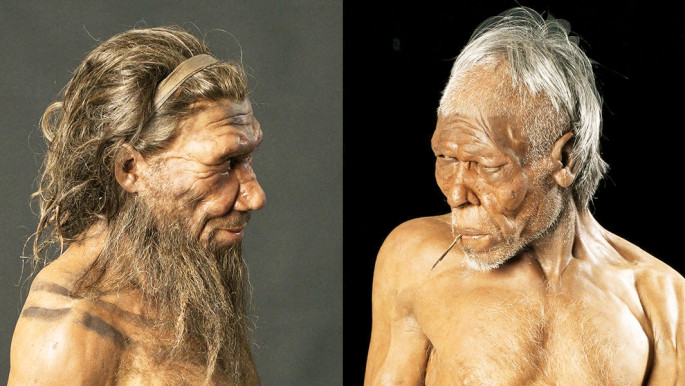
As scientists delve deeper into the complexities of human genetics, they are uncovering significant segments of our genomes that trace back to distant populations and even entirely different species.
These findings indicate that our ancestors did not evolve in isolation; rather, they intermingled with various hominins throughout history. The Denisovans, for instance, were first identified in 2008 when archaeologists discovered bone fragments in a Siberian cave.
These remains belonged to a previously unknown lineage of ancient humans, distinct from Homo sapiens. DNA analysis revealed that this lineage contributed to the genetic makeup of modern East Asians, further complicating our understanding of human ancestry.
The recent study focusing on four contemporary West African populations—Yoruba, Ean, West Gambians, and the men—sought to unravel the mysteries surrounding the ghost hominids.
By comparing the DNA of these modern populations with that of Neanderthals and Denisovans, researchers aimed to determine whether specific genes in living Africans were unique to Homo sapiens or derived from a more ancient ancestor shared with Neanderthals.
They examined single nucleotide polymorphisms (SNPs), which represent variations in the DNA sequence.
The results were unexpected: instead of a smooth evolutionary pattern, the data formed a U shape, indicating a higher frequency of rare and common gene variants than anticipated.
This unusual genetic pattern suggests that modern West Africans carry a small amount of DNA from another ancient human group that diverged before our split with Neanderthals.
The findings imply that a significant portion of the ancestry of contemporary West Africans can be traced back to an unidentified hominid, yet to be recognized in the fossil record.
The estimated contribution of ghost hominid DNA ranges from 2% to 19%, with a mean average of around 9% to 12%. This is notably higher than the 1% to 2% Neanderthal DNA found in Europeans and the 2% to 3% in East Asians.

Intriguingly, this genetic admixture appears to be specific to West Africa, as similar signals were not detected in South African or Central African groups.
The researchers classify these ghost hominins as archaic hominins, suggesting they branched off from our lineage prior to the divergence of Neanderthals and Denisovans.
Genetic evidence indicates that this split occurred between 360,000 and 975,000 years ago, around the time our last common ancestors with Neanderthals and Denisovans were evolving.
While the exact identity of these ghost hominins remains elusive, they likely inhabited West or Northwest Africa, while our lineage emerged across Central, East, and Southern Africa.
As Homo sapiens began to spread across the continent, they would have encountered these hominins, who may have resembled typical hominins from the Middle Pleistocene—tall, robust, and equipped with sophisticated tools.
Some researchers have even dubbed them the “African Neanderthals,” highlighting their similarities to other hominin species.
Archaeological evidence suggests that these ghost hominins produced stone tools comparable in complexity to those created by Neanderthals and Homo sapiens.
Over time, interbreeding between these ancient populations likely occurred, leading to a hybrid population that persisted in the region for thousands of years. However, it’s crucial to note that the ancestors of modern West Africans did not directly mate with these ghost hominins.
Instead, around 43,000 years ago, they migrated into West Africa and mated with populations of Homo sapiens that had already settled there, inheriting the genetic legacy of the ghost hominins.
The implications of these findings are profound. The genes inherited from these ancient relatives have tangible effects on modern populations, influencing traits such as disease susceptibility and adaptability.
For instance, high frequencies of the NF1 tumor suppressor gene have been identified in West Africans, indicating that these ancient genes may confer health benefits.
As researchers continue to explore the genetic landscape of humanity, they hope to uncover more about the contributions of these ghost hominins and their impact on our evolutionary journey.
Despite the excitement surrounding these discoveries, misconceptions abound. Some have misinterpreted the findings to challenge the widely accepted “Out of Africa” theory, which posits that modern humans originated in Africa before dispersing to other continents.
Critics have erroneously claimed that modern humans evolved in Europe and then migrated back to Africa, interbreeding with local hominins.
However, the evidence overwhelmingly supports the notion that our lineage began in Africa, with ghost hominid admixture being a relatively recent phenomenon.
As we continue to unravel the complex tapestry of human ancestry, it becomes clear that the genetic legacy of ancient hominins is not merely a relic of the past but a vital part of our identity today.
The study of ancient DNA has revolutionized our understanding of human evolution, revealing that we are the product of millions of years of interbreeding and adaptation.
The remarkable story of our evolutionary journey is far from over, and as scientists push the boundaries of research, we can expect to uncover even more astonishing revelations about our ancient relatives and their enduring impact on our lives.
News
Doomsday From the Sky: The Shocking New Timeline of the Day the Dinosaurs Were Erased
A reconstructed scientific timeline details the minute-by-minute destruction unleashed when the Chicxulub asteroid struck Earth 65 million years ago. …

Descubrimiento de una Civilización Perdida Bajo Angkor Wat: Un Enigma Científico
A vast urban network buried beneath Angkor Wat has been revealed through LiDAR and radar imaging, uncovering roads, canals, reservoirs,…

Palace Denies Prince Harry Informed Them About Canada Trip, but His Team Says He Did
Prince Harry traveled to Canada for Remembrance Day events, surprising Buckingham Palace aides despite his team claiming they informed them….
Exiled and Exposed! Former Prince Andrew Spotted Riding Alone at Windsor as Royal Titles Erased and Falklands Honors Vanish!
Former Prince Andrew was spotted horseback riding at Windsor Castle for the first time since losing his royal titles and…
BBC Issues Rare Apology to Kate Middleton After Remembrance Broadcast Backlash
The network received criticism over the Princess of Wales’ titles after covering the royal family’s Remembrance tributes In…

Wall Street in ‘extreme fear’ as stocks plunge AGAIN amid fears world’s biggest company is a dud
Wall Street suffered another sharp sell-off as major indexes and Bitcoin extended their steep November declines. Investors are gripped by…
End of content
No more pages to load






