
Recent tomb discoveries from Egypt to South America reveal advanced ancient knowledge that challenges conventional history. Hidden tunnels, intricate burial sites, and sophisticated artifacts suggest civilizations were far more technologically and culturally advanced than previously thought.
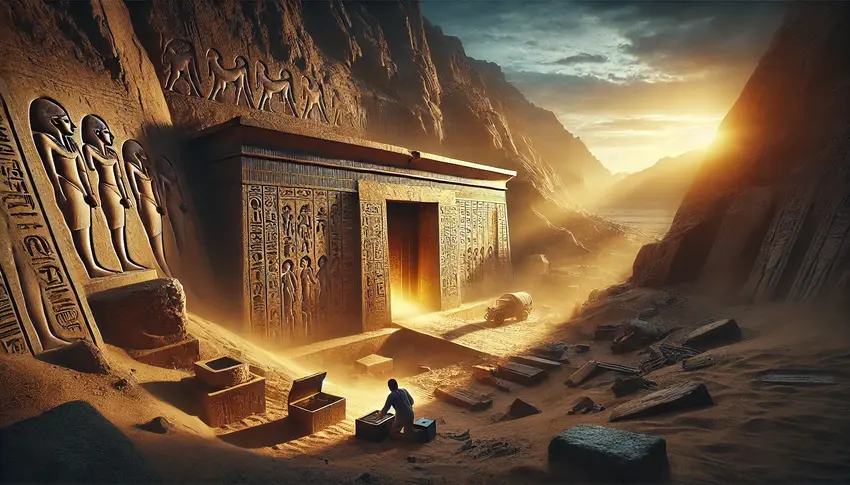
In a world where history is often taken at face value, recent archaeological discoveries challenge everything we thought we knew about ancient civilizations.
The latest findings from Egypt to South America reveal tombs and artifacts that suggest a hidden narrative of advanced knowledge and forgotten cultures.
As we delve into these astonishing revelations, one question looms large: how much of our history has been erased or misrepresented?
Archaeologists have unearthed tombs that defy conventional understanding, leading to shocking discoveries that could rewrite the story of human civilization.
From Cleopatra’s potential burial site to the enigmatic Terracotta Army of China, these findings raise profound questions about the origins of advanced societies and the knowledge they possessed.
In 2022, Dominican archaeologist Kathleen Martinez made headlines with her discovery of a one-kilometer-long tunnel buried beneath the Temple of Taposirus Magna, near Alexandria.
This ancient passage, believed to lead to Cleopatra’s final resting place, stunned experts with its precision and engineering.
The tunnel’s design, unmatched by any other structure from Cleopatra’s time, suggests a level of sophistication that challenges our understanding of ancient Egyptian technology.

Inside, archaeologists found pottery, coins, and alabaster statues, hinting at a connection to the legendary queen. But why would such an elaborate structure be built for a single tomb?
Critics argue it was merely a royal project, while others, like Graham Hancock, propose it reflects knowledge inherited from a lost civilization.
Across the globe, in the heart of China, the Terracotta Army continues to captivate the imagination. Discovered in 1974 by farmers digging a well, this vast underground army of over 8,000 life-sized figures was created to guard the tomb of China’s first emperor, Qin Shi Huang.
While mainstream historians label it a burial ritual, the intricacy and detail of the figures suggest a level of craftsmanship that goes beyond mere ritual. Ancient records indicate that the artisans who crafted this monumental site were buried alive, their secrets sealed with them.
This chilling revelation raises the possibility that the knowledge of these master craftsmen was deliberately silenced, leaving us with only fragments of a larger story.
In the Americas, the tomb of Takab Chak, a Maya ruler, has forced historians to reconsider the timeline of Maya civilization. Discovered in Kacol Bise, this burial site revealed a wealth of artifacts that suggest the Maya were far more advanced than previously believed.
The grave of Takab Chak was filled with intricate pottery, jade masks, and other treasures, indicating a powerful and organized society centuries earlier than conventional history suggests.
This discovery challenges the notion that civilizations evolve gradually, instead hinting at a sudden leap in complexity that points to the influence of a lost civilization.
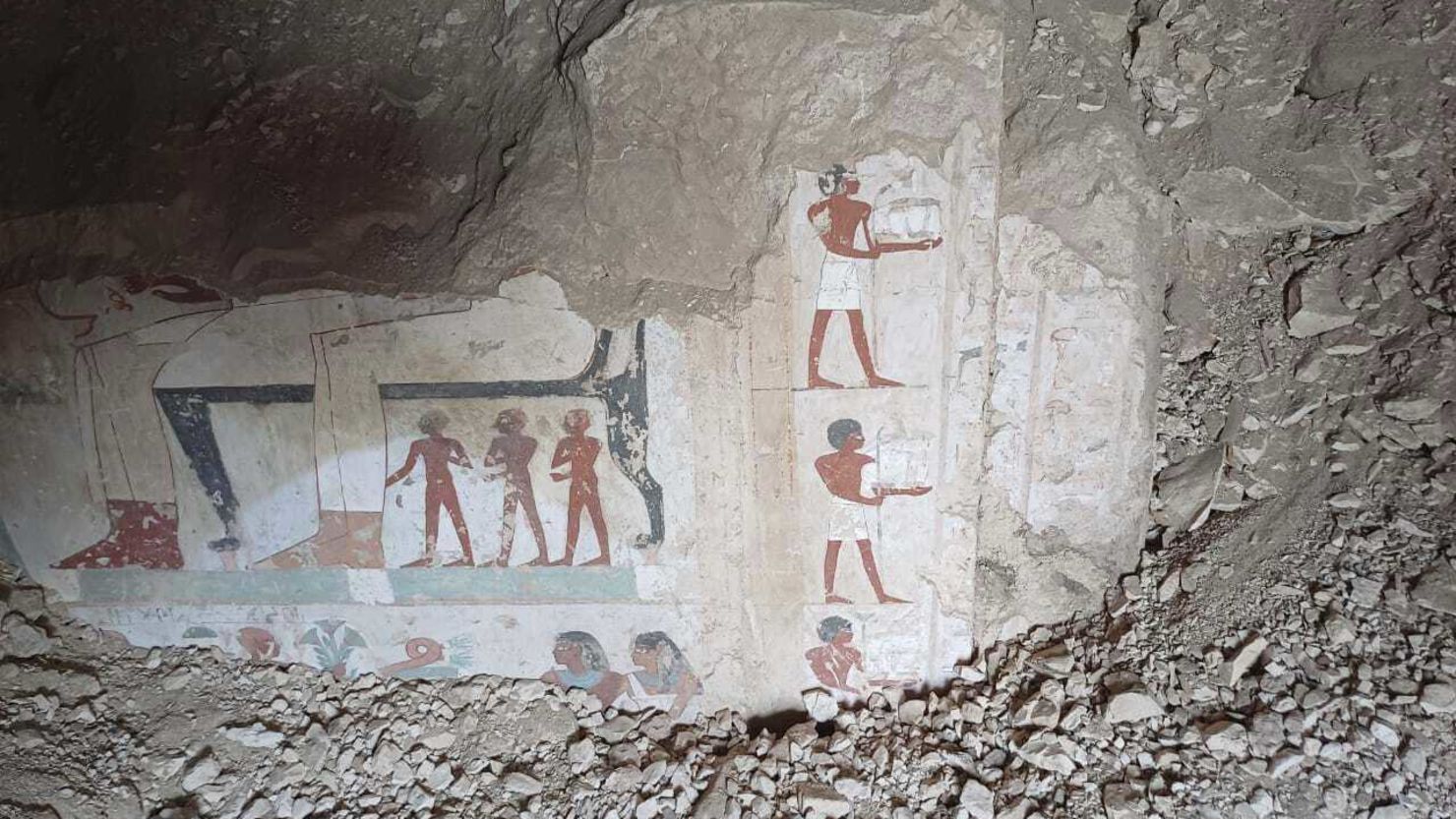
Meanwhile, in Egypt, the tomb of Susenesis I, a pharaoh from the so-called dark era of the 21st dynasty, has upended traditional narratives of decline.
Discovered in Tannis, this tomb contained an astonishing array of silver and gold artifacts, contradicting the idea that Egypt’s golden age had ended.
Instead of a civilization in decline, Susenesis’s burial reveals a continuity of craft and knowledge that defies historical expectations.
Graham Hancock argues that this suggests a preservation of ancient wisdom handed down from a much older civilization, challenging the belief that civilizations crumble and lose their skills.
The Golden Warrior of Peru, unearthed in the tomb of the Lord of Sipán, further complicates our understanding of ancient societies.
This burial, dating back to the Mochica civilization, showcased advanced metallurgy and engineering skills that raise questions about the origins of such knowledge.
The opulence of the burial and the sophistication of the artifacts suggest a society with deep-rooted traditions and connections to earlier cultures, hinting at a legacy of knowledge that transcends time.
In Bulgaria, the discovery of a Thracian mausoleum dating back to the 5th century BCE has unveiled a wealth of artifacts that suggest a highly developed culture with artistic achievements rivaling those of Greece and Rome.
The tomb of King Sooths III reveals a level of craftsmanship and sophistication that challenges our understanding of ancient European civilizations.
The presence of intricate bronze busts and golden artifacts indicates a society with extensive trade networks and cultural exchanges, suggesting that the Thracians were part of a broader narrative of human achievement.

As we piece together these discoveries, a pattern emerges: ancient civilizations may not have developed in isolation but rather shared knowledge and technology across vast distances and time periods.
Graham Hancock’s theories of knowledge transfer and inherited wisdom from a lost civilization resonate throughout these findings, suggesting that our understanding of history is far from complete.
The implications of these discoveries are profound.
If we are to accept that advanced knowledge existed in ancient times, we must confront the possibility that much of what we have been taught about our past is a simplified narrative that overlooks the complexities of human achievement.
The tombs of Cleopatra, the Terracotta Army, the Maya rulers, and the Golden Warrior all point to a shared heritage of knowledge that transcends borders and time.
In an age where history is often written by the victors, these archaeological revelations challenge us to reconsider the narratives we accept.
Are we ready to embrace a more nuanced understanding of our past, one that acknowledges the brilliance of ancient civilizations and the knowledge they may have passed down through generations?
As we delve deeper into these discoveries, the truth about our ancient history may be more astonishing than we ever imagined.
The journey to uncover these hidden truths has only just begun, and the revelations that lie ahead may forever change our understanding of who we are and where we come from.
News
Doomsday From the Sky: The Shocking New Timeline of the Day the Dinosaurs Were Erased
A reconstructed scientific timeline details the minute-by-minute destruction unleashed when the Chicxulub asteroid struck Earth 65 million years ago. …
Descubrimiento de una Civilización Perdida Bajo Angkor Wat: Un Enigma Científico
A vast urban network buried beneath Angkor Wat has been revealed through LiDAR and radar imaging, uncovering roads, canals, reservoirs,…

Palace Denies Prince Harry Informed Them About Canada Trip, but His Team Says He Did
Prince Harry traveled to Canada for Remembrance Day events, surprising Buckingham Palace aides despite his team claiming they informed them….
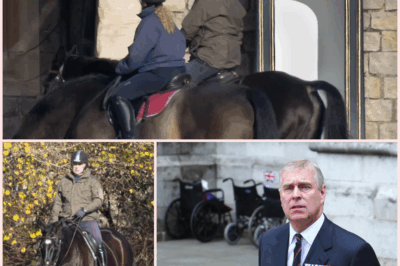
Exiled and Exposed! Former Prince Andrew Spotted Riding Alone at Windsor as Royal Titles Erased and Falklands Honors Vanish!
Former Prince Andrew was spotted horseback riding at Windsor Castle for the first time since losing his royal titles and…
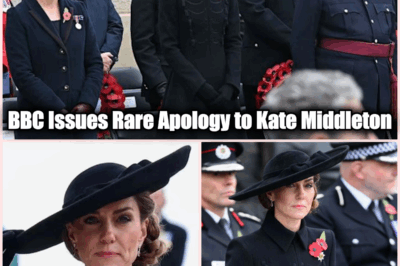
BBC Issues Rare Apology to Kate Middleton After Remembrance Broadcast Backlash
The network received criticism over the Princess of Wales’ titles after covering the royal family’s Remembrance tributes In…

Wall Street in ‘extreme fear’ as stocks plunge AGAIN amid fears world’s biggest company is a dud
Wall Street suffered another sharp sell-off as major indexes and Bitcoin extended their steep November declines. Investors are gripped by…
End of content
No more pages to load






