
758-meter structure in Sichuan Province showed cracks day before falling into river below

In what authorities are calling a stunning and terrifying engineering failure, the Hongqi Bridge at the Shuangjiangkou Hydropower Station in
Sichuan Province, China, collapsed dramatically into the river below Tuesday afternoon, sending up a massive dust cloud that could be seen for miles.
Completed earlier this year as part of a high-profile infrastructure push to improve connectivity across western China, the 758-meter-long, cantilevered two-lane bridge had barely been in service for months before its shocking failure.
Eyewitnesses and viral footage shared on social media captured the precise moment the bridge buckled, with entire sections of concrete and steel plummeting into the gorge, twisting and cracking under forces that remain under investigation.
The collapse occurred around 3 p.m. local time near the G317 national highway, a critical artery linking central China to Tibet, and sent shockwaves through local communities and engineering circles alike.
The Hongqi Bridge was more than a simple crossing; it was a symbol of China’s ambitious infrastructure program, a testament to state-backed engineering prowess designed to showcase the nation’s ability to conquer some of the planet’s most rugged terrain.
Standing roughly 625 meters above the gorge floor, with piers reaching up to 172 meters, the bridge was a cantilevered marvel of design and construction, intended to open previously inaccessible areas of the Maerkang region to commerce, tourism, and transportation.
Yet its promising future came to a catastrophic halt when cracks were observed on the right-bank slope just a day prior to the collapse.
Local authorities had noticed deformation along the bridge’s road surface and slope, prompting temporary traffic restrictions—a warning that, in hindsight, underscored the fragility of what had been hailed as a technological triumph.
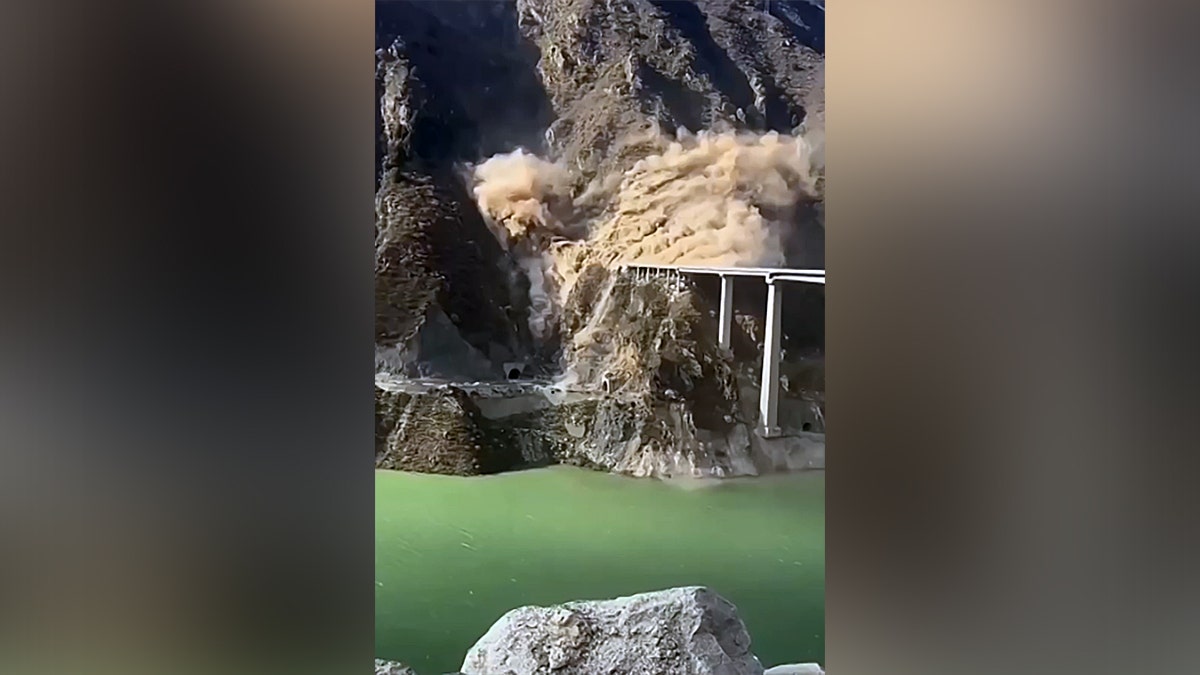
Despite the collapse’s dramatic nature, officials from Barkam County reported no casualties, noting that the bridge was empty at the time.
Vehicles and pedestrians had been cleared due to prior warnings, yet the scene left a chaotic aftermath of twisted girders, shattered concrete, and a river now littered with debris.
Emergency crews rushed to the site, documenting the wreckage and beginning the painstaking work of assessing structural damage and environmental impact.
Dust and debris clouded the gorge as engineers began surveying the fallen structure, taking stock of a disaster that has already triggered urgent debates on safety oversight, geological assessments, and construction protocols for China’s rapidly expanding infrastructure network.
The collapse of the Hongqi Bridge is a stark reminder of the risks involved in large-scale engineering projects, particularly in regions with complex topography.
The Maerkang area, with its steep mountains and unstable geological conditions, had always presented challenges for construction, requiring rigorous planning, meticulous surveying, and precise execution.
Experts are now examining whether geological instability contributed to the sudden failure, alongside potential design flaws, construction shortcuts, or overlooked warning signs.
In the days leading up to the collapse, local transportation and public security bureaus had issued notices alerting residents and travelers to possible safety risks, yet the sheer scale of the disaster underscores just how quickly such warnings can escalate into catastrophe.
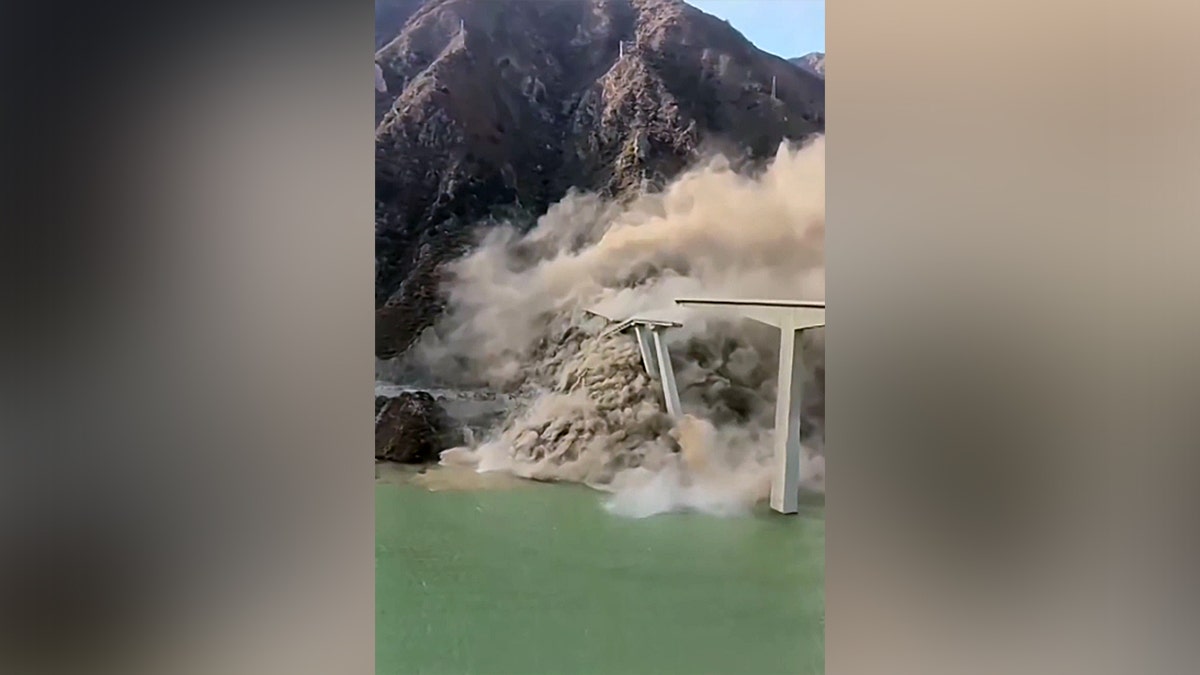
Footage from the collapse, widely circulated on Chinese social media, showed sections of the bridge buckling in sequence before succumbing entirely, sending up clouds of dust and debris that obscured the river below.
Observers likened the scene to an earthquake, with concrete slabs twisting mid-air and steel supports bending like matchsticks.
While miraculous in its timing, the fact that no one was on the bridge spared lives, though the psychological impact on the surrounding community is profound.
Residents who witnessed the collapse described a moment of utter disbelief, seeing what had seemed like an indestructible structure disintegrate in a matter of seconds, leaving behind a gaping chasm and a river strewn with remnants of a bridge meant to symbolize progress.
The Hongqi Bridge’s short-lived service highlights the tension between ambitious infrastructure projects and the inherent risks of operating in challenging environments.
Constructed by the state-backed Sichuan Road & Bridge Group, the bridge was part of a broader effort to expand access to the Tibetan Plateau and stimulate economic growth in one of China’s most remote and mountainous regions.
As a component of the G317 national highway, it was intended to facilitate trade, improve mobility, and open new avenues for development.
Yet the collapse exposes vulnerabilities in construction oversight, the potential consequences of rapid development, and the critical importance of monitoring geological and structural integrity in real time.
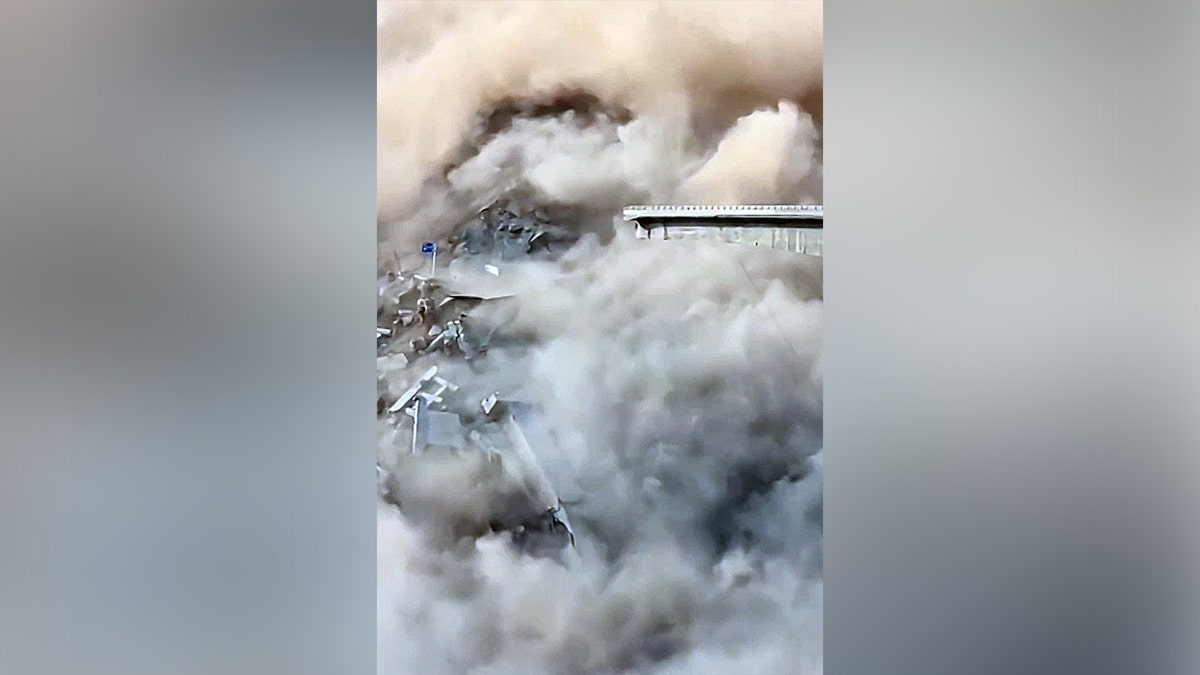
State-run outlets have not definitively identified the cause of the failure, but early assessments point to potential geological instability as a contributing factor.
The combination of steep slopes, fluctuating water tables, and natural erosion could have created conditions where even a meticulously engineered structure was at risk.
Engineers and investigators are meticulously combing through construction records, design blueprints, and surveillance footage to determine whether human error, material deficiencies, or unforeseen environmental factors played a role.
The investigation promises to be complex, given the scale of the bridge and the remote location of the site, but officials stress the urgency of understanding the causes to prevent future disasters.
The collapse also carries wider implications for infrastructure projects across China and potentially around the world.
As governments increasingly invest in massive bridges, hydropower stations, and highways, questions of oversight, construction standards, and risk assessment take on heightened significance.
While the Hongqi Bridge was heralded as a state-of-the-art feat, its abrupt failure raises red flags about whether similar projects in other mountainous regions are subject to comparable risks.
In addition to engineering concerns, environmental experts are assessing potential hazards posed by the debris in the river, including the disruption of aquatic ecosystems and contamination from construction materials.

Economically, the collapse may have long-term consequences for the region. The G317 highway is a vital transport route, and the sudden loss of a key crossing point disrupts trade, commuting, and tourism.
Reconstruction efforts are expected to be costly and time-consuming, requiring careful planning to ensure that a repeat of this disaster does not occur.
Meanwhile, local authorities face mounting pressure to provide accountability, transparency, and reassurance to residents who once celebrated the bridge as a marvel and now witness it as a cautionary symbol of failure.
The Hongqi Bridge collapse has sparked public debate about the balance between speed, ambition, and safety in infrastructure projects.
While China has made headlines for completing enormous projects at remarkable pace, this incident underscores the potential human and environmental cost of such achievements.
Engineers, planners, and policymakers now face the difficult task of evaluating protocols, reinforcing safety measures, and implementing stricter oversight to ensure that bridges and other monumental constructions can withstand both natural and man-made stresses.
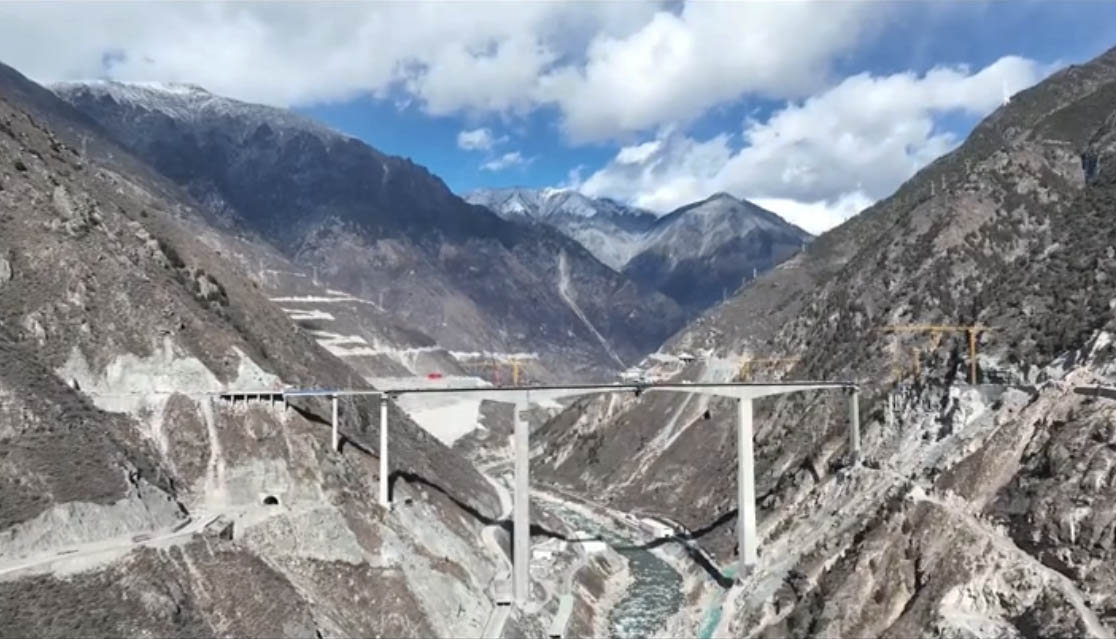
For now, the river beneath the Hongqi Bridge bears silent witness to a collapse that is as dramatic as it is instructive.
Concrete and steel, once a symbol of progress, lie twisted and broken, a reminder that even the most ambitious engineering feats are vulnerable to the forces of nature and the limits of human planning.
The event has left a scar on the landscape, challenged public confidence in infrastructure, and raised urgent questions about the safety of other projects across China’s mountains and plateaus.
As investigators continue their work, the Hongqi Bridge will remain a potent symbol of both human ambition and its potential peril.
Engineers, government officials, and local communities are left to grapple with the lessons of this disaster: the delicate balance of rapid development, the hidden dangers of complex terrain, and the unforgiving consequences when warning signs are ignored or underestimated.
The world watches closely as China confronts one of its most dramatic infrastructure failures in recent memory, a collapse that may redefine the standards of engineering oversight and the limits of human ingenuity in the face of nature’s immense power.
In the coming weeks and months, the focus will remain on piecing together what led to the collapse, repairing the damage, and ensuring that bridges meant to symbolize progress do not once again turn into cautionary monuments over rivers and gorges alike.
News

Doomsday From the Sky: The Shocking New Timeline of the Day the Dinosaurs Were Erased
A reconstructed scientific timeline details the minute-by-minute destruction unleashed when the Chicxulub asteroid struck Earth 65 million years ago. …

Descubrimiento de una Civilización Perdida Bajo Angkor Wat: Un Enigma Científico
A vast urban network buried beneath Angkor Wat has been revealed through LiDAR and radar imaging, uncovering roads, canals, reservoirs,…

Palace Denies Prince Harry Informed Them About Canada Trip, but His Team Says He Did
Prince Harry traveled to Canada for Remembrance Day events, surprising Buckingham Palace aides despite his team claiming they informed them….

Exiled and Exposed! Former Prince Andrew Spotted Riding Alone at Windsor as Royal Titles Erased and Falklands Honors Vanish!
Former Prince Andrew was spotted horseback riding at Windsor Castle for the first time since losing his royal titles and…

BBC Issues Rare Apology to Kate Middleton After Remembrance Broadcast Backlash
The network received criticism over the Princess of Wales’ titles after covering the royal family’s Remembrance tributes In…

Wall Street in ‘extreme fear’ as stocks plunge AGAIN amid fears world’s biggest company is a dud
Wall Street suffered another sharp sell-off as major indexes and Bitcoin extended their steep November declines. Investors are gripped by…
End of content
No more pages to load






