
Archaeologists re-examined the Osiris Shaft beneath the Giza Plateau and found a complex of water-filled chambers with empty sarcophagi and scattered human bones.
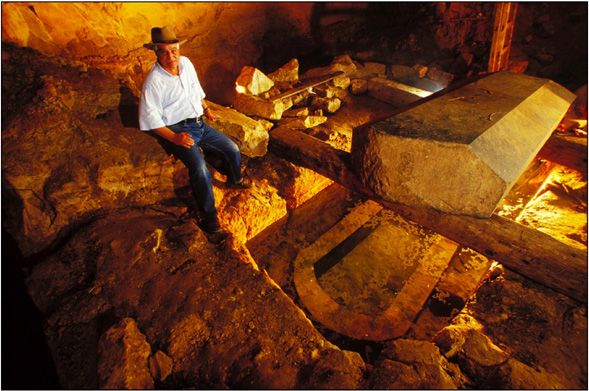
Archaeologists have reopened one of the most chilling subterranean mysteries under the Giza Plateau — a deep shaft beneath the causeway
that links the Sphinx to the second pyramid — and their latest findings suggest it was never a tomb, but a sacred, water‑filled ritual complex tied to the ancient myth of Osiris.
For decades, tall tales circulated of a coffin floating in a hidden lake, but systematic re‑examinations led by respected experts now paint a darker and more symbolic portrait:
a labyrinth of chambers filled with empty sarcophagi, bone fragments, and precisely cut rock, deliberately arranged for spiritual, not funerary, purposes.
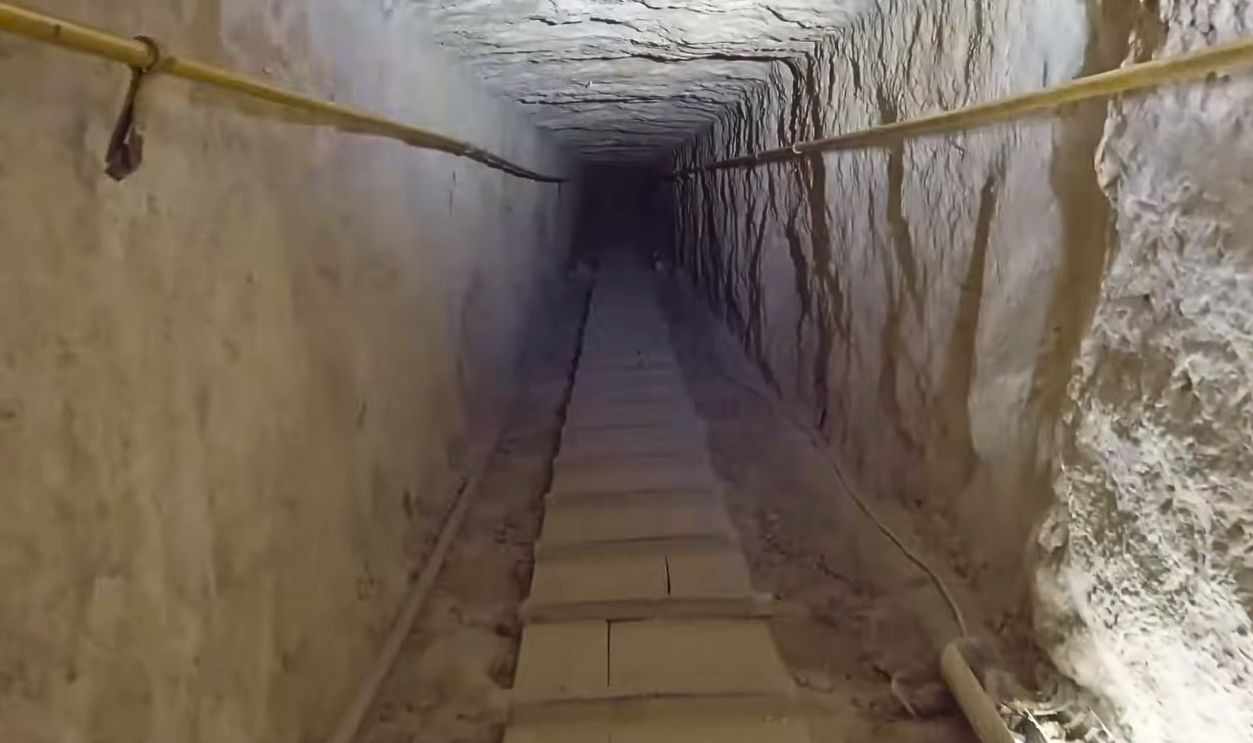
The shaft, often referred to as the “Osiris Shaft,” plunges some 25 to 30 meters into the limestone bedrock.
Its existence was first noted by early explorers, but meaningful excavation did not resume until renowned Egyptologist Zahi Hawass and his team investigated the site in the late 1990s.
Their descent led them through three distinct levels of rock-cut chambers, each carrying an eerie atmosphere: dim, wet, and silent except for the drip of groundwater echoing through ancient corridors. The deeper they went, the stranger it became.
On the first level, the rooms are relatively simple — unadorned, with plain stone walls that give nothing away of royal grandeur.
This is not the kind of ornate burial crypt we associate with Giza’s famous pyramids.
Instead, it feels like an antechamber, a threshold rather than a tomb. Yet even here, archaeologists found scattered fragments of pottery and bone, hinting at repeated use, perhaps over centuries.
The absence of hieroglyphs or formal grave goods suggests this level played a functional, perhaps transitional role in ritual activity.
Moving to the second level, the exploration becomes more startling. There, Hawass’s team uncovered **two massive granite sarcophagi**, each sealed and sculpted yet curiously unmarked — no names, no royal titles, no inscriptions at all.
These stone coffins were coated in black resin, a substance associated in ancient Egyptian symbolism with regeneration and renewal.
The surrounding floor held human skeletal fragments, but the bones were incomplete, raising thorny questions about who — or what — was placed here, and why the remains were left in such an unusual state.
Descending even further, the team reached a waterlogged chamber that bordered on otherworldly. This third level, partially submerged beneath a constant trickle of seepage, contains a large granite sarcophagus perched in the center of a watery trench, framed by stone pillars.
The coffin appears heavily weathered, coated in mineral deposits where water has pooled over centuries. When opened, it revealed no human remains — an empty stone tomb in a subterranean lake, as chilling as it is mysterious.
What at first glance sounds like sensational legend — a floating coffin beneath Giza — takes on a far more nuanced meaning under scientific scrutiny. Inside this submerged chamber, the floor bears a carved symbol: the hieroglyph **“pr”**, meaning “house.”
This has led Hawass and other researchers to interpret the space not as a burial site but as a **ritual “house of Osiris”**, a symbolic sanctuary devoted to the god of death and renewal.
Rather than sealing in a physical body, the sarcophagus may have served as a metaphorical vessel, a spiritual presence in rock and water.
Pottery shards from various stages of Egypt’s history have been recovered throughout the shaft, and radiocarbon dating places some material around 500 BC, while later fragments suggest continued ritual use into the Late Period.
This multi‑phase occupation undercuts the idea that the shaft was built for a single pharaoh’s burial.
Instead, it appears to have been reused and revered across centuries, a long-lived ceremonial hall where physical space mirrored sacred cosmology.
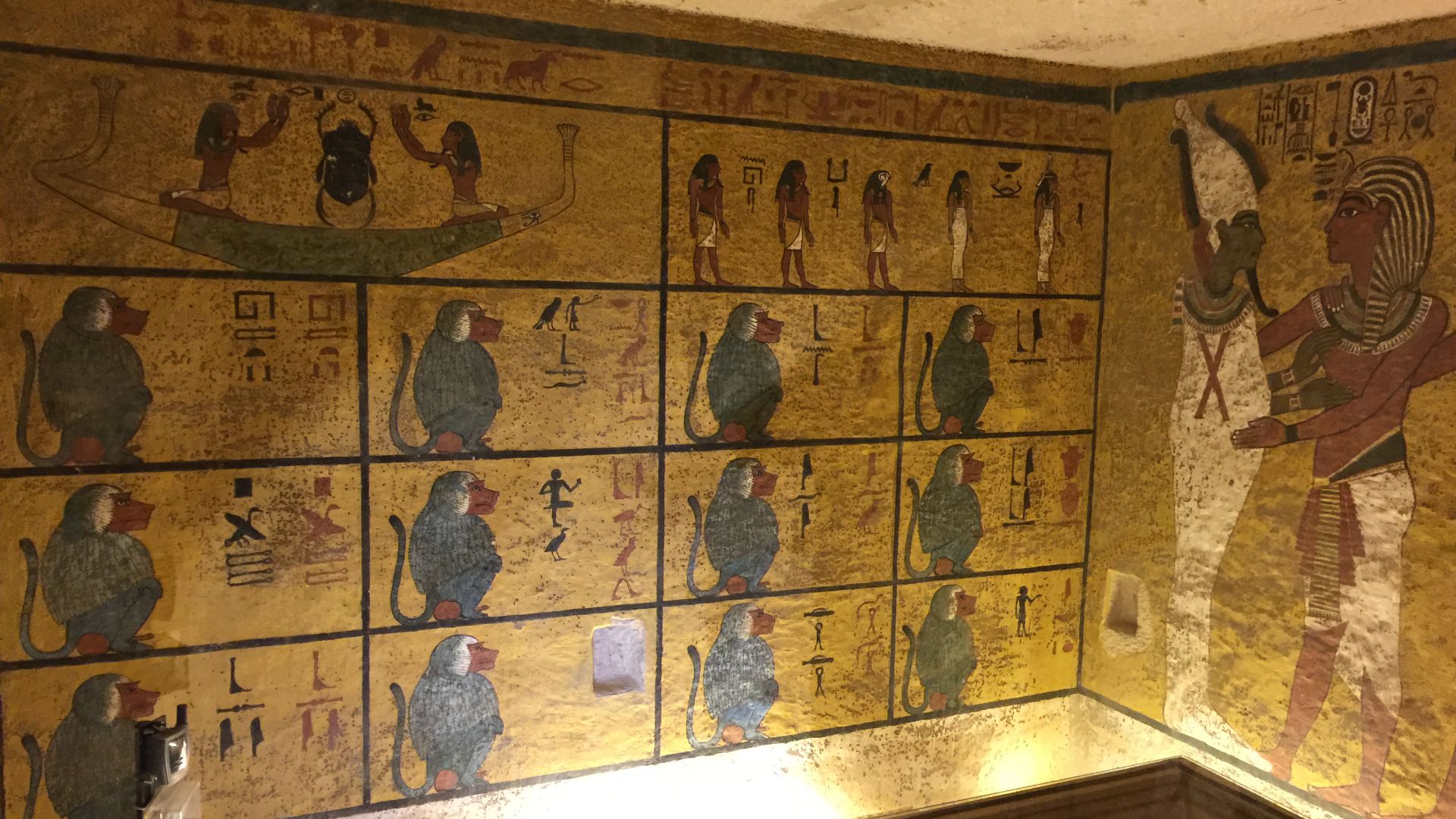
Far from being an abandoned tomb, the Osiris Shaft emerges as a deliberate architectural design imbued with symbolic meaning.
The choice of black resin for the sarcophagi aligns with Egyptian beliefs in rebirth, while the water itself may represent the primordial waters of creation — the infinite depths from which life and death both emerge.
The composition of the chamber, with its pillars and central sarcophagus, suggests a highly ritualized environment, not a pragmatic burial corridor.
The presence of incomplete human remains — scattered bones, rather than full skeletons — further supports the interpretation that this was never intended as a final resting place in the usual sense.
The disarticulated remains might have been deposited in symbolic acts of dismemberment or reassembly, echoing Osiris’s mythic death, fragmentation, and resurrection. Alternatively, they could represent dedication or offering rather than traditional internment.
Modern technology has played a crucial role in reshaping our understanding of the site. Ground‑penetrating tools, careful water control, and detailed mapping have enabled archaeologists to document structural details that early explorers could only guess at.
The dim, echoing chambers, once considered a curiosity or folklore come to life, now fit together in a complex architectural puzzle whose design reflects a sophisticated understanding of geology, symbolism, and ritual function.
This reinterpretation of the Osiris Shaft has profound implications for how we view the Giza Plateau.
Rather than a hidden tomb for a forgotten king, it may represent a **subterranean cult center**, a spiritual locus where water, stone, and myth converged in a sustained act of worship.
The traditional narrative of pyramid complexes as purely funerary monuments may need revision: at least in this case, the underworld itself was literally built into the bedrock.

Critically, this does not mean the shaft was designed simply as a shrine for tourists’ fascination — it likely held deep religious significance for ancient Egyptians.
The long-term reuse of the site, across different dynastic periods, suggests that its meaning transcended the reign of any single ruler.
It may have functioned as a place of initiation or pilgrimage, where priests entered the depths, performed rites, and symbolically accessed the afterlife.
Skeptics, however, remain cautious. Some argue that the black resin could be a late addition, or that the water-filled chamber was never intended for human occupation.
Others question whether the carved “house” glyph truly signifies a ritual house, or whether it may have a different symbolic meaning altogether.
Until more excavations are conducted, and perhaps until new discoveries emerge, parts of the shaft’s purpose will remain speculative.
Yet the beauty of this site lies in its ambiguity: the very things that fuel sensational headlines — water, empty sarcophagi, mythic resonance — are grounded in real archaeological evidence.
Far from a haunted tomb, the Osiris Shaft now appears as a deliberate fusion of architecture, religion, and geology. It invites us to reconsider not just how the ancient Egyptians buried their dead, but how they conceived their cosmos.
As researchers plan further dives and surveys, the questions proliferate. Are there hidden passageways beyond the waterlogged chamber?
Was the shaft part of a larger underground network? Did priests once conduct secret rites here, far from the eyes of pharaohs and pilgrims? What does this site tell us about how ancient Egyptians understood death and rebirth?
The Osiris Shaft may never deliver the blockbuster discovery of a pharaoh’s undisturbed remains, but its real power could be even greater: a living testament to a spiritual tradition that transcended mortality.
Beneath the sands of Giza, in silence and darkness, a sacred architecture waits — not for glory, but for meaning.
News

Doomsday From the Sky: The Shocking New Timeline of the Day the Dinosaurs Were Erased
A reconstructed scientific timeline details the minute-by-minute destruction unleashed when the Chicxulub asteroid struck Earth 65 million years ago. …
Descubrimiento de una Civilización Perdida Bajo Angkor Wat: Un Enigma Científico
A vast urban network buried beneath Angkor Wat has been revealed through LiDAR and radar imaging, uncovering roads, canals, reservoirs,…

Palace Denies Prince Harry Informed Them About Canada Trip, but His Team Says He Did
Prince Harry traveled to Canada for Remembrance Day events, surprising Buckingham Palace aides despite his team claiming they informed them….
Exiled and Exposed! Former Prince Andrew Spotted Riding Alone at Windsor as Royal Titles Erased and Falklands Honors Vanish!
Former Prince Andrew was spotted horseback riding at Windsor Castle for the first time since losing his royal titles and…

BBC Issues Rare Apology to Kate Middleton After Remembrance Broadcast Backlash
The network received criticism over the Princess of Wales’ titles after covering the royal family’s Remembrance tributes In…

Wall Street in ‘extreme fear’ as stocks plunge AGAIN amid fears world’s biggest company is a dud
Wall Street suffered another sharp sell-off as major indexes and Bitcoin extended their steep November declines. Investors are gripped by…
End of content
No more pages to load






