
Greenland’s Viking settlements flourished for centuries before vanishing mysteriously by the mid-1400s, leaving no clear explanation for their disappearance.

In the annals of history, few tales are as perplexing as that of the Vikings who settled in Greenland.
Around 985 AD, these intrepid Norsemen transformed a desolate, icy landscape into a thriving community filled with farms, churches, and trade networks, all while braving the harshest conditions imaginable.
Yet, by the mid-1400s, they vanished without a trace, leaving behind no battles, no plagues, and no warning.
What could have led to the sudden disappearance of an entire civilization? This mystery has captivated historians and archaeologists for centuries, prompting questions about survival, adaptation, and the fragility of human societies.
The saga begins with Eric the Red, a legendary figure who, after facing exile from Iceland, ventured westward to establish two main settlements on Greenland’s rugged coastline—the Western and Eastern settlements.
These Viking pioneers were not merely surviving; they were thriving, cultivating a miniature European society in one of Earth’s most inhospitable climates. They brought livestock, built sod houses, and erected stone churches, creating a semblance of home amidst the ice.
Cows grazed in sheltered pastures, goats roamed the hills, and hay was carefully stored to ensure livestock could survive the brutal winters.
Trade routes connected Greenland with Norway and Iceland, facilitating the exchange of essential goods like tools and iron. The Vikings carved out a life from ice and stone, blending grit with faith, tradition, and community.
However, as the years rolled on, the climate began to shift. By the early 1300s, the medieval warm period that had allowed for productive farming came to an end.
Winters grew longer and harsher, and the once-favorable grazing seasons began to shrink. Ice lingered into spring, making navigation perilous and cutting off vital trade routes.
The isolation became increasingly pronounced as ships from Norway became less frequent and more dangerous.
Food shortages loomed large on the horizon, and the settlers were forced to adapt their diets, shifting from traditional livestock to marine mammals and fish. Archaeological evidence suggests a growing reliance on seals and walrus, yet adaptation had its limits.
The Norse may have been reluctant to adopt the survival techniques of the local Inuit populations, clinging to their own cultural identity at the expense of their very survival.
As environmental challenges intensified, the settlers faced an onslaught of difficulties. Rising sea levels eroded fertile farmland, unpredictable weather patterns disrupted agriculture, and the onset of the Little Ice Age further shortened growing seasons.
The combination of relentless snow, ice, and wind made life increasingly untenable.
Historians propose that entire generations grew up under these harsh conditions, witnessing fewer resources and less sunlight than their ancestors.
Some communities attempted to build stone walls and windbreaks to protect their pastures, but these efforts proved insufficient against nature’s fury.
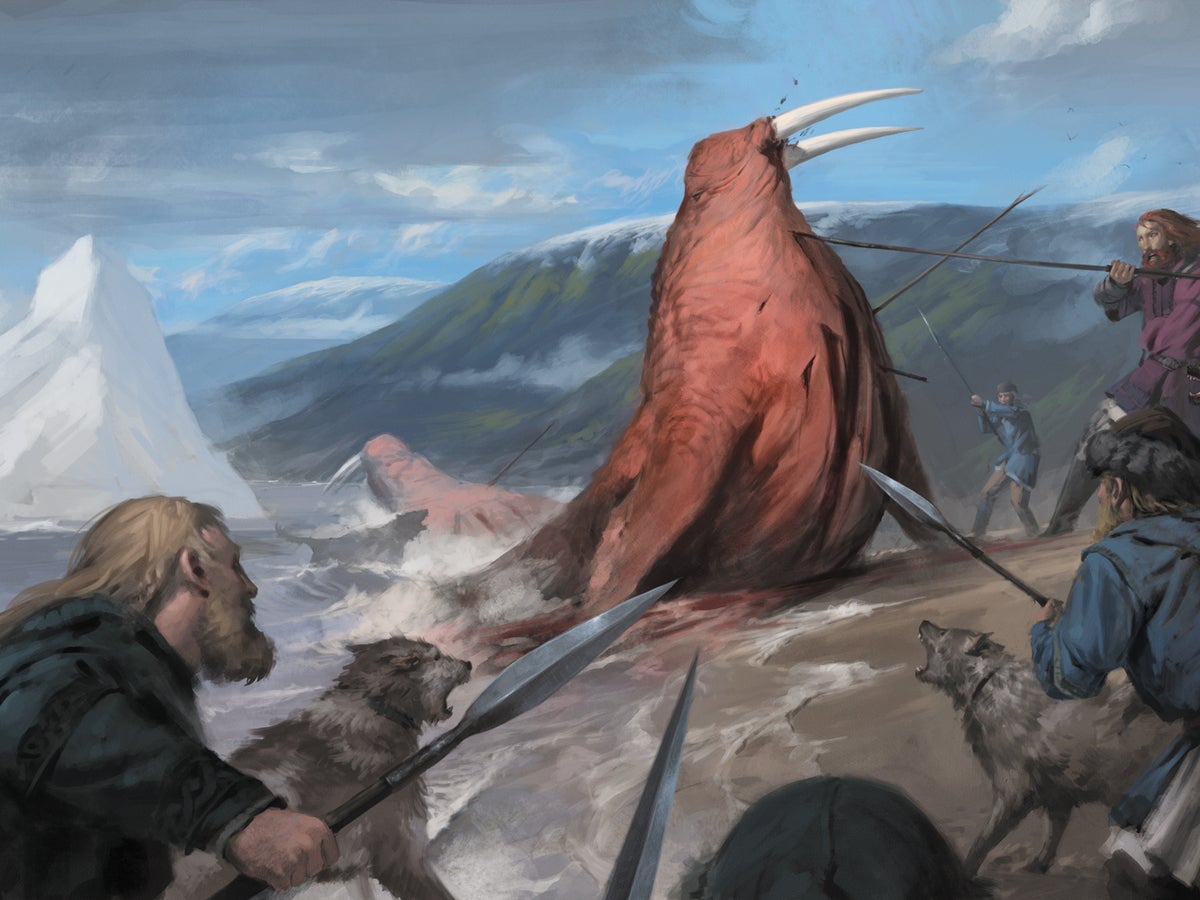
Economic pressures compounded the settlers’ struggles. Greenland’s exports, particularly walrus ivory, began to lose value as European alternatives became available.
The Black Death ravaged Europe, disrupting supply chains and isolating the Greenland settlements even further. Fewer ships meant fewer imports and less communication with the outside world.
The religious institutions that once provided comfort and community began to falter, with bishops losing touch and churches becoming mere relics of the past.
Despite these mounting pressures, life continued for the Greenland Vikings—albeit quietly and with increasing difficulty. Seasonal festivals, communal hunts, and church gatherings persisted, showcasing the social cohesion that remained even as resources dwindled.
Yet, this quiet persistence may have delayed the necessary adaptations that could have saved the settlements.
Evidence suggests that life continued as best it could until the early 15th century, with the wedding at Voly Church in 1408 marking one of the last documented events in Greenland’s Viking history.
After that, written records vanish, and archaeological findings point to a gradual abandonment rather than a sudden catastrophe.
What happened next remains shrouded in mystery. Did some settlers migrate back to Iceland or Norway? Did others integrate into Inuit communities, adopting local survival strategies?
Historians can only speculate, but one fact remains: by the mid-1400s, the Norse Greenlanders had disappeared entirely, leaving behind no dramatic final stand, only silence.
The echoes of their existence linger in the archaeological record, hinting at lives once lived amidst the icy expanse.
The legacy of the Greenland Vikings serves as a cautionary tale about the interplay of environmental, economic, and cultural pressures.
Their story illustrates how small shifts in climate and trade patterns can have devastating consequences for communities on the brink of survival. While the Vikings innovated and persevered, their resistance to cultural change ultimately limited their options.
Survival often requires flexibility and a willingness to learn from others, especially in the face of adversity.
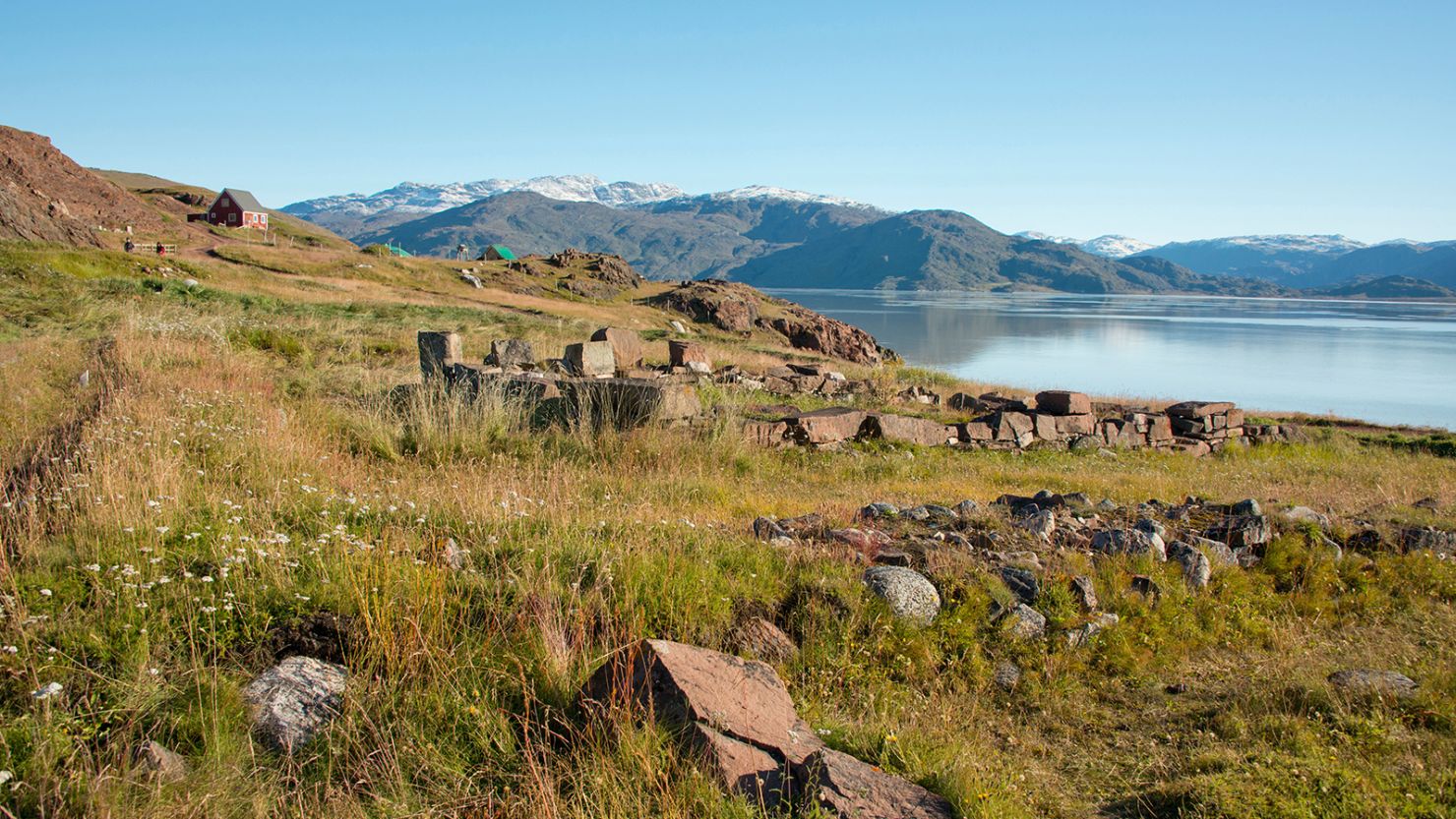
Today, the ruins of Greenland’s Norse settlements continue to captivate archaeologists and historians alike. Excavations reveal stone foundations, remnants of churches, and artifacts that provide glimpses into this vanished world.
Ice cores, pollen analysis, and DNA studies are gradually reconstructing the lives and challenges faced by these settlers.
Could there still be undiscovered clues waiting to be uncovered? Perhaps hidden artifacts hold the key to understanding migration patterns, diets, and interactions with indigenous populations.
The story of Greenland’s vanished settlements invites us to reflect on the fragility and adaptability inherent in human societies.
It challenges romanticized myths of divine punishment or dramatic invasions, instead revealing a complex process shaped by forces beyond any single individual’s control.
As we ponder the lessons of this lost civilization, we are reminded that history often whispers more than it shouts.
The echoes of the Greenland Vikings, their struggles and triumphs, linger in the frozen landscape, inviting us to explore the mysteries of a civilization that vanished without warning.
Would you dare to walk among the ruins, to uncover the secrets of a society that once thrived against all odds? The answers may lie buried beneath the ice, waiting to be discovered by those willing to seek them out.

News
Doomsday From the Sky: The Shocking New Timeline of the Day the Dinosaurs Were Erased
A reconstructed scientific timeline details the minute-by-minute destruction unleashed when the Chicxulub asteroid struck Earth 65 million years ago. …
Descubrimiento de una Civilización Perdida Bajo Angkor Wat: Un Enigma Científico
A vast urban network buried beneath Angkor Wat has been revealed through LiDAR and radar imaging, uncovering roads, canals, reservoirs,…

Palace Denies Prince Harry Informed Them About Canada Trip, but His Team Says He Did
Prince Harry traveled to Canada for Remembrance Day events, surprising Buckingham Palace aides despite his team claiming they informed them….

Exiled and Exposed! Former Prince Andrew Spotted Riding Alone at Windsor as Royal Titles Erased and Falklands Honors Vanish!
Former Prince Andrew was spotted horseback riding at Windsor Castle for the first time since losing his royal titles and…

BBC Issues Rare Apology to Kate Middleton After Remembrance Broadcast Backlash
The network received criticism over the Princess of Wales’ titles after covering the royal family’s Remembrance tributes In…

Wall Street in ‘extreme fear’ as stocks plunge AGAIN amid fears world’s biggest company is a dud
Wall Street suffered another sharp sell-off as major indexes and Bitcoin extended their steep November declines. Investors are gripped by…
End of content
No more pages to load






