
Scientists discovered a massive hidden void inside the Great Pyramid of Khufu using cosmic-ray muon imaging. The void is at least 30 meters long and rivals the size of the Grand Gallery.
:max_bytes(150000):strip_icc():focal(799x492:801x494):format(webp)/hidden-corrido-inside-pyramid-of-giza-030223-3e1fee828b544a4aa7d60cbf7977e62e.jpg)
In an astonishing revelation that has electrified the world of archaeology, scientists have uncovered a gigantic hidden void deep within the Great Pyramid of Khufu, a structure that has captivated humanity for over 4,500 years.
Using state-of-the-art cosmic-ray muon imaging technology, researchers detected a cavernous space so enormous that its cross section rivals that of the pyramid’s famed Grand Gallery.
This discovery marks the first major internal finding inside the Great Pyramid since the 19th century, suggesting that even one of the most studied monuments on Earth still holds secrets waiting to be unearthed.
Muon imaging, an advanced technique that tracks subatomic particles generated by cosmic rays as they pass through stone, revealed this massive empty chamber tucked high above the Grand Gallery.
By carefully placing sensitive detectors both inside and around the pyramid, scientists were able to construct a three-dimensional map of density anomalies within the structure.
The result was a striking confirmation of a void at least 30 meters in length, a hidden cavity that had eluded explorers, engineers, and archaeologists for centuries.
The function of this colossal space remains a tantalizing mystery. Some experts believe it may have served a purely structural purpose, acting as a weight-relief chamber to distribute the immense load of stone blocks above the Grand Gallery and protect the integrity of the pyramid.
Others propose that it could have been a part of the pyramid’s construction process itself, possibly an internal ramp or passage used by the builders to maneuver massive stones into place before being left empty once construction was complete.

Yet the most captivating theories are those that bridge engineering and ritual.
Drawing inspiration from the ancient Pyramid Texts, some scholars speculate that this enormous void could have been intended to house a sacred object, perhaps a throne forged from meteoritic iron — a celestial artifact imbued with religious or symbolic power.
In this vision, Pharaoh Khufu may have designed the chamber not only to maintain the pyramid’s structural integrity but also to safeguard a ritualistic object that connected him to the heavens, reinforcing his status as an intermediary between the mortal world and the divine.
Despite the excitement, caution tempers speculation. Researchers have yet to explore the void directly, and many details about its orientation, continuity, and exact dimensions remain unknown.
The void could be a single uninterrupted chamber, a series of smaller connected cavities, or even a cleverly engineered architectural feature meant to distribute weight while concealing its true purpose.
Each possibility fuels more questions than answers, inviting the world to imagine what could be hidden behind the pyramid’s limestone walls.
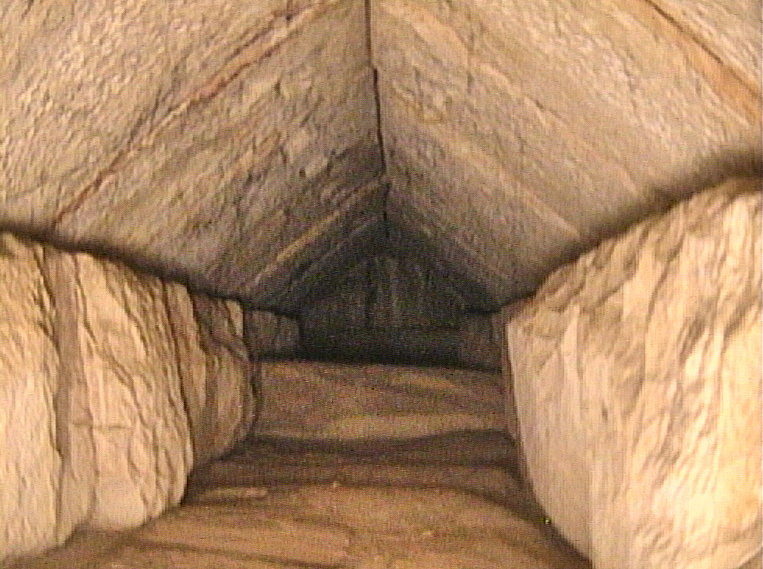
The discovery has reignited global fascination with one of humanity’s oldest and most enigmatic monuments. For decades, the Great Pyramid has been admired not only for its architectural brilliance but also for the mysteries it continues to hold.
The revelation of this hidden void opens the door to new possibilities, challenging long-held assumptions about ancient Egyptian construction techniques, religious practices, and the Pharaoh’s ambitions.
Speculation abounds. Could this enormous hidden space be a secret ritual chamber, a construction aid, or a cosmic vault for sacred relics?
Does it hint at advanced engineering knowledge lost to history, or perhaps a symbolic passage designed to convey Pharaoh Khufu’s power and divine connection?
Until archaeologists can physically penetrate the void, these questions remain tantalizingly unanswered, suspended in the very heart of the Great Pyramid itself.
One thing is certain: the Great Pyramid still holds secrets that defy time, daring humanity to uncover them.
As scientists refine their imaging techniques and plan future explorations, the world waits in awe, knowing that even after thousands of years, this ancient wonder may yet reveal treasures — and mysteries — beyond imagination.

News

Doomsday From the Sky: The Shocking New Timeline of the Day the Dinosaurs Were Erased
A reconstructed scientific timeline details the minute-by-minute destruction unleashed when the Chicxulub asteroid struck Earth 65 million years ago. …

Descubrimiento de una Civilización Perdida Bajo Angkor Wat: Un Enigma Científico
A vast urban network buried beneath Angkor Wat has been revealed through LiDAR and radar imaging, uncovering roads, canals, reservoirs,…

Palace Denies Prince Harry Informed Them About Canada Trip, but His Team Says He Did
Prince Harry traveled to Canada for Remembrance Day events, surprising Buckingham Palace aides despite his team claiming they informed them….

Exiled and Exposed! Former Prince Andrew Spotted Riding Alone at Windsor as Royal Titles Erased and Falklands Honors Vanish!
Former Prince Andrew was spotted horseback riding at Windsor Castle for the first time since losing his royal titles and…

BBC Issues Rare Apology to Kate Middleton After Remembrance Broadcast Backlash
The network received criticism over the Princess of Wales’ titles after covering the royal family’s Remembrance tributes In…

Wall Street in ‘extreme fear’ as stocks plunge AGAIN amid fears world’s biggest company is a dud
Wall Street suffered another sharp sell-off as major indexes and Bitcoin extended their steep November declines. Investors are gripped by…
End of content
No more pages to load






