Scientists have uncovered new evidence that the universe is expanding at an accelerating rate driven by a mysterious, unseen force known as dark energy. Researchers warn that this accelerating expansion could determine the universe’s ultimate fate, ranging from a slow freeze to a catastrophic “Big Rip.”
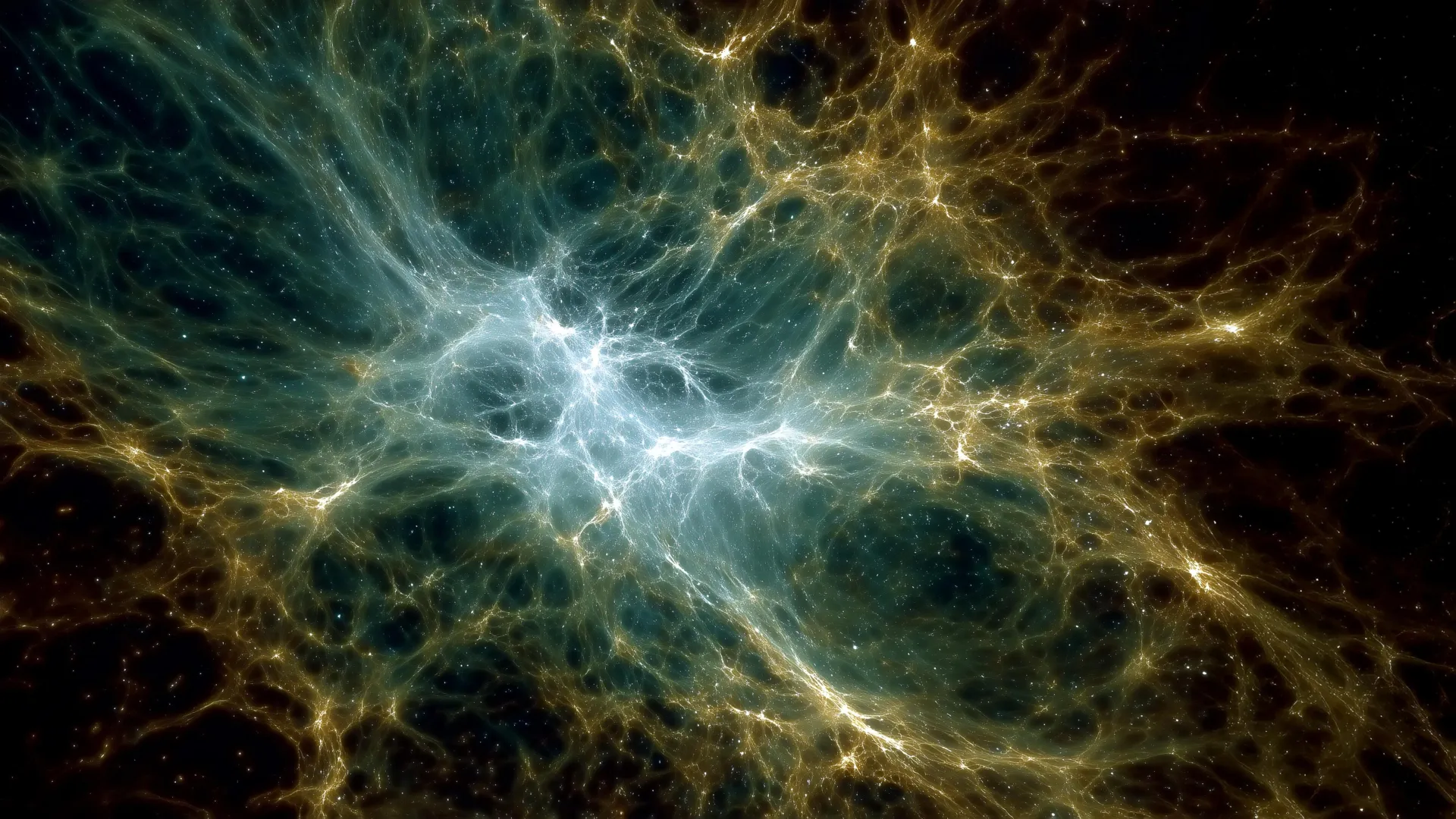
In a stunning revelation that could change everything we know about the cosmos, scientists are grappling with the implications of a mysterious force that appears to be driving our universe apart.
While Albert Einstein once famously quipped that “the universe is infinite, and human stupidity is also infinite,” recent advancements in astronomy suggest that our understanding of the universe is still very much in its infancy.
The James Webb Space Telescope and other cutting-edge technologies are now allowing researchers to probe deeper into the fabric of reality, revealing that the universe is not only expanding but doing so at an accelerating rate.
The implications of this discovery are profound. For centuries, humankind believed that the universe was static, merely a collection of stars and galaxies floating in a dark void.
This notion was shattered by Edwin Hubble in the 1920s when he observed that distant galaxies were moving away from us, leading to the formulation of the Big Bang theory.
However, the recent findings suggest that this expansion is not just a slow drift but a rapid acceleration, fueled by a force that remains largely unseen and poorly understood.
This enigmatic force, dubbed “dark energy,” is estimated to make up about 68% of the universe. While scientists have long acknowledged its existence, the nature of dark energy is still a mystery.
Some theorists propose that it could be linked to a cosmological constant, a term Einstein introduced to maintain a static universe.
Others speculate that dark energy might be the result of new fields yet to be discovered, potentially leading to catastrophic consequences for the universe as we know it.

The implications of dark energy extend beyond mere academic curiosity; they could dictate the ultimate fate of the universe. If dark energy continues to drive the expansion of the universe, we might face a future known as the “Big Freeze.”
In this scenario, galaxies would drift farther apart, and eventually, all stars would burn out, leaving a cold, dark universe devoid of light and life.
Future astronomers might gaze into the night sky and see nothing but darkness, unaware that there was once a vibrant cosmos teeming with stars and galaxies.
But what if dark energy is not stable? Some scientists warn of the possibility of a “Big Rip,” where the repulsive forces of dark energy could become so overwhelming that they tear apart galaxies, stars, and even atoms themselves.
This terrifying prospect raises questions about the very nature of reality and our place within it. Are we merely observers in a universe that is doomed to disintegrate?
Adding to the intrigue, researchers are also investigating ancient cosmic objects that could provide clues about the universe’s history and its future.
A recently discovered interstellar comet, estimated to be around 7 billion years old, offers a glimpse into the early formation of galaxies and the conditions that prevailed shortly after the Big Bang.
Such discoveries are crucial for piecing together the cosmic puzzle and understanding the forces at play in our universe.

As scientists continue to explore these questions, they are also grappling with the implications of their findings for our understanding of time and space. The universe, as it turns out, is not just expanding; it is doing so at a speed that challenges our comprehension.
The Hubble Constant, which measures the rate of this expansion, suggests that galaxies are receding from us at an astonishing pace, creating a cosmic landscape that is constantly shifting and evolving.
In light of these revelations, the scientific community is buzzing with excitement, but also trepidation. The mysteries of dark energy and its role in the universe’s expansion remain largely unsolved, and the stakes could not be higher.
As we stand on the brink of a new era in cosmology, the questions we face are as profound as they are unsettling. What is the ultimate fate of our universe? Will we witness its slow demise, or could we be caught in the crosshairs of a cosmic catastrophe?
In conclusion, the universe is far more complex and dynamic than we ever imagined. As researchers delve deeper into the mysteries of dark energy and the accelerating expansion of the cosmos, we are left with more questions than answers.
The future of our universe hangs in the balance, and the potential for discovery is as thrilling as it is daunting.
One thing is certain: the cosmos is a vast and enigmatic place, and our journey to understand it has only just begun. As we continue to explore the depths of space, we may yet uncover the secrets that lie hidden among the stars, reshaping our understanding of reality itself.
News

Descubrimiento de una Civilización Perdida Bajo Angkor Wat: Un Enigma Científico
A vast urban network buried beneath Angkor Wat has been revealed through LiDAR and radar imaging, uncovering roads, canals, reservoirs,…

Palace Denies Prince Harry Informed Them About Canada Trip, but His Team Says He Did
Prince Harry traveled to Canada for Remembrance Day events, surprising Buckingham Palace aides despite his team claiming they informed them….

Exiled and Exposed! Former Prince Andrew Spotted Riding Alone at Windsor as Royal Titles Erased and Falklands Honors Vanish!
Former Prince Andrew was spotted horseback riding at Windsor Castle for the first time since losing his royal titles and…

BBC Issues Rare Apology to Kate Middleton After Remembrance Broadcast Backlash
The network received criticism over the Princess of Wales’ titles after covering the royal family’s Remembrance tributes In…

Wall Street in ‘extreme fear’ as stocks plunge AGAIN amid fears world’s biggest company is a dud
Wall Street suffered another sharp sell-off as major indexes and Bitcoin extended their steep November declines. Investors are gripped by…
NASA’s Stunning Revelation: Interstellar Object 3I/ATLAS Faces Catastrophic CME Impact!
NASA announced that the interstellar object 3I/ATLAS is about to be struck by a solar coronal mass ejection, potentially triggering…
End of content
No more pages to load