China released over a million rabbits into the Kubuqi Desert to help restore vegetation and combat desertification. Over ten years, the rabbit population grew massively, enriching soil but also threatening native plants and wildlife.
In a move straight out of a science‑fiction thriller, China quietly released more than a **million rabbits** into one of its vast deserts—with jaw‑dropping results a decade later.
What began as an ambitious environmental restoration project has evolved into something far more complicated than anyone anticipated, sparking debates over whether this is a genius solution to desertification—or a dangerous ecological gamble gone off the rails.
A decade ago, in the windswept dunes of Inner Mongolia’s Kubuqi Desert, Chinese environmentalists, economists, and local farmers hatched a bold plan: use rabbits. Not just any rabbits—but the plush, thick-furred Rex rabbits.
These creatures, known for their burrowing habits and surprisingly high rates of reproduction, would be integrated into a broader rewilding and land‑restoration program.
The theory: the rabbits would dig into the sandy soil, their droppings would fertilize it, and their grazing behavior would stimulate the growth of native shrubs and grasses. In turn, these plants would anchor the sand, reduce erosion, and help rebuild a healthier ecosystem.
At the outset, the model seemed both clever and sustainable. Local farmers were enlisted to raise the rabbits in semi‑wild enclosures scattered across the desert.
Their waste supplied a natural fertilizer, which propelled the growth of hardy shrubs like *salix* (a desert willow), carefully planted in rows.
The vegetation, once established, would both feed the rabbits and stabilize the sand dunes. Gradually, the barren desert would begin to green.
But over the past ten years, what appeared to be an elegant ecological solution has spun into something far more unpredictable—and controversial.
First, the scale of the project ballooned. What started as a pilot model expanded into full-blown rabbit farms, with **millions of animals** now living in and around the desert.
Local communities embraced the enterprise not just for its environmental potential, but for its economic promise. Rabbits became cash cows: their fur, meat, and even manure were turned into valuable commodities.
As the population exploded, so did the industry, drawing more people into rabbit breeding than anyone had initially expected.
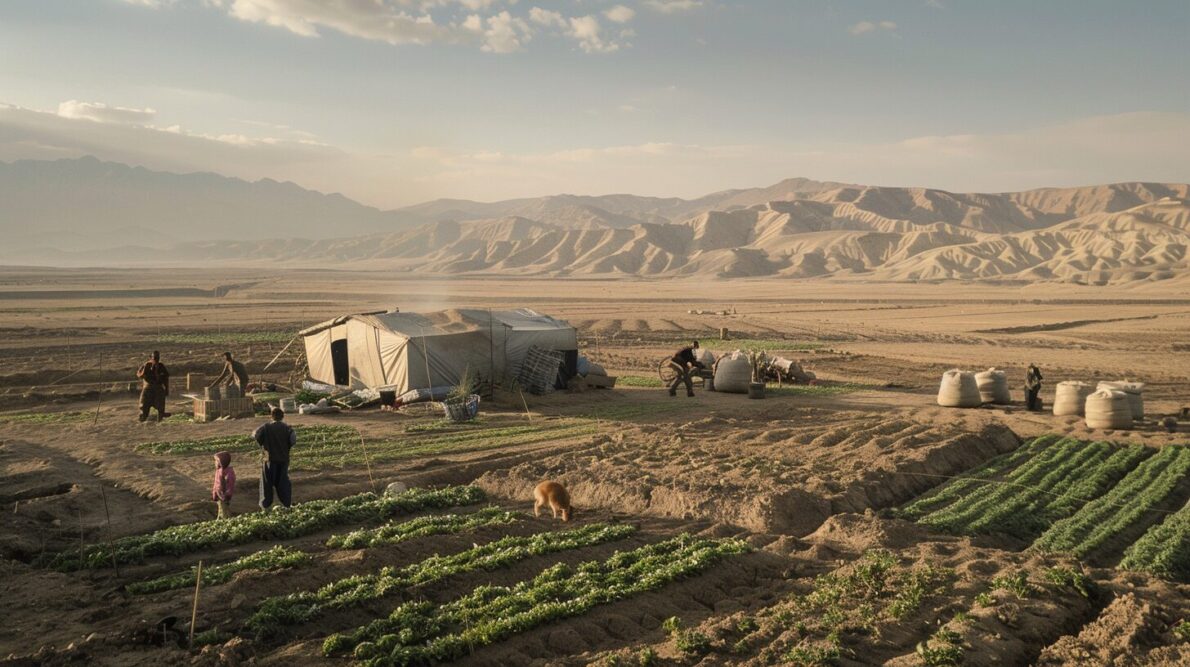
At the same time, the ecological effects have proven to be a double-edged sword. On one hand, there are real signs of success. Satellite images show more greenery creeping across parts of the dunes. Shrubs planted among the rabbit enclosures seem to be thriving.
The desert landscape, once lifeless and hostile, now bears spots of pastoral beauty. The droppings of these burrowing rabbits have indeed enriched the soil, making it more hospitable for vegetation—a kind of rabbit-fueled desert miracle.
But the darker side is beginning to emerge. Ecologists warn that the rabbit populations may be **disrupting native wildlife**. With millions of non-native rabbits proliferating, they could be competing aggressively for food and space with indigenous desert species.
The risk of overgrazing is real: if rabbit numbers grow unchecked, they could decimate delicate plant life faster than it can recover, undoing the very restoration effort they were supposed to help.
Moreover, the density of rabbit burrows has started altering the physical structure of the soil. Some scientists worry that excessive digging could destabilize dunes instead of stabilizing them, particularly in areas where the shrub layer remains thin.
In worst-case scenarios, these rabbit networks might trigger micro‑erosion patterns, setting the stage for sudden sand collapses.
As if that weren’t enough, disease has begun rearing its ugly head. In densely packed populations, rabbits are especially vulnerable to viral infections, and reports suggest that outbreaks have occurred in several farms.
If a new highly contagious strain spreads, it could decimate the population—and with millions of animals, such a collapse could unleash a cascade of ecological consequences. Dead rabbits may poison the soil, attract scavengers, or even spread disease to other animals.
Local farmers, meanwhile, are caught between profits and peril. For many, the rabbit farms are a lifeline—a steady source of income in one of China’s more remote regions.
The economic incentives are huge: fur, meat, and fertilizer derived from rabbit dung provide multiple revenue streams. But some farmers are already warning that the costs are rising.
They say that maintaining such high-density populations requires more resources than ever: feed, veterinary care, and infrastructure. If a disease outbreak or ecological backlash hits, the financial risks could be crippling.
Political analysts also see a broader narrative here. The Chinese government has long promoted large-scale “eco‑civilization” projects, combining environmental goals with economic development.
The rabbit desert scheme has become a symbol of that ambition: a daring experiment meant to showcase China’s ability to tame nature.
Yet critics argue that these kinds of large-scale interventions—though well-intentioned—too often favor short-term economic gains over long-term ecological stability.
Some environmental advocates are now calling for tighter regulation. They argue that what began as a quasi‑wild restoration project has morphed into an industrial rabbit plantation that may be creating as many new problems as it solves.
Others, more skeptical, say we should have seen this coming: any time humans try to engineer nature on such a massive scale, unintended consequences are almost inevitable.
Meanwhile, public perception is shifting. On social media, footage of rabbit-filled desert scenes—once celebrated—now sparks worry and controversy.
Dramatic headlines ask: Is this a bold step to green the planet, or a crazy human experiment? Tourism to the area is also changing.
What was once a curiosity for eco‑tourists is turning into a cautionary tale, drawing visitors who want to see the so-called “rabbit apocalypse” before it potentially unravels.
Despite mounting concerns, project leaders remain defiantly optimistic. They argue that the benefits—greener soils, economic uplift for locals, and a new model for desert management—outweigh the risks.
According to them, the rabbit numbers can be controlled with better breeding practices and periodic culls. Nutrient cycling via rabbit manure must be balanced by preserving and expanding native plant species so the vegetation can keep pace.

Still, not everyone is buying that reassurance. Ecologists are calling for independent research and transparent monitoring. They want baseline data on native biodiversity, soil stability, and long-term sustainability.
Some suggest rethinking the entire model: instead of forcing rabbits into the desert, why not focus more on native wildlife restoration, or even alternative grazing animals with lower ecological risk?
As for the rabbits themselves, their fate remains uncertain. Will they continue to be little eco‑warriors boosting the soil, or will their population collapse under disease or ecological strain?
Will their burrow networks strengthen the dune system—or genuinely threaten the fragile balance of the desert? And what happens if this experiment fails, taking both the environment and the local economy down with it?
One thing is clear: the million‑rabbit experiment is no longer a side project. It’s a high-stakes bet on the future of desert ecosystems—and the results may still surprise everyone.
As China’s “rabbit army” spreads across the dunes, scientists, farmers, and political leaders all find themselves in a race against time to figure out whether this daring gamble will be hailed as a visionary environmental breakthrough or condemned as a reckless intervention.
In the end, the story of the desert rabbits raises deeper questions.
Are we ready to engineer nature at this scale? Or have we crossed a line, turning ecological restoration into a theatrical science experiment—one with possible long-term costs that dwarf today’s dazzling gains? As the rabbits hop on, the world watches.
News

Descubrimiento de una Civilización Perdida Bajo Angkor Wat: Un Enigma Científico
A vast urban network buried beneath Angkor Wat has been revealed through LiDAR and radar imaging, uncovering roads, canals, reservoirs,…

Palace Denies Prince Harry Informed Them About Canada Trip, but His Team Says He Did
Prince Harry traveled to Canada for Remembrance Day events, surprising Buckingham Palace aides despite his team claiming they informed them….

Exiled and Exposed! Former Prince Andrew Spotted Riding Alone at Windsor as Royal Titles Erased and Falklands Honors Vanish!
Former Prince Andrew was spotted horseback riding at Windsor Castle for the first time since losing his royal titles and…

BBC Issues Rare Apology to Kate Middleton After Remembrance Broadcast Backlash
The network received criticism over the Princess of Wales’ titles after covering the royal family’s Remembrance tributes In…

Wall Street in ‘extreme fear’ as stocks plunge AGAIN amid fears world’s biggest company is a dud
Wall Street suffered another sharp sell-off as major indexes and Bitcoin extended their steep November declines. Investors are gripped by…

NASA’s Stunning Revelation: Interstellar Object 3I/ATLAS Faces Catastrophic CME Impact!
NASA announced that the interstellar object 3I/ATLAS is about to be struck by a solar coronal mass ejection, potentially triggering…
End of content
No more pages to load