
Archaeologists in Luxor uncovered 1,500 decorated temple blocks showing Queen Hatshepsut ruling as a woman, challenging the idea she disguised herself as a man.
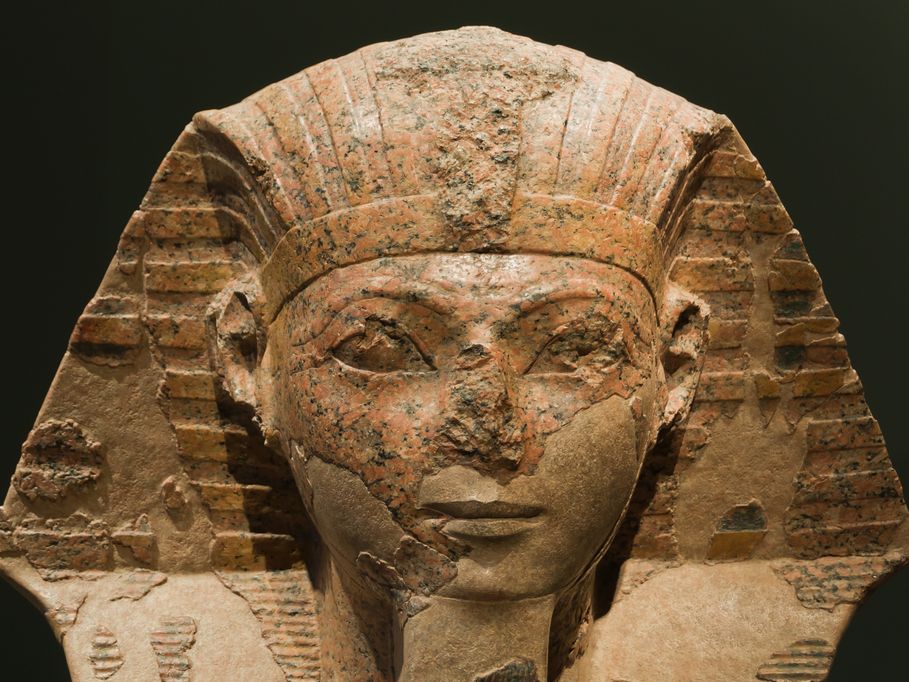
For nearly 3,500 years, historians and Egyptologists have debated the enigmatic rise of Queen Hatshepsut, one of the most powerful rulers in ancient history.
Long thought to have disguised herself as a man to claim the Egyptian throne, a stunning new discovery in Luxor has shattered centuries of assumptions.
Archaeologists have unearthed 1,500 intricately decorated temple blocks that document the earliest years of her reign, revealing for the first time how she claimed authority not through deception, but by redefining what power itself looked like.
These blocks are more than stone—they are a visual manifesto of ambition, strategy, and brilliance, offering an unprecedented glimpse into the mind of a woman who would reshape an entire civilization.
The discovery came unexpectedly during routine excavations at the Valley Temple site in Luxor. Archaeologists uncovered block after block, each carved with detailed hieroglyphs and images that date back to the earliest years of Hatshepsut’s reign.
What they found rewrites history: Hatshepsut did not hide behind masculine imagery to seize power.
Instead, she appeared as a woman in feminine attire, clearly asserting her identity while simultaneously claiming the authority of a pharaoh. This revelation upends the long-standing narrative that she had to “masquerade” as a man.
Hatshepsut’s temple reliefs show her performing rituals, receiving symbols of divine authority, and exercising political power far beyond what any regent might wield, demonstrating that she was already pharaoh in all but name.

When Thutmos II died unexpectedly, the kingdom faced a succession crisis. His heir, Thutmos III, was a child with no real claim through his mother, a secondary wife. Hatshepsut, daughter of Pharaoh Thutmos I and widow of Thutmos II, stepped into the void as regent.
But she did not merely oversee the young king’s rule—she actively positioned herself as the power behind the throne.
The Luxor blocks reveal that she carried out pharaonic duties within months of her husband’s death: performing rituals, receiving the ank of life from the gods, and wearing the Ureas Cobra crown, symbols of authority previously reserved for pharaohs alone.
Hatshepsut’s genius lay in her ability to leverage both her royal lineage and religious legitimacy. The inscriptions and carvings show deliberate ambiguity in her titles: she was neither simply a regent nor formally declared pharaoh yet.
She carefully built a foundation of authority, creating a framework of loyalty among officials, priests, and military commanders that would support her eventual ascension.
Figures like Senmut, Hapusenb, and Ni—her chief steward, high priest, and trade leader—were instrumental in consolidating her influence, ensuring that every decision, from temple construction to state administration, strengthened her grip on power.

Her marriage to Thutmos II had been strategic long before his death. As the daughter of Thutmos I and the principal queen, Hatshepsut’s bloodline outranked her husband’s.
In ancient Egyptian custom, royal authority passed through the female line, meaning the king’s legitimacy derived from his wife.
Hatshepsut had been exercising co-ruler authority even during her husband’s lifetime, appearing in state functions and performing religious rituals while Thutmos II often remained absent from these records.
These temple blocks show a carefully orchestrated rise: a queen asserting power quietly but relentlessly, gradually preparing Egypt to accept a female pharaoh.
For seven years, she ruled as regent for Thutmos III, but those years were far from idle. The Luxor discovery chronicles her transformation step by step.
Initially depicted in queenly attire, she gradually assumes more pharaonic roles, culminating in full pharaonic authority by year five.
She led religious ceremonies, oversaw monumental building projects, commanded trade expeditions, and exercised authority over the priesthood.
Each decision, each ritual, each construction project was a calculated move toward consolidating her legitimacy.
She was already pharaoh in practice, and these inscriptions provide the clearest chronological evidence of her deliberate strategy.

Hatshepsut also mastered the art of divine legitimacy. The newly unearthed blocks include fragments of her divine birth narrative, portraying her as conceived directly by the god Amun, positioning her rule as divinely ordained.
Unlike previous pharaohs who made similar claims symbolically, Hatshepsut’s reliefs show gods attending her birth, blessing her, and declaring her destiny as ruler.
This theological framework made opposition not only politically difficult but heretical, ensuring that Egypt could not reject her authority without defying the gods themselves.
She did not disguise her gender; she transformed the very definition of pharaonic power, integrating masculine symbols like the false beard into her identity while retaining distinctly feminine features.
Architecture became a central tool of her rule. Hatshepsut’s mortuary temple at Deir el-Bahari, along with other temples she built or restored across Egypt, reflected her authority and vision.
he Luxor blocks confirm her involvement in construction, from the first stone to the consecration of completed temples, revealing her as a hands-on leader.
These projects employed thousands of workers, showcased the kingdom’s wealth, and reinforced her legitimacy.
Her buildings were not just functional; they were carefully designed statements of power, signaling prosperity, stability, and divine favor. Every temple and relief communicated to Egyptians that a woman could lead with the same competence and authority as any male ruler.
The relationship with Thutmos III was equally strategic. Rather than eliminating a potential rival, Hatshepsut cultivated his abilities, granting him military command while she focused on governance and religious leadership.
Reliefs depict their partnership as co-rulers, a balance that allowed Egypt to remain stable and prosperous.
Thutmos III later oversaw the restoration of traditional male succession lines, but the careful preservation of temple blocks ensured that Hatshepsut’s achievements survived, providing an unbroken record of her extraordinary rise.
This monumental discovery from Luxor proves that Hatshepsut’s ascent was neither accidental nor forced—it was the result of meticulous planning, strategic marriages, religious innovation, and architectural brilliance.
She redefined what it meant to be pharaoh, merging feminine identity with symbols of absolute authority, and left a legacy that rewrote the rules of an entire civilization.
The 1,500 temple blocks are more than historical artifacts; they are evidence of the first woman in history to turn impossible circumstances into unstoppable power. Hatshepsut did not steal the throne.
She earned it, showing the world that leadership was defined not by gender, but by vision, intellect, and the ability to make power seem inevitable.
News

Doomsday From the Sky: The Shocking New Timeline of the Day the Dinosaurs Were Erased
A reconstructed scientific timeline details the minute-by-minute destruction unleashed when the Chicxulub asteroid struck Earth 65 million years ago. …

Descubrimiento de una Civilización Perdida Bajo Angkor Wat: Un Enigma Científico
A vast urban network buried beneath Angkor Wat has been revealed through LiDAR and radar imaging, uncovering roads, canals, reservoirs,…

Palace Denies Prince Harry Informed Them About Canada Trip, but His Team Says He Did
Prince Harry traveled to Canada for Remembrance Day events, surprising Buckingham Palace aides despite his team claiming they informed them….

Exiled and Exposed! Former Prince Andrew Spotted Riding Alone at Windsor as Royal Titles Erased and Falklands Honors Vanish!
Former Prince Andrew was spotted horseback riding at Windsor Castle for the first time since losing his royal titles and…

BBC Issues Rare Apology to Kate Middleton After Remembrance Broadcast Backlash
The network received criticism over the Princess of Wales’ titles after covering the royal family’s Remembrance tributes In…

Wall Street in ‘extreme fear’ as stocks plunge AGAIN amid fears world’s biggest company is a dud
Wall Street suffered another sharp sell-off as major indexes and Bitcoin extended their steep November declines. Investors are gripped by…
End of content
No more pages to load






