
Ancient mysteries that baffled historians for centuries are finally being unraveled. Cutting-edge science and technology reveal shocking secrets behind iconic monuments, lost languages, and ingenious civilizations. From Easter Island to Roman concrete, the past is revealing its hidden genius like never before.
The ancient world has always been shrouded in mystery, a time when humans built monumental structures, created complex languages, and engineered feats that continue to baffle modern science.
For centuries, historians, archaeologists, and scientists have been left scratching their heads at the puzzles left behind by civilizations long gone.
But in the past decade, groundbreaking discoveries have shattered old assumptions, revealing astonishing truths about some of history’s most enduring enigmas.
From the colossal stone guardians of Easter Island to the secrets of Roman concrete that has survived millennia, the past ten years have been a revelation for those obsessed with unlocking the secrets of antiquity.
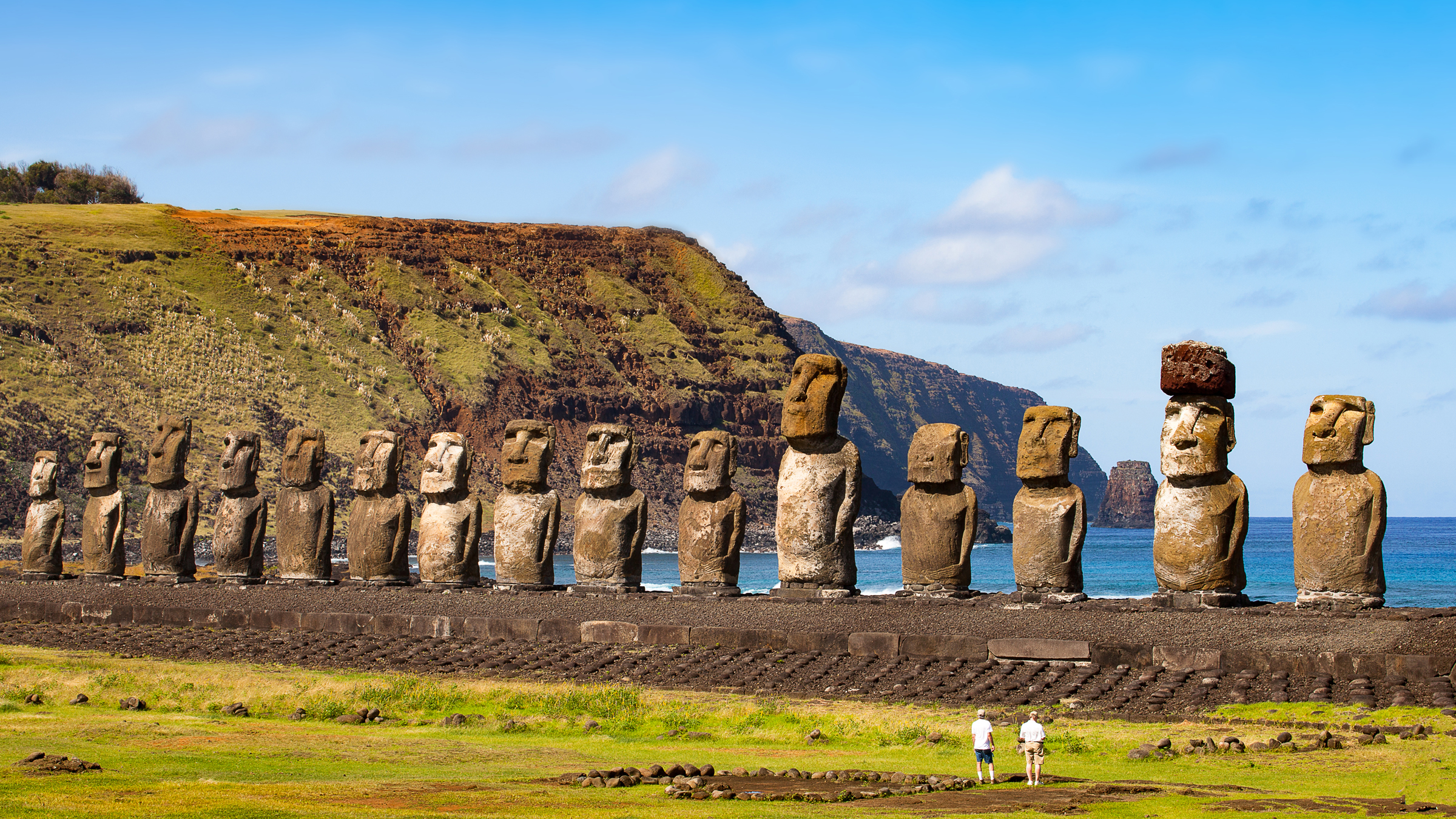
Few images evoke mystery and wonder quite like the Moai statues of Easter Island. These massive stone figures, with their elongated heads, pronounced brows, and haunting stares, have fascinated travelers and scholars for generations.
For years, the most basic questions about the Moai remained unanswered: Why were they built? How were they moved?
And why were they positioned the way they were? The answers, revealed in 2019, might surprise anyone who imagined spiritual guardians watching over the island’s people.
A team of anthropologists from six institutions employed advanced spatial modeling to study the placement of the statues. Their findings were stunning. The Moai weren’t just randomly scattered, nor were they purely symbolic.
Instead, their positioning was intimately tied to the island’s scarce freshwater sources. Easter Island is notoriously dry, with few lakes, no streams, and only one spring.
European explorers once described the inhabitants drinking ocean water, which would have been fatal due to its high salt content.
The scientists discovered that rainwater, absorbed by the volcanic soil, would flow underground and emerge as brackish water at specific points along the coast. These points aligned almost perfectly with the placement of Moai platforms, known as Ahu.
In other words, the iconic statues weren’t just guardians of the people—they were markers of life-sustaining water. What once seemed mystical now had a practical explanation rooted in survival.
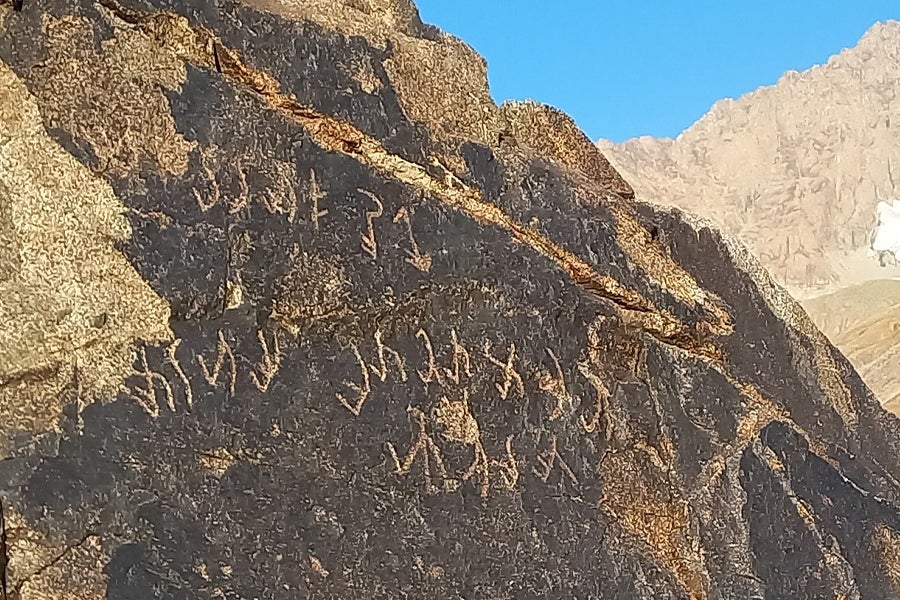
While the Moai guarded water, another ancient mystery was being solved in the mountains of Central Asia. For decades, linguists and historians were confounded by the Kashan script, a language used in the Kushan Empire around 135 B.C.E.
Despite numerous inscriptions discovered since the 1950s, the script remained indecipherable—until a breakthrough in 2022. A bilingual inscription found on a rock face in Tajikistan provided the key.
Written in both Kashan and Bactrian, the inscription allowed researchers to match symbols to known words, unlocking the language after thousands of years of obscurity.
Kashan, consisting of just 25 symbols and read from right to left, revealed records of day-to-day administration, offering an unprecedented glimpse into the governance and organization of one of history’s most enigmatic empires.
Meanwhile, in Egypt, the mystery of the Great Pyramid of Giza’s construction took a dramatic turn.
For centuries, engineers and historians marveled at how a civilization so long ago could have transported millions of stone blocks, some weighing more than 50 tons, across the desert.
Alien intervention was occasionally proposed by fringe theorists, but the real solution came from Earth itself.
Radar and satellite imaging revealed the existence of a long-lost branch of the Nile River, stretching 40 miles and perfectly situated to deliver stone by boat to the pyramid’s construction site.
The discovery of this “mega river,” dubbed Aramat, provided a practical explanation for how the Egyptians achieved one of history’s most remarkable engineering feats—without the need for extraterrestrial assistance.
Half a world away, the Nazca Desert in southern Peru was also revealing secrets that had eluded scholars for generations. The Nazca Lines, giant geoglyphs etched into the desert floor, are famous for their precise shapes depicting animals and plants.
Less known are the mysterious Nazca spirals, circular rock-lined depressions whose purpose baffled archaeologists. In 2016, researchers using satellite imagery discovered that these spirals, called “peakos” locally, functioned as part of a sophisticated irrigation system.
The spirals acted as chimneys, channeling wind into underground tunnels to direct water toward crops, preventing evaporation in one of the driest places on Earth.
This ingenious solution showcased the Nazca people’s mastery of their environment and deep understanding of natural forces—a practical brilliance hidden in plain sight.

Even in the heart of ancient Athens, shocking revelations came to light about the city once celebrated as the cradle of democracy.
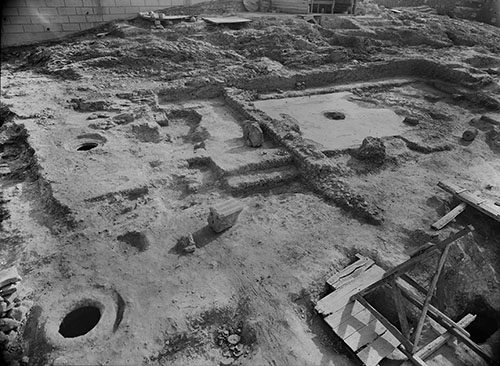
Excavations in the 1930s uncovered a well on the edge of the Athenian Agora filled with the skeletal remains of over 450 infants and about 150 dogs. For decades, the discovery prompted speculation: Was it evidence of human sacrifice? Disease? Or something else entirely?
In 2015, biological anthropologists determined that the majority of the infants had died from natural causes, including bacterial meningitis, a deadly infection exacerbated by unsanitary practices such as cutting umbilical cords with unsterilized instruments.
The well appeared to function as a disposal site for infants who died before a ceremonial naming ceremony, a practice rooted in cultural beliefs about family membership.
While the fate of the dogs remains mysterious, the discovery shed light on the harsh realities of infant mortality in ancient Greece.
The Maya city of Tikal in modern-day Guatemala offered another astonishing discovery. Once home to over 10,000 people, Tikal’s main water sources were undrinkable, yet the city thrived.
How? In 2020, scientists revealed that the Maya had developed one of the world’s earliest known water purification systems.
Rainwater was funneled into reservoirs through porous limestone walls layered with woven plant material, sand, and a naturally occurring volcanic ash mixture called zeolite.
This compound removed heavy metals, cyanobacteria, and other impurities, producing some of the safest water of the ancient world.
While the filters needed frequent maintenance during the rainy season, the Maya’s advanced engineering demonstrates an ingenuity that rivals modern technology, proving they were far ahead of their time in environmental and public health solutions.
Finally, the ancient Romans, famous for their roads, aqueducts, and monumental architecture, have had one of their greatest secrets cracked: the durability of Roman concrete.
Structures built 2,000 years ago, from harbors to aqueducts, still stand while modern concrete often crumbles within decades.
In 2023, scientists determined that the secret lies in the Romans’ use of “hot mixing” quicklime and volcanic ash, producing a cement that strengthens over time.
The quicklime reacts with water to form calcium carbonate crystals, which fill cracks as they appear, effectively self-healing the material.
This discovery not only illuminates Roman engineering genius but also has profound implications for sustainable modern construction, offering a potential blueprint for more durable, eco-friendly concrete today.
From the water-marked Moai of Easter Island to the self-healing concrete of Rome, the last decade has redefined what we thought we knew about ancient civilizations.
These discoveries reveal that ancient peoples were far more sophisticated than often credited, using mathematics, chemistry, environmental science, and logistics to solve problems that still challenge humanity today.
Modern technology—from satellites to advanced chemical analysis—is allowing us to finally see the ancient world not as a collection of myths and legends, but as a domain of brilliant, inventive humans tackling real-world challenges.
Yet, for every mystery solved, hundreds more remain. The Nazca Lines still hide many secrets, the Maya left countless questions about their political and spiritual life unanswered, and the full scope of Roman engineering may still surprise us.
What the past decade has shown is that curiosity and technology are the keys to unlocking the human story, and that even after thousands of years, history still has the power to shock, amaze, and inspire.
The ancient world may be gone, but thanks to modern science, its secrets are finally stepping into the light.

News
Doomsday From the Sky: The Shocking New Timeline of the Day the Dinosaurs Were Erased
A reconstructed scientific timeline details the minute-by-minute destruction unleashed when the Chicxulub asteroid struck Earth 65 million years ago. …
Descubrimiento de una Civilización Perdida Bajo Angkor Wat: Un Enigma Científico
A vast urban network buried beneath Angkor Wat has been revealed through LiDAR and radar imaging, uncovering roads, canals, reservoirs,…

Palace Denies Prince Harry Informed Them About Canada Trip, but His Team Says He Did
Prince Harry traveled to Canada for Remembrance Day events, surprising Buckingham Palace aides despite his team claiming they informed them….

Exiled and Exposed! Former Prince Andrew Spotted Riding Alone at Windsor as Royal Titles Erased and Falklands Honors Vanish!
Former Prince Andrew was spotted horseback riding at Windsor Castle for the first time since losing his royal titles and…

BBC Issues Rare Apology to Kate Middleton After Remembrance Broadcast Backlash
The network received criticism over the Princess of Wales’ titles after covering the royal family’s Remembrance tributes In…

Wall Street in ‘extreme fear’ as stocks plunge AGAIN amid fears world’s biggest company is a dud
Wall Street suffered another sharp sell-off as major indexes and Bitcoin extended their steep November declines. Investors are gripped by…
End of content
No more pages to load






