
AI reveals hidden messages and geometric patterns in Da Vinci’s “The Last Supper,” uncovering secrets centuries in the making. Advanced analysis sheds new light on the apostles’ gestures, expressions, and the symbolic storytelling behind the iconic mural.

In a quiet hall in Milan, a masterpiece hangs on the wall, captivating and haunting the world for centuries—Leonardo da Vinci’s “The Last Supper.” This iconic mural, depicting the final meal of Jesus and his apostles, has long been a subject of fascination and speculation.
Now, advanced artificial intelligence has decoded hidden messages within this renowned artwork, revealing shocking insights that could change the way we perceive not only the painting but also the very essence of art and history itself.
Da Vinci, a polymath of the Renaissance, was known for embedding subtle messages in his works. Many believe he created “The Last Supper” not only as a religious depiction but as a commentary for future generations.
The mural, painted between 1495 and 1498, adorns the dining hall of the Convent of Santa Maria delle Grazie, where it was meant to inspire awe among the monks and the Duke of Milan, Ludovico Sforza.
The sheer scale of the painting—15 feet tall and nearly 30 feet wide—combined with its intricate details, makes it a marvel of artistic achievement.
When one enters the refectory, the mural immediately demands attention. Da Vinci’s innovative technique blurred the lines between reality and art, as he designed the painted space to mirror the actual dining hall.
The windows in the mural align perfectly with the real windows, and the light in the painting reflects the natural light streaming into the room.
This seamless integration creates an immersive experience that pulls viewers into the scene, directing their gaze toward the central figure of Christ, whose calm demeanor contrasts with the chaos surrounding him.
Each apostle is portrayed with distinct expressions and gestures, capturing a moment of intense emotion as Jesus announces that one among them will betray him.
The composition is masterfully arranged, with the apostles grouped in threes, each reacting differently to the shocking news. This dramatic staging transforms the supper into a theatrical performance, inviting viewers to engage with the narrative on a personal level.
However, the brilliance of “The Last Supper” is marred by its fragility. Da Vinci’s choice to paint on dry plaster instead of the traditional fresco technique sealed the painting’s fate.
The pigments, resting delicately on the surface, began to peel almost immediately in the humid environment of the dining hall.
By the early 16th century, reports of the mural’s deterioration were already surfacing, with observers noting that the vibrant colors had faded into ghostly remnants.
Over the centuries, numerous restoration attempts aimed to save the mural, but these efforts often obscured Da Vinci’s original work.
Each layer of paint added in good faith only further buried the masterpiece beneath a patchwork of repairs. By the 18th century, the mural was barely recognizable, prompting more drastic measures to restore it to its former glory.
The physical damage continued as workers cut doorways through the wall, and the building itself suffered during conflicts, including World War II, when Allied bombs struck Milan, exposing the mural to the elements.

Despite these challenges, the mural survived, albeit in a fragmented state. In the late 20th century, a team of conservators embarked on a monumental task to uncover the true essence of Da Vinci’s work.
Using cutting-edge technology, including infrared scans and X-rays, they meticulously analyzed the layers of paint to differentiate between Da Vinci’s original strokes and later restorations.
This painstaking process revealed that only about 42.5% of the original paint remained, while nearly 40% consisted of older retouching that modern conservators chose not to remove.
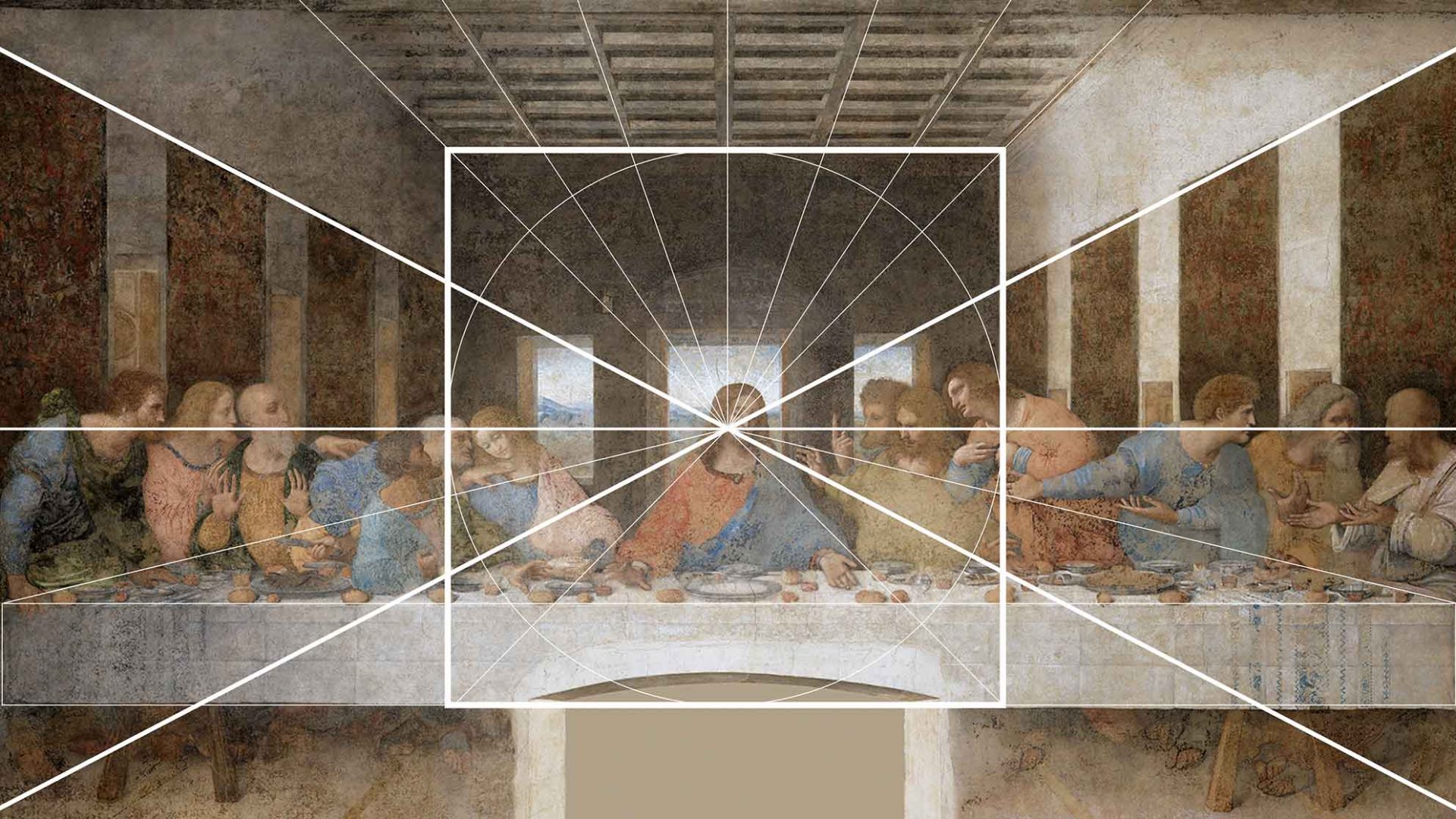
As researchers delved deeper, they began to uncover a hidden geometry within the mural. Advanced imaging techniques allowed them to visualize the relationships between figures, gestures, and the overall composition.
Astonishingly, a clear visual line emerged, connecting the lowered face of the young disciple beside Christ, through Christ’s head, and down to the tense hand near Judas.
This pathway tells a story of innocence, calm, and impending betrayal, revealing Da Vinci’s masterful use of geometry to convey complex emotions.
The implications of these findings are profound. The AI-assisted analysis highlights how Da Vinci’s artistic choices were not merely aesthetic but deeply symbolic, reflecting themes of trust, betrayal, and the human condition.
The careful arrangement of the apostles’ reactions serves as a commentary on the nature of faith and the fragility of relationships. Da Vinci’s ability to encapsulate such intricate narratives within a single scene is a testament to his genius.

Moreover, the discoveries challenge popular myths surrounding the painting. One of the most sensational claims—that the figure traditionally identified as John is actually Mary Magdalene—has gained traction in recent years, fueled by sensationalist interpretations.
However, the evidence from early copies and infrared scans consistently identifies the figure as John, adhering to the conventions of Renaissance art. This scrutiny underscores the importance of grounding interpretations in historical context rather than sensational theories.
Another captivating theory, proposed by an Italian musician, suggests that the arrangement of hands and bread in the painting forms a musical score, creating a hidden hymn.
While this idea is intriguing, it lacks substantial evidence in Da Vinci’s own writings or sketches. The allure of secret codes within the mural often overshadows the profound storytelling already present in the artwork itself.
As technology continues to advance, the potential for further revelations remains vast. The ongoing study of “The Last Supper” not only enriches our understanding of Da Vinci’s intent but also invites us to reconsider the way we engage with art.
Each brushstroke carries a weight of meaning, and the layers of history embedded in the mural tell a story that transcends time.
In the end, “The Last Supper” stands as a powerful reminder of the complexities of human emotion and the enduring impact of art.
The secrets unveiled by AI serve not only to illuminate Da Vinci’s genius but also to inspire a deeper appreciation for the narratives woven into our cultural heritage.
As we continue to explore the mysteries of this iconic masterpiece, we are reminded that the past is never truly lost; it lives on in the art that captures our imagination and shapes our understanding of the world.
News
Doomsday From the Sky: The Shocking New Timeline of the Day the Dinosaurs Were Erased
A reconstructed scientific timeline details the minute-by-minute destruction unleashed when the Chicxulub asteroid struck Earth 65 million years ago. …

Descubrimiento de una Civilización Perdida Bajo Angkor Wat: Un Enigma Científico
A vast urban network buried beneath Angkor Wat has been revealed through LiDAR and radar imaging, uncovering roads, canals, reservoirs,…
Palace Denies Prince Harry Informed Them About Canada Trip, but His Team Says He Did
Prince Harry traveled to Canada for Remembrance Day events, surprising Buckingham Palace aides despite his team claiming they informed them….
Exiled and Exposed! Former Prince Andrew Spotted Riding Alone at Windsor as Royal Titles Erased and Falklands Honors Vanish!
Former Prince Andrew was spotted horseback riding at Windsor Castle for the first time since losing his royal titles and…
BBC Issues Rare Apology to Kate Middleton After Remembrance Broadcast Backlash
The network received criticism over the Princess of Wales’ titles after covering the royal family’s Remembrance tributes In…
Wall Street in ‘extreme fear’ as stocks plunge AGAIN amid fears world’s biggest company is a dud
Wall Street suffered another sharp sell-off as major indexes and Bitcoin extended their steep November declines. Investors are gripped by…
End of content
No more pages to load






