Pando, the world’s largest living organism in Utah, is rapidly declining because aging aspens are no longer regenerating and young shoots are being heavily eaten by exploding mule deer populations.

In the heart of Utah’s Fishlake National Forest lies a remarkable secret—an ancient giant that has quietly survived the test of time, yet now stands on the brink of extinction.
Most visitors drive through this area without realizing they are passing by Pando, the largest living organism on Earth, a sprawling aspen grove that weighs as much as 40 blue whales.
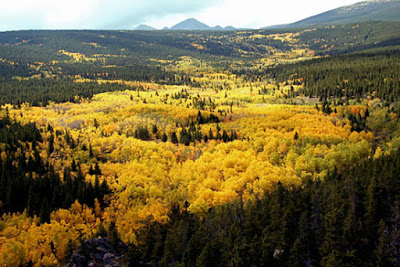
Stretching over 106 acres, Pando consists of 47,000 genetically identical trees connected by an extensive underground root system.
This incredible organism has been thriving for at least 16,000 years, but today, it faces unprecedented threats that could lead to its demise.
At first glance, Pando appears to be a typical forest, but a deeper look reveals a sobering reality. Researchers describe the current state of Pando as akin to a town of 50,000 elderly residents—aging trees with no young saplings to replace them.
The root system, which once supported a thriving ecosystem, is now struggling to regenerate as the ancient stems approach the end of their lifespans. The alarming truth is that Pando isn’t growing anymore, and the clock is ticking faster than anyone could have imagined.
The primary culprit behind this decline is a burgeoning population of mule deer, which have proliferated in the absence of their natural predators.
A century of wildlife management decisions led to the systematic elimination of wolves, mountain lions, and grizzly bears, resulting in an explosion of deer numbers.

Today, the region is home to approximately 300,000 mule deer and 77,000 elk, which feast on Pando’s young shoots, preventing them from growing tall enough to escape the voracious appetite of these browsers.
Historical aerial photographs tell a stark story. In 1939, the aspen crowns formed a dense, continuous canopy, but by 2011, much of that lush landscape had transformed into a patchy, fragmented terrain devoid of young trees.
The ecological disaster unfolding at Pando is a direct consequence of human intervention, and despite our knowledge of how to remedy the situation, political obstacles stand in the way.
Efforts to restore Pando have included fencing off areas to protect young saplings from deer, and the results have been encouraging.
In a fenced area established in 2013, scientists have observed a remarkable recovery, with dense clusters of young aspens emerging. However, this artificial solution presents its own challenges.
Many of these young trees are showing signs of disease, particularly a canker that has infected 90% of the trees in one fenced section. The lack of age diversity among the trees creates a vulnerability, as diseases can sweep through populations that lack genetic variation.

As researchers grapple with these complexities, they also face the harsh realities of climate change.
The American West has experienced the most severe drought conditions on record since 2000, with climate models predicting that aspen habitats could decline by as much as 75% in the next 60 years.
The massive root system that once redistributed water across Pando is struggling to adapt to these unprecedented conditions.
Warmer temperatures disrupt seasonal patterns, leading to earlier leaf-out times that make trees vulnerable to late frosts. Erratic precipitation further complicates the organism’s ability to respond effectively.
Adding to the challenges, the construction of roads through Pando has fragmented this once-unified organism, creating a wound that may never heal.
Highway 25 splits the grove, leading to varying soil compaction, drainage patterns, and usage habits on either side. As a result, Pando is morphing into three separate communities, each with its own ecological trajectory.
The heavily browsed areas are turning into shrubland, while the fenced sections develop into dense, even-aged stands susceptible to disease.
Despite these dire circumstances, there are glimmers of hope for Pando’s future. Recent studies have shown that the organism still possesses remarkable resilience.
Areas that have been continuously protected since 2013 exhibit sustained recovery, and scientists are employing innovative techniques to monitor and support this ancient giant.
GPS collaring of deer provides real-time insights into their behavior, helping researchers understand how to manage browsing pressures more effectively.
The lessons learned from Pando extend beyond its survival; they offer profound insights into our relationship with nature.
As scientists observe the patterns of regeneration and resource allocation within this organism, it challenges our perceptions of intelligence in the natural world. Pando operates on a level of interconnectedness that we are only beginning to comprehend.
It is not merely surviving; it is adapting and making calculated decisions about where to invest energy and resources.
The ultimate question remains: will we, as stewards of the Earth, be humble enough to learn from Pando’s intelligence? If we can give this ancient giant the time and space it needs to teach us, we may uncover strategies for our own survival in a rapidly changing world.
The wind rustling through the leaves of Pando sounds like applause—a celebration of resilience and a reminder that every new shoot represents a decision made by an organism that has thrived for millennia.
As we confront the challenges of protecting this remarkable living entity, we must recognize that Pando is more than just a forest; it is a testament to the power of connection, communication, and collective response.
The survival of Pando may very well depend on our ability to listen, learn, and adapt alongside it.
If we can grasp the lessons it offers, we might not only save this incredible giant but also find pathways to ensure our own survival in the face of environmental crises.
News

Descubrimiento de una Civilización Perdida Bajo Angkor Wat: Un Enigma Científico
A vast urban network buried beneath Angkor Wat has been revealed through LiDAR and radar imaging, uncovering roads, canals, reservoirs,…

Palace Denies Prince Harry Informed Them About Canada Trip, but His Team Says He Did
Prince Harry traveled to Canada for Remembrance Day events, surprising Buckingham Palace aides despite his team claiming they informed them….

Exiled and Exposed! Former Prince Andrew Spotted Riding Alone at Windsor as Royal Titles Erased and Falklands Honors Vanish!
Former Prince Andrew was spotted horseback riding at Windsor Castle for the first time since losing his royal titles and…

BBC Issues Rare Apology to Kate Middleton After Remembrance Broadcast Backlash
The network received criticism over the Princess of Wales’ titles after covering the royal family’s Remembrance tributes In…

Wall Street in ‘extreme fear’ as stocks plunge AGAIN amid fears world’s biggest company is a dud
Wall Street suffered another sharp sell-off as major indexes and Bitcoin extended their steep November declines. Investors are gripped by…

NASA’s Stunning Revelation: Interstellar Object 3I/ATLAS Faces Catastrophic CME Impact!
NASA announced that the interstellar object 3I/ATLAS is about to be struck by a solar coronal mass ejection, potentially triggering…
End of content
No more pages to load