The Devil’s Hole pupfish survives in an extreme, isolated desert cave in Death Valley, with only a few dozen individuals left in the wild.
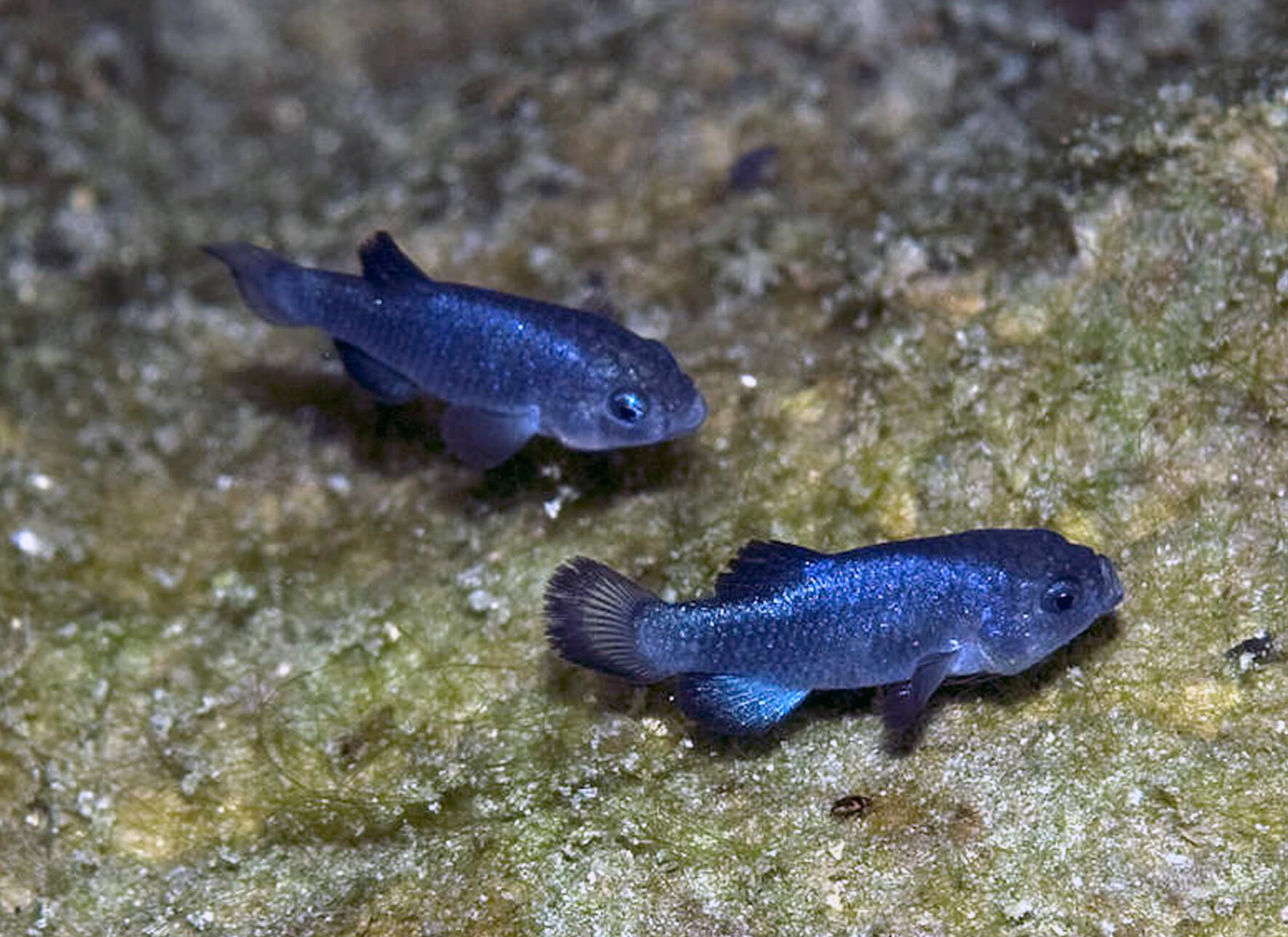
In the heart of Death Valley National Park, one of the most extreme environments on Earth, lives a fish that seems to defy the laws of nature: the Devil’s Hole pupfish.
This minuscule creature, measuring no more than a thumb’s length, thrives in a habitat so unique that it challenges everything we know about fish survival.
Nestled in a limestone cavern, this fish calls a flooded cave filled with 91°F water its home, a temperature that would be lethal to most aquatic life.
Yet, against all odds, these remarkable fish have survived for tens of thousands of years in complete isolation, with only 57 individuals remaining in the wild today.
The story of the Devil’s Hole pupfish is not just a tale of survival; it is a saga intertwined with the American Dream and the ongoing battle between conservation and development.
In 1967, a ranching family purchased 12,000 acres of arid Nevada desert, envisioning a profitable agricultural venture.
However, their plans to drill wells and pump groundwater initiated a catastrophic drop in the water levels of Devil’s Hole, threatening the existence of these rare fish for the first time in recorded history.
This conflict ignited a legal battle that would reach the Supreme Court and ultimately determine the fate of these extraordinary creatures.

Devil’s Hole is not just a small body of water; it is an otherworldly environment that reacts violently to seismic activity. Whenever there is an earthquake anywhere on the planet, the water shakes, creating an unstable habitat.
The cave extends so deep that its bottom has never been measured, and the water remains at a constant temperature, fed by underground springs. For a species that has adapted to such extreme conditions, the arrival of ranching operations posed an existential threat.
The first humans to encounter these fish were likely Shoshone hunters, but it wasn’t until 1891 that science formally recognized their existence. A federal survey team, cataloging extreme life forms in the American Southwest, stumbled upon this unique habitat.
Initially misclassified as a mere population of desert pupfish, it took decades for researchers to understand that these fish were an entirely separate species, Cyprinodon diabolus, named after the Devil’s Hole that housed them.
As scientists began exploring the broader Mojave Desert, they discovered that this was just one of many unique pupfish species, each adapted to its own isolated spring. However, as the American West turned its gaze toward development, these fish found themselves at a crossroads.
The Kappert family’s plans to transform the desert into farmland threatened not only the Devil’s Hole pupfish but also a network of desert springs that had sustained various pupfish populations for millennia.

The ensuing legal battle became a defining moment for conservation efforts in the West. The case reached the Supreme Court, where justices grappled with the fundamental question of what makes a species worth protecting.
The government’s argument rested on a revolutionary legal theory: when President Truman designated Devil’s Hole as part of the Death Valley National Monument in 1952, he implicitly reserved the water necessary to keep the pupfish alive.
Despite skepticism about the fish’s significance, the court ruled in their favor, establishing a precedent that would shape water rights in the region.
Yet, legal protection alone was insufficient to ensure the pupfish’s survival. Population fluctuations revealed alarming trends, with numbers plummeting to just 35 individuals in 2013.
Genetic studies conducted in 2022 uncovered the extent of inbreeding among these fish, revealing that they shared 58% of their DNA with one another—more closely related than human siblings.
This genetic bottleneck jeopardized their ability to adapt to environmental changes, compounding the threats posed by climate change.
In response to the urgent crisis, conservationists launched ambitious initiatives to replicate the pupfish’s habitat. The Ash Meadows Fish Conservation Facility opened in 2013, designed to mimic the unique conditions of Devil’s Hole.
Initial successes in population counts offered hope, with numbers rising to a 25-year high of 191 fish in spring 2024.
However, disaster struck when a series of earthquakes in 2024 caused significant disruption, leading to a dramatic decline in the population to just 38 fish by spring 2025.

Faced with the prospect of extinction, scientists made the unprecedented decision to release captive-bred pupfish back into Devil’s Hole to bolster the dwindling population.
This desperate measure underscored the urgency of the situation and the lengths to which conservationists would go to save this remarkable species.
Peering into the depths of Devil’s Hole, one can catch glimpses of these resilient fish, navigating their tiny universe with purpose. Their existence serves as a powerful reminder of the tenacity of life, even in the most inhospitable environments.
The Devil’s Hole pupfish may be small, but their story is monumental—a testament to the ongoing struggle for survival against overwhelming odds.
As we reflect on the plight of the Devil’s Hole pupfish, we are reminded that their survival is not just about protecting a single species; it is about preserving the intricate web of life that sustains our planet.
These tiny fish symbolize the broader challenges we face in balancing human ambition with the need for conservation.
Their endurance offers a glimmer of hope in a world often overshadowed by uncertainty, proving that even in the most unlikely places, life can persist and inspire us all.
News

Descubrimiento de una Civilización Perdida Bajo Angkor Wat: Un Enigma Científico
A vast urban network buried beneath Angkor Wat has been revealed through LiDAR and radar imaging, uncovering roads, canals, reservoirs,…

Palace Denies Prince Harry Informed Them About Canada Trip, but His Team Says He Did
Prince Harry traveled to Canada for Remembrance Day events, surprising Buckingham Palace aides despite his team claiming they informed them….

Exiled and Exposed! Former Prince Andrew Spotted Riding Alone at Windsor as Royal Titles Erased and Falklands Honors Vanish!
Former Prince Andrew was spotted horseback riding at Windsor Castle for the first time since losing his royal titles and…

BBC Issues Rare Apology to Kate Middleton After Remembrance Broadcast Backlash
The network received criticism over the Princess of Wales’ titles after covering the royal family’s Remembrance tributes In…

Wall Street in ‘extreme fear’ as stocks plunge AGAIN amid fears world’s biggest company is a dud
Wall Street suffered another sharp sell-off as major indexes and Bitcoin extended their steep November declines. Investors are gripped by…

NASA’s Stunning Revelation: Interstellar Object 3I/ATLAS Faces Catastrophic CME Impact!
NASA announced that the interstellar object 3I/ATLAS is about to be struck by a solar coronal mass ejection, potentially triggering…
End of content
No more pages to load