
Wall Street suffered another sharp sell-off as major indexes and Bitcoin extended their steep November declines. Investors are gripped by “extreme fear” ahead of Nvidia’s earnings, with concerns that even a slight miss could deepen the market downturn.

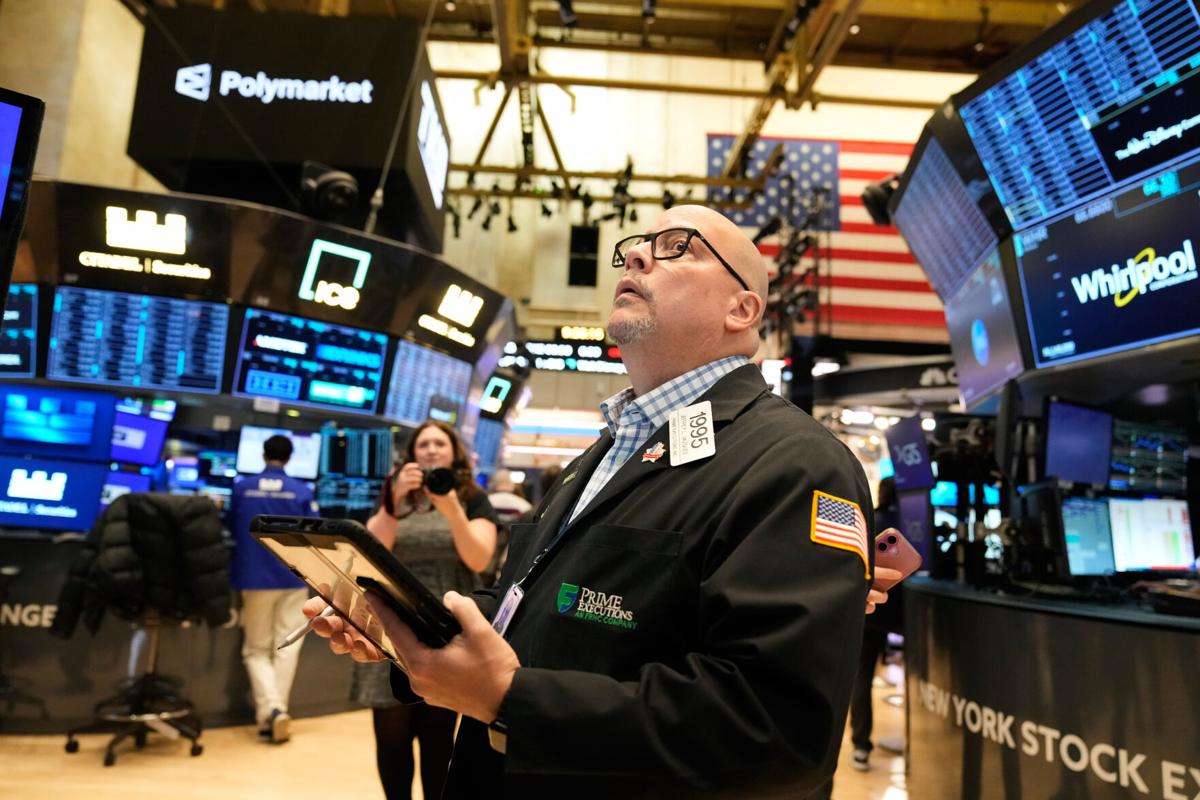
Wall Street was hit with another punishing blow Monday, a sell-off so sharp and unsettling that seasoned traders openly described the mood as “extreme fear” while Americans watched their retirement savings shrink for a second straight week.
Stocks, already reeling from November’s brutal downturn, plunged yet again as a growing chorus of analysts warned that the world’s most valuable company may no longer be the sure bet investors once believed it to be.
The Dow fell 1.2 percent, the S&P 500 and Nasdaq slipped just under one percent, and Bitcoin sank nearly three percent below $92,000 — capping a staggering 25 percent retreat since its October record.
For millions of households with money in the market, the sudden reversal has delivered a jolt reminiscent of earlier crisis moments, when the first tremors of a deeper economic unraveling began to surface.
The anxiety rippled through CNN’s Fear & Greed Index, which collapsed to 14 out of 100 by late Monday — a reading usually reserved for moments of acute market stress. Not since April, when higher-than-expected tariffs sent investors scrambling, has the index looked so grim.
Then, it fell to just 3 before an unexpected revival drove markets back to record-breaking highs by midsummer. But the optimism that once powered that rally has turned brittle.
On trading floors across New York, conversations have shifted from earnings momentum and AI-fueled expansion to fears that the boom may have peaked and that the flagship company behind the entire wave — Nvidia — could be losing altitude.

No sector felt Monday’s blow more intensely than tech. Nvidia, the world’s only $5 trillion company and the undisputed face of the AI revolution, will report earnings Wednesday in what many analysts describe as “the most important corporate moment of the year.”
For nearly two years, investors have poured staggering amounts of capital into the chipmaker, treating it as the bellwether for AI’s transformative promise.
If Nvidia thrives, the logic has gone, the entire market thrives. If Nvidia disappoints — even slightly — the consequences could be punishing.
The stakes of this single earnings report have rarely been higher. Traders who once viewed the company as unstoppable now whisper about the growing list of skeptics, including some of the industry’s biggest names.
Bret Kenwell, an investment analyst, summed up the nerves clearly, noting that Nvidia has become the center of gravity for a bull market defined by AI exuberance. Even a hint of slowing demand, analysts warn, could topple sentiment already on edge.
Ross Mayfield, an investment strategist, described Nvidia’s dilemma with even sharper contours: while demand for compute remains undeniable, the deeper question is whether companies shelling out billions for AI infrastructure are seeing a return.
As he put it, unless Nvidia proves not only that orders are strong but that customers are achieving meaningful outcomes, the debate over AI’s true value will grow louder — and far more uncomfortable — for the market.

These concerns have been amplified by a striking shift among a few high-profile investors. Earlier this month, filings revealed that Michael Burry — who famously predicted the 2008 financial crisis — placed a massive bet against Nvidia.
Days later, Masayoshi Son, one of the tech world’s most closely watched visionaries, disclosed that he quietly unloaded his entire Nvidia stake and most of his T-Mobile holdings.
To many, these moves signaled not just skepticism but an emerging sense that the AI boom may be running out of steam.
Last week, Wall Street’s Volatility Index surged nearly 20 percent, reflecting the abrupt rise in uncertainty.
Traders have become increasingly jittery, pointing to softening economic data, rapidly shifting expectations about consumer strength, and a cloudier outlook for corporate margins.
On Thursday, Walmart will report earnings that could offer the clearest look yet at the American consumer’s financial fatigue. For months, households have battled inflationary pressures, rising borrowing costs, and stagnating wage growth.
A weak showing from Walmart — the country’s largest retailer — could cement fears that consumer spending is losing critical momentum.
And Thursday’s return of the nonfarm payrolls report, delayed by the government shutdown that froze key data, will provide another high-stakes test of broader economic health.
A soft labor reading could deepen the sense that the economy is wobbling just as markets lose confidence in their most important growth engine.
Still, pockets of optimism remain. Some of AI’s strongest advocates argue that — despite recent volatility — the technology is on track to unlock unprecedented cost savings across the corporate landscape.
Morgan Stanley has projected that widespread AI adoption could generate nearly $1 trillion in annual net benefits for S&P 500 companies alone.
Such forecasts have fueled the long-running argument that short-term pain is merely an interlude before another powerful wave of technological transformation.

But those counterpoints have done little to settle nerves this week. Instead, traders are glued to every signal, leak, or whisper about Nvidia’s upcoming results, with many describing the atmosphere as eerily similar to the tense hours before a market shock.
The momentum that once propelled stocks to dizzying heights has stalled, replaced by a waiting game saturated with doubt.
As Monday’s declines deepened, scenes emerged of traders staring anxiously at screens flashing red, analysts racing to revise their models, and retail investors rushing to social media to ask whether the sell-off is just beginning.
For those who rode the AI wave to spectacular gains, the question now feels brutally straightforward: was the rally built on durable fundamentals — or did the world’s most valuable company become a bubble too big to admit?
Despite the unfolding turmoil, some analysts emphasize that the broader market remains significantly higher than its April lows and has enjoyed a six-month surge rarely seen outside of boom cycles.
They argue that even a temporary correction could prove healthy after an overheated run driven as much by narrative as by data.
Yet such reassurances feel thin in the face of mounting uncertainty and the sense that the next 72 hours could reshape the trajectory of the U.S. economy heading into winter.
As the week’s critical earnings reports and economic releases approach, the only certainty is that the fear gripping Wall Street has become impossible to ignore.
And with the world’s largest company on the brink of a moment that could either calm the storm or ignite a new wave of panic, investors are bracing themselves for answers — and hoping they are ready for whatever comes next.
News

Doomsday From the Sky: The Shocking New Timeline of the Day the Dinosaurs Were Erased
A reconstructed scientific timeline details the minute-by-minute destruction unleashed when the Chicxulub asteroid struck Earth 65 million years ago. …

Descubrimiento de una Civilización Perdida Bajo Angkor Wat: Un Enigma Científico
A vast urban network buried beneath Angkor Wat has been revealed through LiDAR and radar imaging, uncovering roads, canals, reservoirs,…
Palace Denies Prince Harry Informed Them About Canada Trip, but His Team Says He Did
Prince Harry traveled to Canada for Remembrance Day events, surprising Buckingham Palace aides despite his team claiming they informed them….

Exiled and Exposed! Former Prince Andrew Spotted Riding Alone at Windsor as Royal Titles Erased and Falklands Honors Vanish!
Former Prince Andrew was spotted horseback riding at Windsor Castle for the first time since losing his royal titles and…

BBC Issues Rare Apology to Kate Middleton After Remembrance Broadcast Backlash
The network received criticism over the Princess of Wales’ titles after covering the royal family’s Remembrance tributes In…
NASA’s Stunning Revelation: Interstellar Object 3I/ATLAS Faces Catastrophic CME Impact!
NASA announced that the interstellar object 3I/ATLAS is about to be struck by a solar coronal mass ejection, potentially triggering…
End of content
No more pages to load






