
The Terracotta Army: Secrets Unearthed
In the heart of Shaanxi province, where the dusty winds whispered stories of ancient times, a small village lay quietly beneath the vast Chinese sky.
This village, Xiyang, was a place where life moved slowly, where farmers toiled under the relentless sun, and where dreams of prosperity seemed as distant as the stars above.
In March of 1974, a severe drought struck the region.
The earth cracked, and the villagers struggled to find water.
Among them was a farmer named Yang Zhifa, whose hands were calloused from years of labor, yet his spirit remained unbroken.
With his brothers, he decided to dig a new well, hoping to find the life-giving water that had eluded them for far too long.
As they dug deeper into the parched earth, their shovels scraped against something hard.
At first, it was just shards of pottery, remnants of a forgotten past.
But as they continued to excavate, more peculiar objects began to emerge.
Bronze arrowheads glimmered in the sunlight, and soon, a lifelike earthen head appeared, its eyes staring blankly into the void.
The brothers exchanged bewildered glances.
What were they uncovering? With each stroke of the shovel, more pieces came to light—torso, limbs, weapons.
These were not the crude figures of local shrines; these were intricately detailed soldiers, crafted with astonishing skill.
Yang Zhifa felt a chill run down his spine as he realized the magnitude of their discovery.
Word spread like wildfire.

Local authorities were summoned, and soon, archaeologist Zhao Kangmin arrived at the site.
The moment he laid eyes on the fragments, his heart raced.
He understood immediately that they had stumbled upon something monumental.
This was not merely a collection of statues; it was part of a vast army, a silent legion that had guarded the tomb of China’s first emperor, Qin Shi Huang, for over two millennia.
As the excavation progressed, the once-quiet village transformed into a bustling hub of activity.
Scholars, government officials, and workers descended upon Xiyang, turning the farmers’ field into a sacred ground of archaeological wonder.
Yang Zhifa watched in awe as row upon row of terracotta warriors were revealed, standing in perfect formation, their expressions frozen in time.
Each soldier was unique, with different hairstyles and postures, armed with weapons that spoke of a time when they were meant to protect and serve.
The sheer scale of the discovery was staggering.
What had begun as a desperate search for water had unearthed an entire army, a testament to the ambitions of a long-dead emperor.
But who was Qin Shi Huang, and why did he need such an extravagant burial? Born in 259 BCE, Qin Shi Huang was a ruler whose vision transcended the ordinary.
He unified China after centuries of conflict, creating a legacy that would last for generations.
His obsession with immortality led him to construct a tomb that mirrored his empire, filled with treasures and warriors to accompany him in the afterlife.
The Terracotta Army was not just a display of power; it was a reflection of his fears and desires.
Qin Shi Huang feared death and sought to conquer it.
He sent envoys across distant lands in search of elixirs that promised eternal life.
When those failed, he turned to artifice, creating a vast underground complex designed to protect his spirit from the chaos of the world above.
As the excavation revealed more pits, the full extent of Qin Shi Huang’s ambition became clear.

Officers, archers, chariots, and even life-sized horses emerged from the earth, each crafted with meticulous detail.
The realization struck Yang Zhifa that their humble village had become the gateway to one of history’s greatest treasures.
Yet, beneath the excitement lay a chilling foreboding.
The Terracotta Army was not just a marvel; it was a warning.
As scholars studied the army, they unearthed secrets that hinted at the darker aspects of Qin Shi Huang’s reign.
His methods were ruthless, and his desire for control extended beyond death.
Ancient texts spoke of booby traps within his tomb, designed to deter intruders.
The emperor’s paranoia manifested in deadly mechanisms, ensuring that no one would disturb his eternal slumber.
The thought of what lay beneath the earth sent shivers down the spines of those who dared to dream of excavating further.
Despite the warnings, the fascination with the Terracotta Army only grew.
In early 2025, a groundbreaking discovery reignited global interest.
Dr.Mei Lin, an esteemed archaeologist, led a team that uncovered a towering figure of a general, unlike any soldier previously found.
This general was adorned with ornate armor and a headdress that shimmered with remnants of ancient pigments.
The implications of this find were profound.
It suggested a level of military organization and individuality previously unseen in the Terracotta Army.
Yang Zhifa, now a local hero, felt a swell of pride as the world turned its gaze to Xiyang once more.
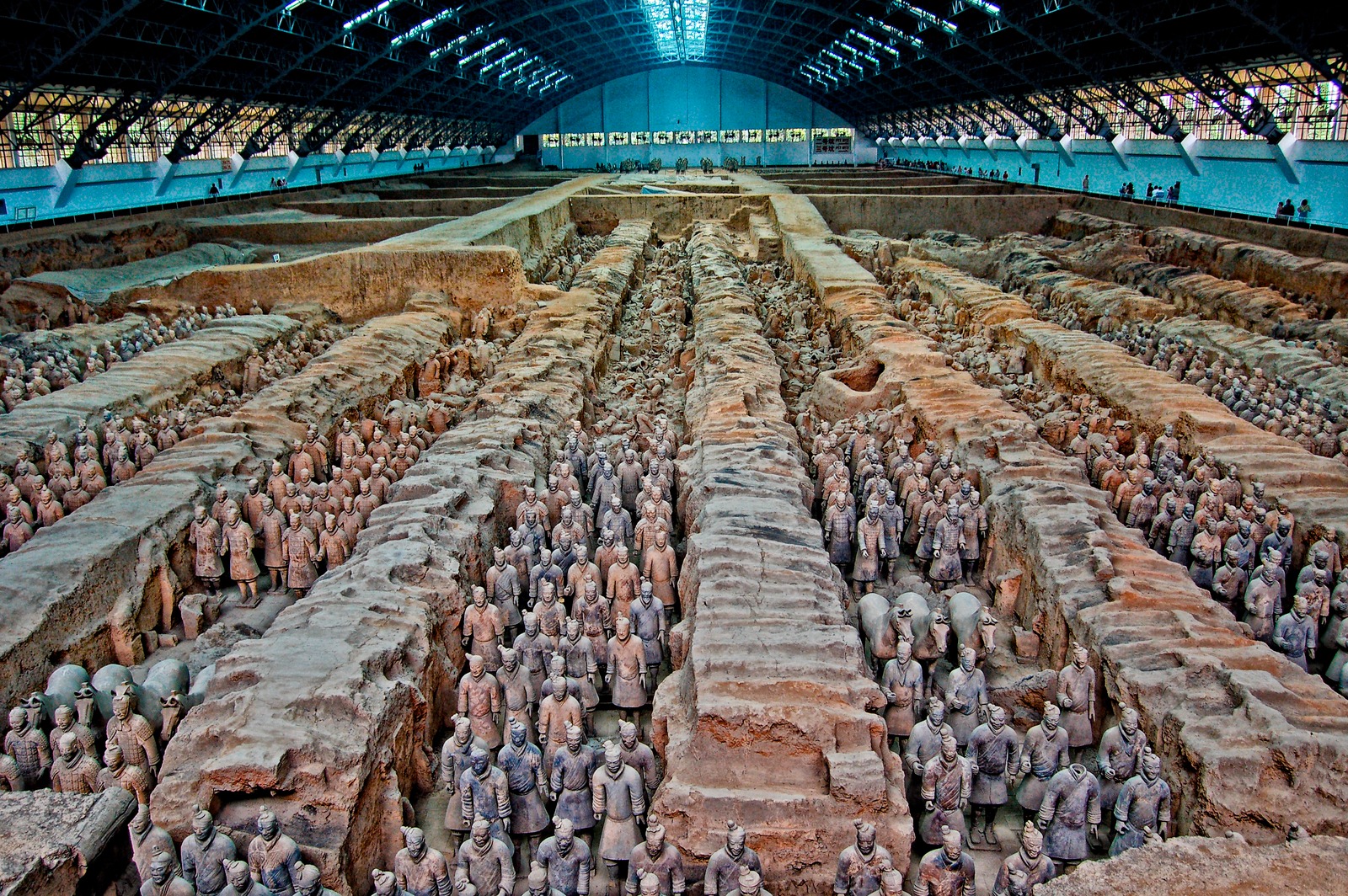
The general’s presence hinted at the complexity of Qin Shi Huang’s military structure, revealing that these figures were not mere soldiers but representations of real men who lived and fought for their emperor.
As news of the discovery spread, museums and cultural institutions expressed interest in collaborating with Chinese archaeologists.
The Terracotta Army had transcended its role as a historical artifact; it had become a symbol of national pride and cultural identity.
Yet, even as the excitement reached a fever pitch, the unopened tomb of Qin Shi Huang loomed ominously in the background.
What secrets lay within its sealed chambers? Ancient writings hinted at rivers of mercury and elaborate traps designed to protect the emperor’s remains.
The fear of what might happen if the tomb were opened weighed heavily on the minds of archaeologists.
The decision to wait became a matter of cultural preservation versus the thirst for knowledge.
The tomb represented both a treasure and a warning.
As technology advanced, experts hoped for a future where they could safely explore its depths without causing irreversible damage.
Until then, the tomb remained a powerful symbol of ancient ambition, locked away beneath the earth.
The ongoing mystery surrounding the Terracotta Army captivated the world.
Each soldier stood silently, guarding not just the tomb but the secrets of a bygone era.
Who were these warriors? What stories did they hold? The questions lingered, tantalizingly out of reach.
As Yang Zhifa reflected on the journey from farmer to witness of history, he felt a profound connection to the past.
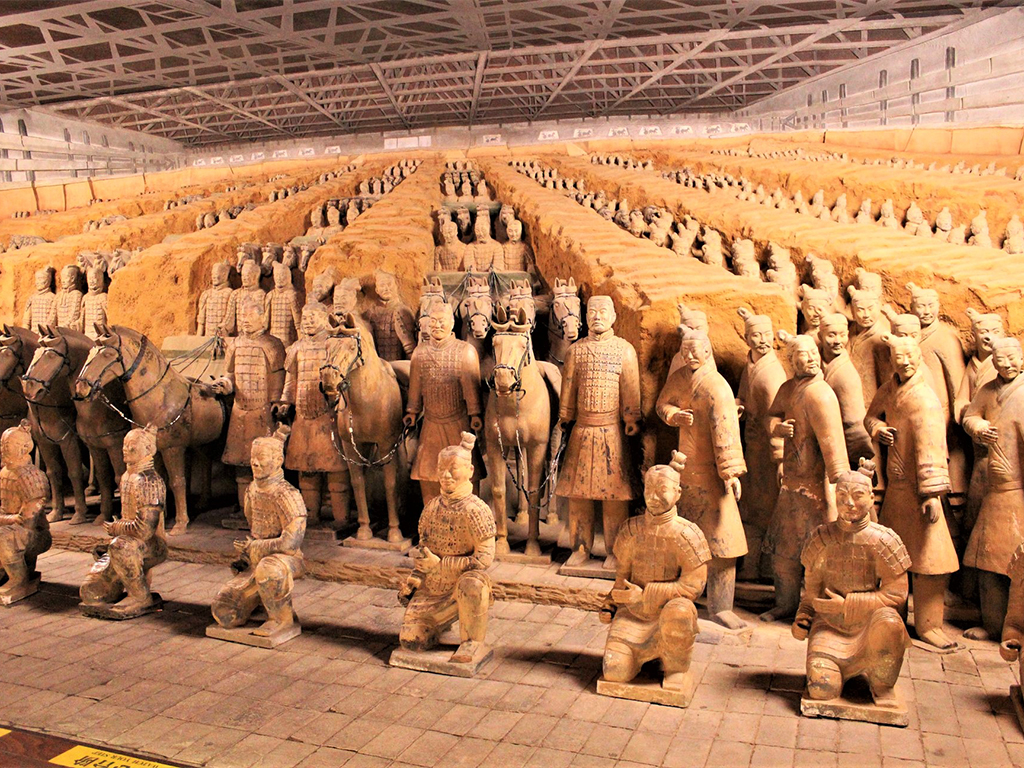
The Terracotta Army was more than just clay figures; they were a bridge to a time when loyalty, honor, and ambition defined an empire.
In the end, the discovery of the Terracotta Army was not merely about unearthing the past; it was a reminder of the fragility of history and the importance of preserving it for future generations.
The soldiers may have been frozen in time, but their stories continued to resonate, urging humanity to remember the lessons of ambition and mortality.
As the world watched with bated breath, the Terracotta Army stood as both a monument to human achievement and a warning of the consequences of unchecked power.
The secrets of Qin Shi Huang and his silent army would remain, patiently waiting for the day when they could finally tell their story.
In the shadows of history, the Terracotta Army awaited, a timeless enigma that would forever challenge our understanding of the past.
The journey was far from over, and as the sun set over Xiyang, the whispers of ancient warriors echoed through the valleys, reminding all who listened that history is not just a collection of facts, but a living tapestry woven with the threads of human experience
News
“Mel’s Hole Uncovered: Shocking Secrets from the Depths! 🌌 What Lies Beneath the Surface?” In a chilling investigation, the infamous Mel’s Hole reveals dark secrets that could change everything we know about the unknown! As explorers descend into its eerie depths, they uncover shocking evidence of bizarre phenomena and mysterious disappearances that have haunted the area for decades. What horrors await those who dare to venture too close? Prepare for a spine-tingling journey into a mystery that defies explanation! 👇
: The Mystery of Mel’s Hole: A Descent into the Unknown In the remote hills of eastern Washington, a story…

“The Vanishing Division: Shocking Evidence of Bigfoot’s Secret Society Revealed! ❄️ What Lies Beneath the Ice?” In a chilling investigation, researchers uncover shocking evidence of a hidden society of Bigfoot lurking beneath the snow! As eyewitness accounts pour in, the truth about these elusive creatures becomes more terrifying than we ever imagined. What secrets do they hold, and why have they kept themselves hidden for so long? Prepare for a heart-stopping journey into the icy depths where legends come alive and mysteries unfold! 👇
The Vanishing Division: Secrets Beneath the Snow In the bitter cold of winter 1939, a Soviet division, the 44th Rifle…

“The Ripper’s Final Chapter: Shocking Discoveries That Will Change History! 📜 What Did He Leave Behind?” As investigators piece together the final clues of Jack the Ripper’s gruesome legacy, shocking discoveries emerge that threaten to rewrite history! From hidden letters to unsettling artifacts, the evidence paints a terrifying portrait of a man who thrived in darkness. What drove him to commit such atrocities, and why did he vanish without a trace? This explosive investigation will take you on a heart-pounding journey into the mind of a killer, revealing truths that have remained buried for too long! 👇
Unmasking the Ripper: The Haunting Truth Revealed In the shadowy alleys of Victorian London, a chilling enigma unfolded that would…

“The Alien Files: Alec Newald’s Ten Days of Terror and Revelation! 🛸 What Lies Beyond Our World?” For ten long days, Alec Newald was lost to us—only to return with a tale so unbelievable it could rewrite history! His chilling account of an alien encounter unveils shocking truths about our place in the cosmos and the beings that may be watching us. As he shares the details of his experience, the implications of his story could shake the foundations of science and belief. Are we truly alone, or is there more to the universe than we ever imagined? The answers will astound you! 👇
The Ten Days That Changed Everything: Alec Newald’s Alien Encounter In February 1989, the quiet town of Rotorua, New Zealand,…

“The Untold Story of André the Giant: Love, Betrayal, and the Dark Side of Fame! 🌟 What They Never Told You!” Behind the towering figure of André the Giant lies a shocking tale of love and betrayal that will leave you breathless! As fans remember the wrestling legend, new revelations emerge about his tumultuous relationships and the dark pressures of fame that haunted him. Was his larger-than-life persona hiding a world of heartache and secrets? Dive into the emotional rollercoaster of a giant whose legacy is as complex as his size! The truth is more shocking than the ring itself! 👇
The Legacy of the Giant: A Tale of Shadows and Light In the heart of the wrestling world, there existed…

“Hoffa’s Last Secrets: Mafia Ties and Betrayal Revealed! 💼 Who Really Silenced the Labor Legend?” As the decades roll on, the mystery of Jimmy Hoffa’s disappearance thickens with shocking revelations from inside the mob! New evidence surfaces, suggesting a betrayal so deep it could shake the foundations of organized crime. Was Hoffa’s own inner circle responsible for his vanishing act? This explosive investigation dives into the dark underbelly of the labor movement, where loyalty is a luxury few can afford.
Prepare for a jaw-dropping journey into betrayal and danger! 👇
The Shocking Truth Behind Jimmy Hoffa’s Disappearance On a sweltering summer day in 1975, Jimmy Hoffa stepped out of his…
End of content
No more pages to load






