
Unmasking the Ripper: The Haunting Truth Revealed

In the shadowy alleys of Victorian London, a chilling enigma unfolded that would haunt the city for over a century.
Jack the Ripper, a name that sent shivers down the spines of those who heard it, became synonymous with terror and mystery.
The year was 1888, and the Whitechapel district, a decaying labyrinth of poverty and despair, was about to become the stage for one of history’s most infamous serial killers.
As the sun dipped below the horizon, casting long shadows over the grimy streets, Mary Ann Nichols walked alone, unaware that she was about to become the first victim of a man whose identity would remain hidden for generations.
On that fateful night, her life ended in a brutal act of violence that would mark the beginning of a nightmarish saga.
The community was already fraught with tension, its residents struggling against the harsh realities of life in the East End.
Poverty, disease, and desperation were rampant, creating an atmosphere ripe for exploitation.
The women of Whitechapel, often forced into prostitution to survive, were particularly vulnerable.
They became the prey of a predator who lurked in the darkness, waiting for the opportune moment to strike.
When Mary Ann’s body was discovered on August 31, 1888, the shockwaves reverberated through the neighborhood.
Her murder was not just another crime; it was a grotesque spectacle that revealed the depths of human depravity.
The brutality of the attack left the police baffled and the public terrified.
Little did they know, this was only the beginning.
Just over a week later, Annie Chapman met a similar fate.
Found in the backyard of a lodging house, her body bore the marks of a killer who exhibited a disturbing level of anatomical knowledge.
The press, hungry for sensational stories, seized upon the events, dubbing the murderer “Jack the Ripper” after a letter, likely a hoax, claimed to be from the killer himself.
The name stuck, igniting a media frenzy that would only deepen the mystery.
As the murders continued, the fear in Whitechapel grew palpable.
Elizabeth Stride and Catherine Eddowes were both killed on the same night, a terrifying double event that sent the community into a frenzy.
The police, led by Chief Inspector Frederick Abberline, worked tirelessly to catch the elusive killer, but every lead seemed to vanish like smoke.
With each murder, the killer’s signature became more pronounced.
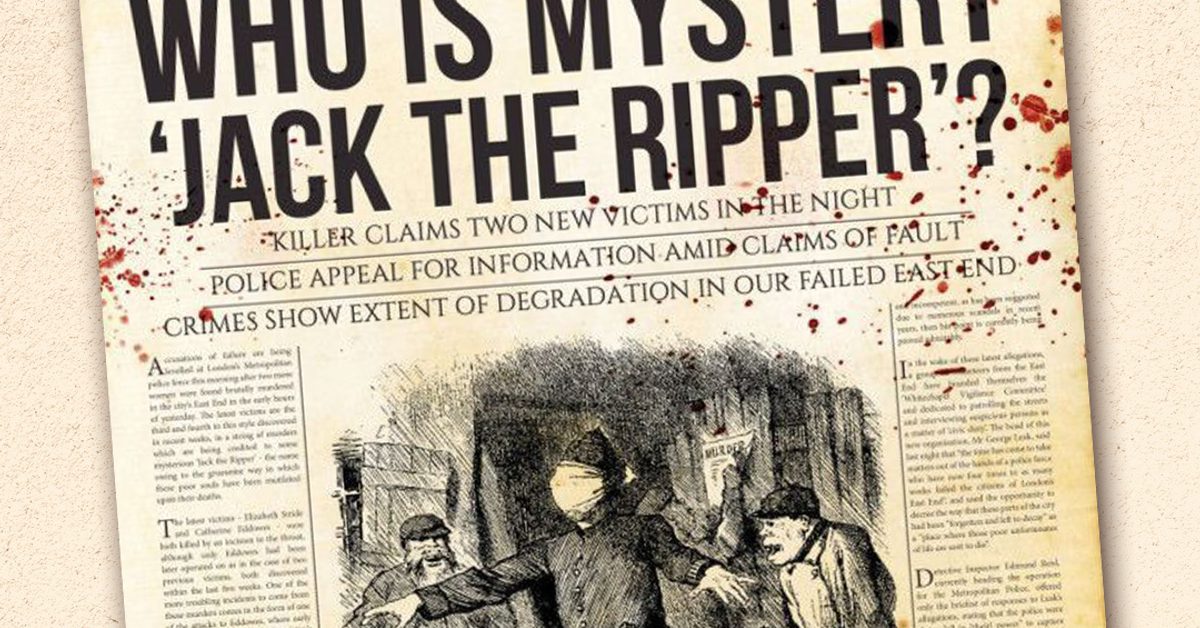
The mutilations were not random; they were deliberate, designed to instill fear and confusion.
The Ripper seemed to possess an understanding of human anatomy, leading some to speculate that he might be a doctor or butcher.
The investigation faced numerous challenges, from inadequate forensic science to a community too fearful to speak openly about the horrors unfolding around them.
As the public clamored for answers, the police found themselves under immense pressure.
The media thrived on the chaos, publishing lurid details and speculative theories that often pointed fingers at the most vulnerable members of society.
The immigrant population of Whitechapel became a target of suspicion, their struggles woven into the fabric of a narrative that painted them as potential threats.
In the midst of this turmoil, Mary Jane Kelly, the youngest of the canonical five victims, was brutally murdered in her own lodgings.
The savagery of her death shocked even the most hardened investigators.
It was a crime that seemed to epitomize the Ripper’s reign of terror, leaving a scar on the community that would never heal.
With each passing day, the mystery deepened.
The killer remained at large, slipping through the fingers of law enforcement like a ghost.
Theories abounded, ranging from local butchers to aristocrats, but none could be definitively linked to the gruesome crimes.
The social chaos of Whitechapel allowed the killer to blend in seamlessly, a wolf in sheep’s clothing, watching and waiting for the next opportunity to strike.
Then, as if the universe had conspired to keep the truth hidden, the murders ceased.
The Ripper vanished into the night, leaving behind a trail of horror and unanswered questions.
The investigation, once a frantic race against time, became a cold case, a chilling reminder of the darkness that lurked within humanity.
For over a century, the identity of Jack the Ripper remained a tantalizing mystery.
Countless theories emerged, each more outrageous than the last.
Some speculated that he was a member of the royal family, while others pointed to artists and doctors.
Yet, despite the passage of time, the truth remained elusive, locked away in the annals of history.
Then, in the twenty-first century, a breakthrough emerged that would change everything.
Historian Russell Edwards embarked on a quest to apply modern forensic science to the century-old mystery.
His journey led him to a seemingly ordinary item: a shawl belonging to Catherine Eddowes, one of the Ripper’s victims.
Acquired in 2007, the shawl had a controversial provenance, but Edwards believed it might hold the key to unmasking the killer.
Collaborating with Dr.
Jari Louhelainen, a molecular biologist specializing in forensic genetics, they set out to analyze the fabric for biological traces linked to the murderer.
Through mitochondrial DNA testing, they extracted two distinct genetic profiles: one matching Catherine Eddowes and the other linked to Aaron Kosminski, a Polish immigrant and barber who had long been suspected as the Ripper.
The implications were staggering.
Kosminski had lived in Whitechapel during the murders and was known to have had violent tendencies.
The revelation sent shockwaves through the historical community.
Could it be that after 137 years, the true identity of Jack the Ripper had finally been revealed? For many, this was not just about solving a cold case; it was about bringing closure to the families of the victims, who had suffered in silence for over a century.
However, the scientific community approached the findings with caution.
Critics questioned the authenticity of the shawl and the potential for contamination over the years.
The debate surrounding the evidence raged on, with skeptics arguing that the conclusions could not definitively prove Kosminski’s guilt.
Yet, the breakthrough had reignited interest in the case, transforming speculation into a matter of scientific inquiry.
As more people became aware of the findings, the narrative shifted.
No longer was Jack the Ripper merely a ghostly figure haunting the pages of history; he was a man with a name, a face, and a story that could be told.
The implications were profound.

If Aaron Kosminski was indeed the Ripper, it meant that the victims were not just nameless statistics but individuals whose lives had been cut short by a man who had slipped through the cracks of society.
The story of Jack the Ripper was no longer just a tale of horror; it was a reminder of the systemic failures that allowed such atrocities to occur.
As the dust settled on this revelation, the world grappled with the reality of what had been uncovered.
The victims—Mary Ann Nichols, Annie Chapman, Elizabeth Stride, Catherine Eddowes, and Mary Jane Kelly—were finally being acknowledged not just as victims of a heinous crime but as real women whose lives mattered.
In the end, the story of Jack the Ripper serves as a haunting reminder of the darkness that can lurk within humanity.
It challenges us to confront the societal issues that allowed such violence to thrive and compels us to remember the lives lost in the shadows.

As the truth emerged from the depths of history, the legacy of Jack the Ripper transformed from a chilling mystery into a call for justice, compassion, and understanding.
The shadows may have receded, but the lessons learned from this dark chapter in history will continue to resonate for generations to come.
News
“Mel’s Hole Uncovered: Shocking Secrets from the Depths! 🌌 What Lies Beneath the Surface?” In a chilling investigation, the infamous Mel’s Hole reveals dark secrets that could change everything we know about the unknown! As explorers descend into its eerie depths, they uncover shocking evidence of bizarre phenomena and mysterious disappearances that have haunted the area for decades. What horrors await those who dare to venture too close? Prepare for a spine-tingling journey into a mystery that defies explanation! 👇
: The Mystery of Mel’s Hole: A Descent into the Unknown In the remote hills of eastern Washington, a story…

“The Vanishing Division: Shocking Evidence of Bigfoot’s Secret Society Revealed! ❄️ What Lies Beneath the Ice?” In a chilling investigation, researchers uncover shocking evidence of a hidden society of Bigfoot lurking beneath the snow! As eyewitness accounts pour in, the truth about these elusive creatures becomes more terrifying than we ever imagined. What secrets do they hold, and why have they kept themselves hidden for so long? Prepare for a heart-stopping journey into the icy depths where legends come alive and mysteries unfold! 👇
The Vanishing Division: Secrets Beneath the Snow In the bitter cold of winter 1939, a Soviet division, the 44th Rifle…

“The Alien Files: Alec Newald’s Ten Days of Terror and Revelation! 🛸 What Lies Beyond Our World?” For ten long days, Alec Newald was lost to us—only to return with a tale so unbelievable it could rewrite history! His chilling account of an alien encounter unveils shocking truths about our place in the cosmos and the beings that may be watching us. As he shares the details of his experience, the implications of his story could shake the foundations of science and belief. Are we truly alone, or is there more to the universe than we ever imagined? The answers will astound you! 👇
The Ten Days That Changed Everything: Alec Newald’s Alien Encounter In February 1989, the quiet town of Rotorua, New Zealand,…

“The Untold Story of André the Giant: Love, Betrayal, and the Dark Side of Fame! 🌟 What They Never Told You!” Behind the towering figure of André the Giant lies a shocking tale of love and betrayal that will leave you breathless! As fans remember the wrestling legend, new revelations emerge about his tumultuous relationships and the dark pressures of fame that haunted him. Was his larger-than-life persona hiding a world of heartache and secrets? Dive into the emotional rollercoaster of a giant whose legacy is as complex as his size! The truth is more shocking than the ring itself! 👇
The Legacy of the Giant: A Tale of Shadows and Light In the heart of the wrestling world, there existed…

“Hoffa’s Last Secrets: Mafia Ties and Betrayal Revealed! 💼 Who Really Silenced the Labor Legend?” As the decades roll on, the mystery of Jimmy Hoffa’s disappearance thickens with shocking revelations from inside the mob! New evidence surfaces, suggesting a betrayal so deep it could shake the foundations of organized crime. Was Hoffa’s own inner circle responsible for his vanishing act? This explosive investigation dives into the dark underbelly of the labor movement, where loyalty is a luxury few can afford.
Prepare for a jaw-dropping journey into betrayal and danger! 👇
The Shocking Truth Behind Jimmy Hoffa’s Disappearance On a sweltering summer day in 1975, Jimmy Hoffa stepped out of his…

“Secrets of the Deep: Ocean’s Sinister Creatures Unleashed! 🌊 What Lies Beneath Will Shock You!” In a world where the ocean is a mere playground for vacationers, shocking revelations emerge as marine biologists uncover a hidden realm of terrifying, monstrous sea creatures that could rewrite everything we thought we knew about the deep blue! As they delve deeper, they stumble upon a conspiracy that reaches far beyond the waves—could these creatures be harboring secrets that threaten humanity itself? Don’t miss this jaw-dropping expose! 👇
The Abyss: Unveiling the Ocean’s Darkest Secret In the depths of the Southern Ocean, a story was unfolding that would…
End of content
No more pages to load






